Executive Office Suite Fire Pump Requirements Guide
I have walked through enough premium office spaces to know one truth. The smaller the footprint, the less room there is for error. Fire safety does not scale down just because square footage does. In fact, it becomes sharper, more precise, and far less forgiving. That is where executive office suite fire pump requirements step into the spotlight. These systems are not just mechanical boxes humming in the background. They are the quiet guardians that ensure pressure, flow, and response time stay exactly where they should be when things heat up, literally.
So, let us talk about how to keep these compact, high value workspaces safe without turning the place into a bunker from a sci fi movie.
Why smaller premium offices demand smarter fire protection
I have seen it time and again. A beautifully designed executive suite with glass walls, modern finishes, and just enough space to feel exclusive. However, those same design choices can create tighter fire loads and faster heat spread. Therefore, fire protection in these environments must be deliberate.
Because space is limited, every system must work harder. Fire pumps must deliver consistent pressure even when the building layout restricts piping routes. Additionally, smaller offices often sit within larger commercial structures, which means they rely on centralized systems while still needing localized performance.
Think of it like a luxury sports car. It is compact, but every component is tuned for performance. Fire safety should follow that same mindset, especially when you are working through detailed executive office suite fire pump requirements in buildings where every square foot carries a premium price tag.
How executive office suite fire pump requirements actually work in practice
Pressure, flow, and performance
I get this question a lot, and the answer is simpler than it sounds. These requirements focus on ensuring that fire pumps can maintain adequate water pressure and flow for sprinkler and standpipe systems within smaller, high end office environments.
First, the pump must match the building demand. Not almost. Not close enough. Exact. Then, it must activate quickly and maintain pressure without fluctuation. Because in a fire event, hesitation is not a charming personality trait.
Codes, standards, and backup power
Moreover, compliance with local codes and national standards is non negotiable. These standards dictate everything from pump capacity to backup power. And yes, backup power matters. Because fires have a funny way of showing up when the power decides to take the day off.
When you step through executive office suite fire pump requirements with your design or facilities team, make sure emergency power sources, transfer switches, and monitoring are treated as core features, not optional upgrades.
Designing around space limits without cutting corners
I have learned that tight spaces force creativity. However, creativity should never mean compromise. Instead, it should lead to smarter layouts and better equipment choices.
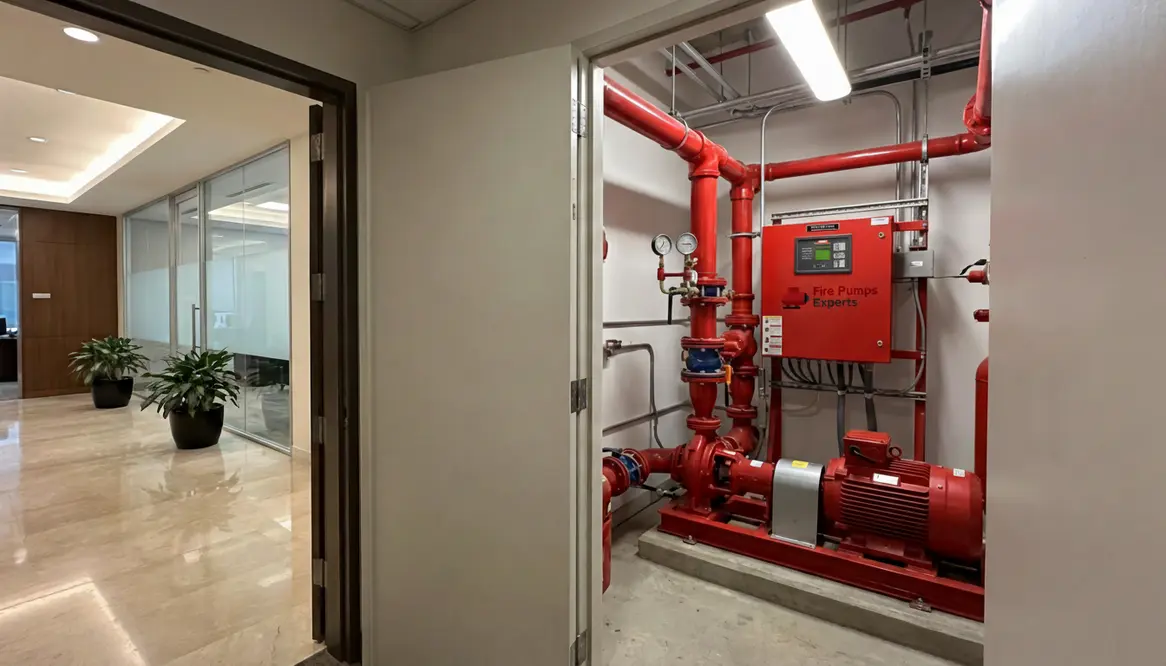
In smaller premium offices, fire pump rooms may be compact or shared within a larger building system. Therefore, accessibility becomes critical. Maintenance teams must reach components easily, or small issues will quietly grow into big problems.
What I prioritize
- Efficient pump placement
- Clear access paths
- Compact yet powerful equipment
- Proper ventilation and drainage
What I avoid
- Cramming equipment into unusable corners
- Ignoring maintenance clearance
- Oversizing without purpose
- Relying on outdated systems
Additionally, integrating fire pumps with building management systems allows real time monitoring. That means fewer surprises and faster response when something drifts out of spec, and it brings your executive office suite fire pump requirements into the same digital, data driven environment as the rest of your building systems.
Common mistakes that quietly sabotage fire readiness
Let me be blunt. Most fire safety failures do not come from dramatic explosions or cinematic chaos. They come from small oversights that stack up over time.
For instance, I often see systems installed correctly but neglected afterward. Testing becomes irregular. Valves get left in the wrong position. Documentation disappears like socks in a dryer. Consequently, when the system is needed, it hesitates or underperforms.
Another issue is misunderstanding demand. Smaller offices sometimes assume they need less robust systems. In reality, premium spaces often house high value equipment and dense occupancy. That raises the stakes significantly.
And then there is the classic move of treating fire pumps as a one time purchase. They are not furniture. They are living systems that require ongoing attention, especially when executive office suite fire pump requirements are written into leases, insurance conditions, and compliance audits that do not accept excuses.
Balancing aesthetics with serious safety
I understand the desire for clean design. No one wants industrial hardware ruining a polished executive look. However, hiding critical infrastructure without planning is like putting a smoke detector behind a painting. It might look nice, but it will not help when you need it.
Instead, I recommend integrating fire safety elements into the design from the start. Use architectural enclosures that allow access. Plan routing that minimizes visual clutter while maintaining function. Because good design does not fight safety. It works with it.
Also, let us be honest. A well designed pump system room can look pretty impressive. It is the kind of space that says, this building knows what it is doing. When your executive office suite fire pump requirements are met without wrecking the visual tone of the space, that is when operations and aesthetics finally agree on something.
Keeping systems compliant and future ready
Codes evolve. Technology improves. Therefore, staying compliant is not a one time task. It is an ongoing process.
I always advise regular inspections, performance testing, and updates based on current standards. This ensures that executive office suite fire pump requirements continue to be met even as the building changes.
Moreover, consider scalability. If the office expands or reconfigures, the fire protection system should adapt without requiring a complete overhaul. Planning for that flexibility upfront saves time, money, and a few headaches down the line. For deeper technical references on pump sizing, curves, and testing expectations, resources at https://firepumps.org can help your team benchmark performance against industry expectations.
FAQ quick answers for busy decision makers
Below are rapid fire clarifications on executive office suite fire pump requirements and related decisions that tend to stall projects or budgets.
Final thoughts that actually matter
Fire safety in smaller premium office spaces is not about doing less. It is about doing things right with precision and intent. If you want systems that perform when it counts, you need proper planning, reliable equipment, and ongoing care. Work with experts who understand commercial and industrial demands, and make sure your fire pump strategy is built to last. Because when the moment comes, performance is everything and your executive office suite fire pump requirements will not care how beautiful the lobby looks if the system does not deliver.