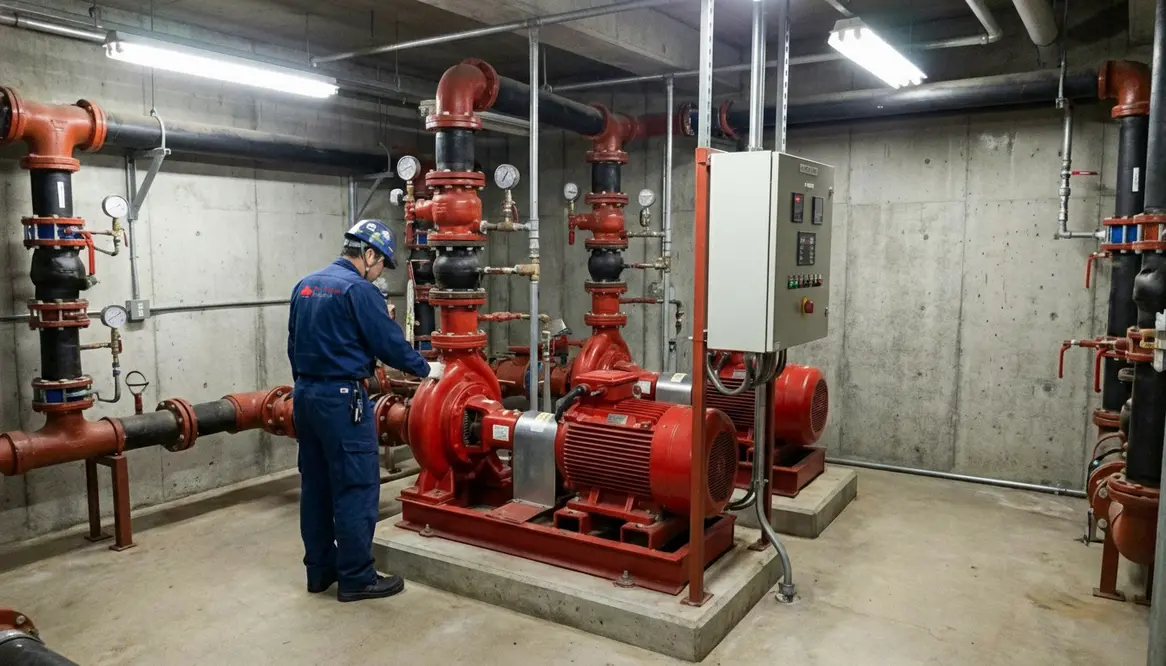
Retirement Community Fire Pump Requirements Guide
Fire Safety for Large Age Restricted Communities
I have spent years walking through large age restricted communities, listening to the quiet hum of daily life, and noticing something most folks overlook until it is too late. Fire safety is not just a checklist. It is a living system. And right at the heart of it sits a topic that deserves more attention than it gets: retirement community fire pump requirements. Within the first moments of an emergency, these systems decide whether a situation stays manageable or becomes something far more serious. So today, I am going to walk you through it all, calmly, clearly, and with just enough wit to keep you awake.
Because let’s be honest, nothing says thrilling afternoon reading like fire pump compliance. But stick with me. This matters.
Why Fire Safety Feels Different in Large Age Restricted Communities
First, let me set the stage. These communities are not your typical commercial properties. They are large, often sprawling, and filled with residents who may need more time and assistance to respond in an emergency. Because of this, every second carries more weight.
Now, I have seen facilities that rely too heavily on basic alarms and sprinklers, assuming that is enough. However, when mobility is slower and response times stretch, systems must perform flawlessly without hesitation. That is where properly designed fire suppression infrastructure steps in.
Additionally, staffing levels and training vary widely. Some communities run like a well rehearsed orchestra. Others feel more like a garage band that just discovered instruments. Either way, the system itself must compensate for human variability. That means stronger design, smarter planning, and consistent maintenance.
How Retirement Community Fire Pump Requirements Shape Protection
Let’s talk about the engine behind the curtain. Fire pumps are not glamorous, but neither is oxygen, and you would not want to go without either.
In large age restricted communities, fire pump systems must meet strict performance standards. These are not arbitrary rules. They ensure that water pressure reaches every corner of a property, even during peak demand. Without that pressure, sprinklers become little more than decorative plumbing.
Moreover, compliance with retirement community fire pump requirements ensures redundancy. That means backup power, reliable activation, and consistent testing. Because if the system fails during the one moment it is needed, well, that is not a second chance kind of scenario.
And here is the part people often miss. These requirements are not static. Codes evolve. Facilities expand. Occupancy changes. So, staying compliant is not a one time event. It is an ongoing commitment.
What Should a Large Community Actually Focus On Day to Day
I like to think of fire safety as a rhythm. Daily awareness, weekly checks, monthly reviews. When that rhythm breaks, risks creep in quietly.
Operational Focus
- Routine inspection of pump systems
- Clear access to fire equipment
- Staff awareness and drills
- Monitoring system alerts in real time
Infrastructure Focus
- Consistent water supply reliability
- Backup power readiness
- Pressure testing across zones
- Integration with alarm systems
Now, I know what you are thinking. That sounds like a lot. And you are right. But here is the twist. When done properly, most of this becomes second nature. Like brushing your teeth. Except the stakes are a bit higher than fresh breath.
How Do I Know If My Fire Protection System Is Actually Ready
That is the question, isn’t it?
I have walked into buildings where everything looked perfect on paper. Then we tested the system, and suddenly it performed like a car that refuses to start when you are already late.
So here is my answer. You do not guess readiness. You prove it.
Regular flow testing, real load simulations, and third party inspections reveal the truth. Additionally, reviewing compliance with retirement community fire pump requirements ensures the system is not just installed, but fully functional under stress.
And let me add this. If your last full system test feels like a distant memory, that is your sign. Fire safety does not reward nostalgia.
Designing Systems That Think Ahead
Now we move beyond maintenance and into strategy. Because the best systems do not just react. They anticipate.
Large communities often expand over time. New wings. Additional floors. More residents. However, many original fire systems were not designed with that growth in mind. That creates pressure gaps, coverage issues, and inconsistent response capability.
Smart design accounts for future load. It builds in capacity. It aligns with evolving retirement community fire pump requirements without requiring constant retrofits.
And here is where working with specialists in commercial and large scale properties matters. This is not a DIY situation. You would not ask your neighbor to rewire a power grid. The same logic applies here.
Also, integrating fire pumps with modern monitoring systems adds a layer of intelligence. Real time alerts. Remote diagnostics. Faster response. It is like giving your building a sixth sense, minus the spooky kid whispering about ghosts.
Common Gaps I See and Why They Matter
Let me be blunt for a moment. Most issues I encounter are not dramatic failures. They are small oversights that stack up.
- Outdated pump calibration
- Inconsistent maintenance logs
- Blocked or restricted access points
- Undertrained staff during off hours
Individually, these seem minor. Together, they create vulnerability. And fire, as it turns out, is not known for being forgiving.
However, the fix is rarely complicated. It is about discipline. Consistency. And a willingness to treat fire safety as essential infrastructure, not background noise.
FAQ: Fire Safety in Large Age Restricted Communities
These quick answers focus on the most common questions about designing, maintaining, and verifying systems that meet retirement community fire pump requirements across large age restricted properties.
Conclusion: A Quiet System That Deserves Loud Attention
Fire safety in large age restricted communities is not about fear. It is about readiness. When systems align with proper standards and consistent care, they work quietly in the background, doing exactly what they were designed to do.
If you manage or operate a large property, now is the time to review your systems, confirm compliance, and strengthen your infrastructure. That includes looking closely at retirement community fire pump requirements, your testing history, and the way your team responds when alarms are more than just a drill.
Walk the property. Ask to see the logs. Question anything that feels fuzzy or out of date. The goal is not perfection on paper, but performance when it counts.
Because when it comes to safety, quiet confidence beats last minute panic every single time.