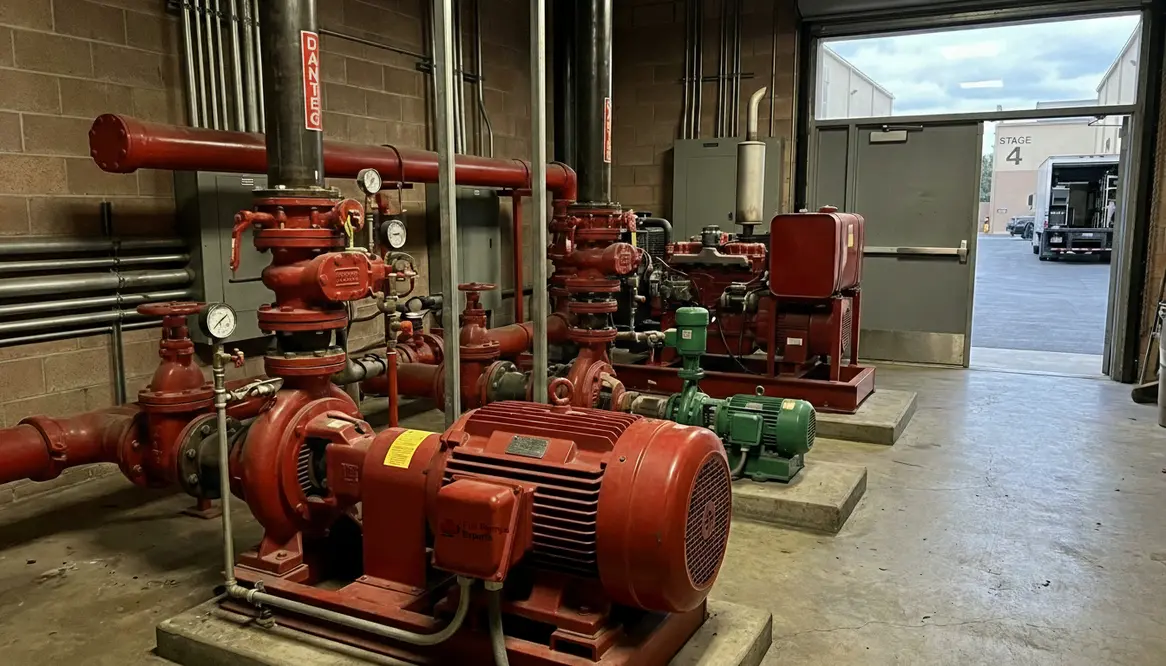
Film Studio Fire Pump Burbank Systems Guide
I have spent enough time around sound stages in Burbank to know one thing for certain. When the cameras roll, everything looks controlled. But behind the scenes, there is a quiet system standing guard. I am talking about the film studio fire pump Burbank facilities rely on to keep massive sets, lighting rigs, and production assets safe. It is not glamorous. It will not win an Oscar. Yet without it, the show quite literally cannot go on.
So let me walk you through the types of fire pumps used in these studios. And yes, I promise to keep it interesting. Even if we are talking about pumps instead of plot twists.
What fire pump types do film studios in Burbank actually use
Most large studios operate like small cities. Therefore, they require industrial grade fire protection systems that can handle high demand instantly. I usually see three primary pump types doing the heavy lifting.
Electric fire pumps
Electric fire pumps lead the pack. They connect to a reliable power source and deliver consistent pressure across large sprinkler systems. In a studio packed with expensive equipment, consistency matters more than dramatic flair.
Diesel fire pumps
Diesel fire pumps step in as the dependable backup. If power drops, and in production environments it sometimes does, these pumps keep water moving. Think of them as the stunt doubles of the fire protection world. They do the risky work when things go sideways.
Jockey pumps
Jockey pumps handle the subtle side of the job. They maintain pressure in the system so the main pumps do not have to start every time there is a minor drop. It is quiet, efficient, and honestly a bit underappreciated.
Together, these systems form a layered defense. And in Burbank, where studios operate around the clock, that redundancy is not optional.
Why pressure consistency matters in large studio environments
Now here is where things get serious. Film studios are not simple buildings. They are sprawling complexes with multiple sound stages, storage areas, and office spaces. As a result, maintaining steady water pressure across that footprint is critical.
When a fire suppression system activates, it cannot hesitate. Even a slight delay in pressure can reduce effectiveness. Therefore, engineers design systems that deliver immediate response across long pipe networks.
I have seen setups where a single stage alone demands more water flow than a small commercial building. Add multiple stages, and suddenly you are dealing with industrial scale requirements. That is why selecting the right pump type is not just a technical decision. It is a safety mandate.
Film Studio Fire Pump Burbank systems and power reliability
Power reliability is a recurring theme in Burbank studios. With high energy lighting and constant production activity, electrical loads fluctuate. Consequently, fire pump systems must account for that reality.
Electric pumps offer efficiency and lower maintenance. However, they depend entirely on the power grid. That is where diesel pumps earn their place. They operate independently, ensuring that even during outages, water still flows where it is needed.
Many facilities pair both systems together. This dual approach creates a safety net that aligns with strict fire codes and insurance requirements. It is not overkill. It is smart planning.
Electric Pumps
Pros
- Reliable for continuous operation
- Lower emissions
- Quieter performance
Considerations
- Dependent on power supply
- Requires electrical infrastructure stability
Diesel Pumps
Pros
- Independent power source
- Strong emergency backup
- High durability
Considerations
- Fuel maintenance needed
- Higher noise levels
How do fire pumps integrate with studio fire protection systems
In most studio environments, fire pumps connect to extensive sprinkler networks, standpipe systems, and sometimes foam suppression setups for specialized areas. When sensors detect heat or smoke, valves open and the pump delivers water at the required pressure.
Additionally, these systems undergo regular testing. Weekly churn tests, annual flow tests, and ongoing inspections keep everything ready. It is a bit like rehearsals before a big scene. You do not wait for opening night to find out something is broken.
And yes, the paperwork alone could rival a screenplay. But unlike some scripts, this one has a clear purpose.
Choosing the right fire pump setup for commercial studio properties
If I had to sum it up, I would say this. There is no one size fits all solution. Each studio has unique layouts, risk factors, and operational demands.
Engineers consider water supply, building size, and hazard classification before selecting a system. For example, a studio with large set construction areas may require higher flow rates compared to administrative buildings.
Moreover, local codes in Burbank and California standards shape these decisions. Compliance is not just about avoiding fines. It ensures that when something goes wrong, the system performs exactly as expected.
And in an industry where time is money, downtime is the real villain. That is why a well engineered film studio fire pump Burbank configuration is treated as core production infrastructure, not an afterthought buried in a mechanical room.
FAQ about fire pumps in Burbank film studios
Here are answers to some of the most common questions that come up when planning or upgrading a film studio fire pump Burbank system for active production campuses.
Keeping production safe starts with the right system
If you manage or operate a studio facility, do not treat fire protection as background noise. The right system, including a properly designed film studio fire pump Burbank setup, protects assets, people, and production timelines. Work with experts who understand large scale commercial properties and know how to design for real world demands. Because when safety runs smoothly, everything else gets to shine on cue.