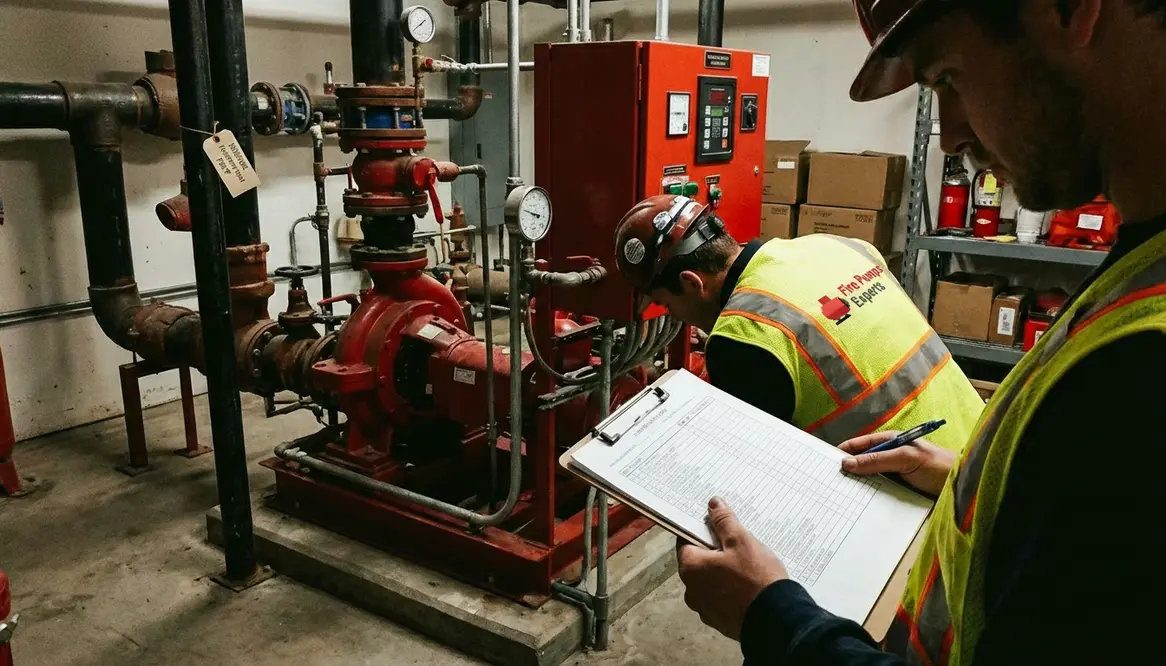
Fire Pump Acceptance Test Denver Inspection Punch List
Turning inspection day from a source of anxiety into a predictable, well-rehearsed performance starts long before the fire marshal steps into the pump room.
I have spent enough time around pump rooms to know one simple truth. The most stressful moment for a facility manager is not when a fire alarm rings. It is the day the inspector walks in for the final pump acceptance test. In Denver, that moment comes with high expectations and very little patience for missing details.
That is exactly why I always prepare a fire pump acceptance test denver pre inspection punch list. I do it early, I do it carefully, and I treat it like the difference between a smooth inspection and a very awkward meeting with the fire marshal. A solid pre inspection checklist helps commercial and industrial properties avoid delays, costly retesting, and those uncomfortable moments when everyone stares at the pump controller like it just forgot its lines in a Broadway show.
So let me walk you through how I approach this process. If you run a hospital, data center, warehouse campus, high rise, or manufacturing plant in the Denver area, this preparation matters more than you think.
Why Denver Fire Pump Inspections Demand Extra Attention
Denver is not casual about fire protection systems. Local codes are strict, inspectors know exactly what they are looking for, and large commercial facilities operate under higher scrutiny. Because of that, the acceptance test is not just a quick demonstration. It is a detailed verification that the entire fire pump system works under real conditions.
First, inspectors confirm that the installation matches approved plans. Then they evaluate performance under flow. After that, they verify alarms, controller settings, power supply reliability, and pressure stability.
However, here is the catch. Even a perfectly installed pump can fail the acceptance test if small details are missing.
I have seen projects delayed because:
- Pressure gauges were not calibrated
- Flow meters lacked documentation
- Controllers had incorrect settings
- Relief valves were not adjusted properly
- Test headers were obstructed
Meanwhile, every delay means rescheduling inspectors, contractors, and engineers. In large facilities, that can stall occupancy approvals. Therefore preparation is not optional. It is operational risk management.
My Approach to a Fire Pump Acceptance Test Denver Pre Inspection Punch List
Before any official test date appears on the calendar, I walk the entire system. Slowly. Methodically. Like a detective in a crime drama who already knows the culprit but wants the evidence anyway.
A strong fire pump acceptance test denver pre inspection punch list focuses on three layers of verification.
System Readiness
- Pump installed per approved drawings
- Suction and discharge piping correctly supported
- Proper clearance around pump and controller
- Correct pump rotation confirmed
- Controller labeled and accessible
Operational Verification
- Jockey pump operation verified
- Pressure switches calibrated
- Controller start sequence confirmed
- Automatic start triggers tested
- Power transfer verified for diesel or electric units
Documentation Review
- Manufacturer specifications available
- Pump curve documentation ready
- Installation certifications completed
- Electrical permits closed
- Inspection records prepared
Because when the inspector arrives, they expect evidence. Not guesses. Not promises. Actual documentation.
And trust me, nothing kills confidence faster than someone saying, “I think the paperwork is in someone’s truck.”
What Inspectors Actually Check During the Pump Acceptance Test
If you want your acceptance test to feel smooth, you need to think like the inspector. That mindset changes everything.
First, they confirm water supply capacity. This means the pump must demonstrate performance at churn, one hundred percent flow, and one hundred fifty percent flow. Each point must match the pump curve within acceptable tolerances.
Next, they verify instrumentation. Every pressure gauge must be readable and properly located. In addition, flow measurement devices must function accurately.
Then they observe controller behavior. The pump must start automatically when pressure drops. It must also remain running until manually stopped. This simple requirement surprisingly trips up many installations.
Finally, they evaluate alarms and supervisory signals. Large commercial properties depend on monitoring systems, so communication between the pump controller and the fire alarm panel must work perfectly.
If any component hesitates or fails, the entire test pauses. And just like that, your carefully planned day turns into a reschedule.
How I Prepare Large Commercial Facilities Before Inspection Day
Mechanical Preparation
- Flush the system to remove debris
- Confirm suction supply valves fully open
- Check pump alignment and vibration
- Inspect packing or mechanical seals
- Verify relief valve discharge routing
Operational Preparation
- Simulate pressure drop conditions
- Test manual start procedures
- Verify emergency power availability
- Confirm controller event logs
- Run a preliminary flow test
By handling these steps early, I remove uncertainty. And uncertainty is what causes inspection day drama.
Think of it like rehearsing before opening night. The audience only sees the polished performance. They never see the hundred practice runs behind the curtain.
What Should Be on a Fire Pump Acceptance Test Denver Pre Inspection Punch List?
When facility engineers ask me this question, I give them the same answer every time. Focus on the items inspectors cannot ignore.
Water Supply Reliability
First, confirm water supply reliability. A fire pump is only as good as the water feeding it. Therefore suction pressure and supply valves must support full demand.
Pump Curve Performance
Second, confirm pump curve performance. During testing, the pump must deliver flow rates that align with manufacturer specifications. If performance drifts too far from the curve, the system fails the acceptance test.
System Integration and Controls
Third, verify system integration. Fire pumps rarely operate alone in modern facilities. They connect to alarm systems, building management platforms, and emergency power sources.
Accessibility and Labeling
Finally, verify accessibility and labeling. Inspectors expect equipment to be easy to identify and operate. Clear signage and valve identification reduce confusion during emergency conditions.
It may sound simple. Yet in massive facilities like distribution centers or medical campuses, hundreds of components interact with the pump system. That complexity makes a well-structured fire pump acceptance test denver pre inspection punch list essential long before the first flow reading is taken.
Common Mistakes I See in Denver Pump Installations
Even experienced contractors occasionally overlook small details. Unfortunately, those small details often stop the acceptance test cold.
- Improperly calibrated pressure gauges
- Missing backflow documentation
- Blocked or undersized test headers
- Loose electrical terminations
- Incorrect controller programming
- Relief valves discharging incorrectly
However, the biggest mistake is simple. Waiting until inspection day to discover problems.
At that point, the fire marshal already scheduled time. The building owner expects results. The general contractor wants the certificate. And suddenly everyone stares at the pump room like it just betrayed them.
A proactive punch list and a disciplined fire pump acceptance test denver pre inspection punch list workflow prevent that moment and keep the project moving toward occupancy.
FAQ About Fire Pump Acceptance Testing in Denver
Prepare Early and Make Inspection Day Easy
If you operate a commercial or industrial property in Denver, the acceptance test is not the time for surprises. A thoughtful inspection checklist protects your schedule, your investment, and your peace of mind. My advice is simple. Walk the system early. Confirm every component. Document everything. Treat your fire pump acceptance test denver pre inspection punch list as a living document from rough-in to final inspection.
If you want experienced guidance preparing your facility, the team at Kord Fire Protection can help ensure your pump system is ready when the inspector arrives. And when that day comes, the pump should perform like a seasoned professional who knows the script by heart.