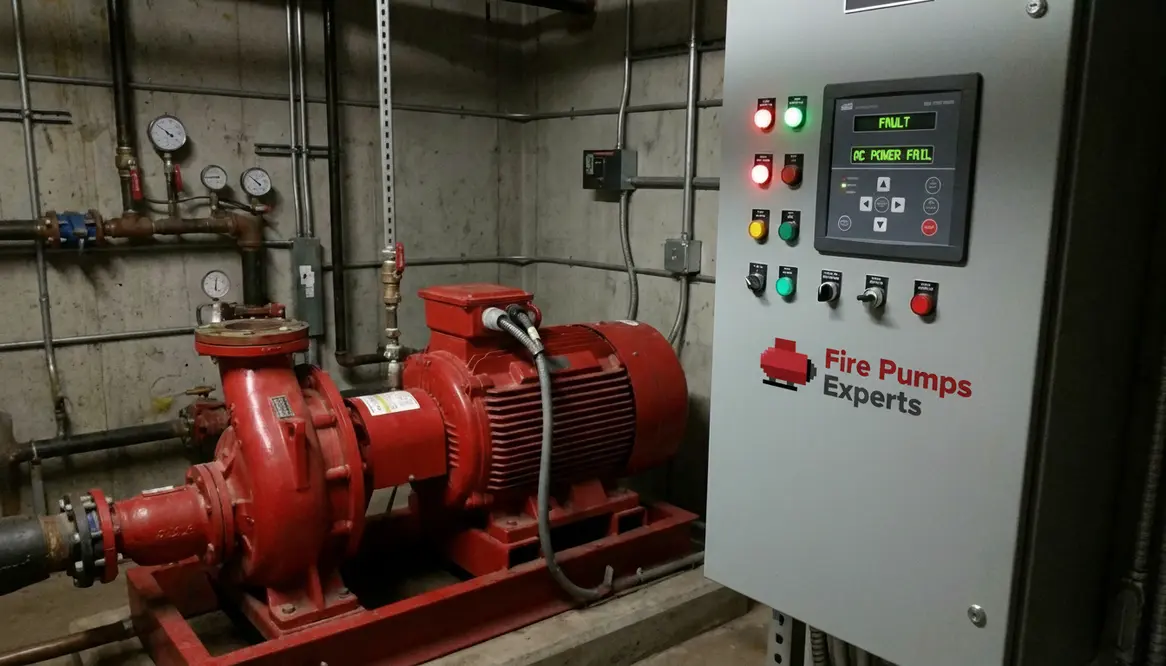
Fire Pump Repair Denver Controller Faults and Starts
Why silent pump rooms, blinking controllers, and stubborn start failures in Denver’s largest buildings all tend to trace back to the same handful of issues.
I have spent a good portion of my career standing in mechanical rooms that hum like a quiet orchestra. Pumps spinning. Controllers blinking. Engineers watching gauges like hawks. And every now and then, something goes wrong. In large commercial and industrial facilities across Colorado, the phrase fire pump repair denver controller faults starting failures tends to come up when a system refuses to start at the worst possible moment.
Now here is the thing. Fire pumps are not dramatic machines. They are patient. They sit quietly for months or years waiting for the one moment when everything depends on them. When that moment comes, the pump must start instantly. No excuses. No sleepy Monday morning attitude.
However, controller faults and start failures do happen. I have seen them in high rise buildings, manufacturing plants, hospitals, distribution centers, and large campuses. The good news is that most of these problems follow patterns. Once you understand those patterns, the solution becomes much clearer. So let me walk you through what I see most often in the field.
Fire Pump Repair Denver Controller Faults Starting Failures in Large Facilities
When I arrive at a commercial property for a pump issue, the first thing I ask is simple. Did the pump try to start or did it stay completely silent?
That answer tells me a lot. In most large buildings, the controller is the brain of the system. It monitors pressure and sends the signal that wakes the pump up when demand drops in the fire protection line. If the controller struggles, the pump never gets its cue.
Typical controller faults I encounter
Controller faults show up in several ways.
- Voltage irregularities. Industrial power environments can fluctuate. When voltage dips or spikes, controllers may lock out or trigger protection faults.
- Sensor failure. Pressure transducers feed information to the controller. When they drift or fail, the controller receives bad data.
- Programming errors. After maintenance or upgrades, settings sometimes shift. Suddenly the controller waits for the wrong trigger.
- Aging electrical components. Contactors, relays, and circuit boards wear out just like anything else.
Consequently, a building manager may see a panel full of lights and alarms but still hear nothing from the pump room. It feels dramatic. Yet most of the time the fix is surprisingly straightforward once the root cause appears.
I like to remind clients that controllers are a bit like the director of a movie. If the director stops giving instructions, the actors just stand there awkwardly. Even the fire pump.
What Actually Causes a Fire Pump to Refuse to Start
Sometimes the controller works perfectly and the pump still refuses to move. That is when the investigation gets more mechanical.
First, I always verify the obvious things. Power supply. Breakers. Transfer switches. You would be amazed how often a simple electrical disconnect becomes the villain of the story. It is not glamorous troubleshooting, but it works.
Then I dig deeper.
Electric motor driven pumps
Electric motor driven pumps rely on a precise sequence of electrical events. The controller sends power. Contactors close. The motor accelerates. If any piece of that chain breaks, the pump stays quiet.
Diesel driven pumps
Diesel driven pumps have their own personality. Fuel systems, battery banks, starter motors, and engine controllers must all cooperate. When one of those elements slips out of line, the engine may crank weakly or not at all.
Mechanical resistance
Meanwhile, mechanical resistance can also stop a start attempt. I have opened pump casings where corrosion built up over time. The motor tried to spin but the impeller felt like it was glued in place. Not ideal when you are protecting a multi story distribution facility.
Therefore, effective troubleshooting always moves step by step. Electrical first. Mechanical second. Control logic third. Skip steps and you risk chasing ghosts.
Fire Pump Repair Denver Controller Faults Starting Failures Troubleshooting Process
When I approach a system showing signs of fire pump repair denver controller faults starting failures, I follow a method that keeps things calm and systematic. No guesswork. No random parts swapping.
Step 1: Pull and read the event logs
First, I pull the event logs from the controller. Modern systems store detailed records of alarms, voltage levels, and start attempts. Those logs tell a story if you know how to read them.
Step 2: Run controlled start tests
Next, I run controlled start tests. I simulate pressure drops to see how the system responds. Does the controller issue the start command? Does the motor energize properly? Does the pump reach full speed?
Step 3: Examine electrical components
Then I examine the electrical components directly. Thermal scans reveal overheating contactors. Meter readings show voltage imbalances. At large industrial sites, power quality issues sometimes play a surprising role.
Step 4: Inspect the mechanical side
Finally, I inspect the mechanical side. Alignment, bearing condition, shaft rotation, and pump casing integrity all matter. A perfectly healthy controller cannot overcome a seized impeller.
Through this process, patterns begin to appear. And once the pattern becomes clear, the repair becomes precise instead of experimental.
Common Controller Problems I See in Denver Mechanical Rooms
Denver has a unique environment for fire protection equipment. Altitude, temperature swings, and heavy commercial electrical loads all influence performance.
Electrical environment issues
- Voltage dips from large industrial equipment
- Loose control wiring in older facilities
- Worn contactors after years of testing cycles
- Power surge damage to circuit boards
Operational system issues
- Improper controller configuration after upgrades
- Pressure sensor drift over time
- Battery degradation in diesel pump systems
- Infrequent full load testing allowing hidden problems
Meanwhile, building expansion often adds complexity. A facility may install new sprinkler zones or increase water demand. If the controller settings remain unchanged, the system may respond incorrectly during testing.
I have walked into brand new distribution centers where everything looked perfect on paper but the controller logic still reflected an older layout. Technology is wonderful. Yet sometimes it just needs a gentle reminder of reality.
How Routine Testing Prevents Starting Failures
The truth is simple. The best repair is the one you never need.
Commercial fire pumps require regular weekly and annual testing for a reason. Those tests expose weaknesses long before an emergency appears. When I perform scheduled system evaluations, I often catch subtle warning signs.
For example, a controller might show minor voltage irregularities during startup. The pump still runs fine today. However, that pattern hints at a future problem. Addressing it early saves property owners from expensive emergency service calls later.
Likewise, batteries in diesel driven pumps slowly lose strength. During routine tests, I measure crank speed and voltage drop. If the numbers drift too far, I recommend replacement long before a start failure occurs.
And yes, I occasionally deliver the news with a bit of humor. I once told a facility manager that skipping pump tests is like ignoring the check engine light in your car. Eventually the engine has a strong opinion about that decision.
Regular testing also protects compliance. Large commercial properties must meet strict fire protection standards. A reliable pump system keeps inspectors happy and more importantly keeps occupants safe. If you want a deep-dive on the standards side, resources like NFPA 20 focused organizations and providers such as Kord Fire’s NFPA 20 overview make the code requirements more approachable.
FAQ About Fire Pump Controller Faults and Starting Failures
In Denver mechanical rooms, the same core questions surface whenever teams start talking about fire pump repair denver controller faults starting failures and what to do about them.
Keeping Critical Fire Protection Systems Ready
In the end, reliable fire protection depends on preparation. If your facility is seeing signs of fire pump repair denver controller faults starting failures, the smartest move is a thorough professional inspection. I help commercial and industrial properties across Denver diagnose controller issues, correct start failures, and restore full pump reliability. Reach out today and let us make sure your system responds exactly when it is needed most. Quietly. Instantly. And without hesitation.