Fire Pump Backup Failure San Diego Risks and Fixes
I have spent years walking through mechanical rooms that hum like quiet orchestras, and if there is one thing I have learned, it is this: when a fire pump backup system fails, it does not send a polite warning. It simply… doesn’t show up. And in a place like San Diego, where critical facilities run around the clock, a fire pump backup failure San Diego scenario is not just inconvenient. It is a risk that can unravel safety, compliance, and business continuity all at once.
So let’s talk about what really happens behind those steel doors, why backup systems fail, and how to stay ahead of trouble before it decides to make an uninvited appearance.
What actually happens when a fire pump backup system fails
I like to think of a fire pump backup system as the understudy in a Broadway show. The star may shine every night, but when something goes wrong, the understudy must step in without hesitation. However, when that understudy forgets their lines, things get awkward fast.
When a backup system fails, water pressure drops or disappears during a fire event. Consequently, sprinkler systems lose effectiveness. In large commercial and industrial buildings, that delay can allow a small fire to grow into something far more serious.
Moreover, failure often triggers compliance violations. Inspectors do not accept “it worked last year” as an excuse. In San Diego’s regulated environment, even a brief lapse can lead to fines, shutdowns, or worse.
And yes, insurance companies notice. They always notice.
Why backup fire pump systems fail in San Diego facilities
Now here is where things get interesting. Failures rarely come from a single dramatic event. Instead, they creep in quietly.
Aging components often top the list. Seals wear out. Controllers drift out of calibration. Batteries lose their strength, much like my enthusiasm for 6 a.m. meetings.
Then there is poor maintenance. I have seen backup systems that were technically present but practically decorative. Dust collects. Valves stick. Meanwhile, everyone assumes everything is fine because no alarms are ringing.
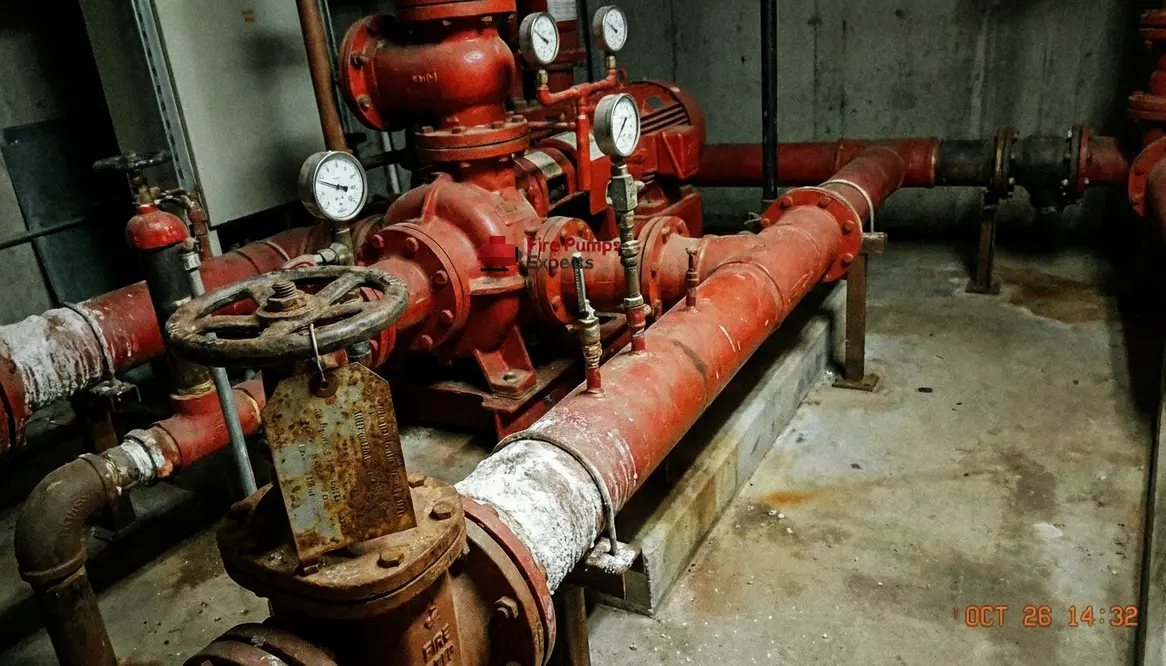
Environmental factors also play a role. Coastal air in San Diego carries salt, and salt has a talent for accelerating corrosion. Over time, that corrosion weakens key components.
Finally, testing gaps create blind spots. Without regular load testing, a system may appear functional but fail under real demand. It is the mechanical equivalent of saying you can run a marathon because you once jogged to the mailbox.
Fire pump backup failure San Diego risks for critical facilities
Critical facilities operate on a different level. Hospitals, data centers, manufacturing plants, and high rise commercial buildings cannot afford downtime. When a fire pump backup failure San Diego situation occurs in these environments, the consequences escalate quickly.
In healthcare settings, patient safety becomes the immediate concern. In data centers, even a minor fire event can disrupt operations that support thousands of users. Manufacturing plants may face production losses that ripple across supply chains.
Additionally, regulatory scrutiny increases. Inspectors expect redundancy systems to perform flawlessly. If they do not, operators may face penalties or forced upgrades under tight timelines.
And let’s be honest, no facility manager wants to explain to executives why a backup system failed during the one moment it was needed most. That is not a fun meeting.
How I identify early warning signs before failure hits
I always tell clients that systems rarely fail without leaving clues. You just have to know where to look.
Left side checks
- Unusual vibration during test runs
- Delayed startup response
- Fluctuating pressure readings
- Corrosion on visible components
Right side checks
- Battery voltage inconsistencies
- Controller fault history logs
- Irregular weekly test results
- Audible changes in pump performance
When I see these signs, I act immediately. Because while a system may still function today, tomorrow is not guaranteed. And in this line of work, hope is not a strategy.
How I prevent backup system failure in large buildings
Prevention is not complicated, but it does require discipline. I focus on consistency and detail.
First, I schedule routine testing under real conditions. Weekly no flow tests are not enough. Periodic full load testing ensures the system performs when it matters.
Next, I prioritize component level inspections. Controllers, batteries, valves, and sensors all need attention. Skipping small parts leads to big failures.
Then, I invest in predictive maintenance tools. Monitoring systems can track performance trends and alert teams before issues escalate.
Finally, I keep documentation tight. Records show patterns. Patterns reveal risks. And risks can be managed before they turn into headlines.
Think of it like keeping your car in shape. You would not wait for the engine to fail on the freeway. At least, I hope not.
FAQ: Fire pump backup systems in San Diego
When you are responsible for life safety systems, a single fire pump backup failure San Diego incident can feel like a career-defining moment. These questions come up constantly in facilities across the region.
If any of these answers make you think of your own equipment or testing records, that is the time to act, not the time to hope the next inspection or incident stays far away.
Stay ready so your system shows up when it matters
I have seen what happens when preparation meets opportunity. Things run smoothly. People stay safe. Businesses keep moving. And I have also seen the opposite, which is far less pleasant.
If you manage a commercial or industrial facility, now is the time to take a closer look at your system. Address risks early, test thoroughly, and maintain consistently. Because when the moment comes, your backup system should not hesitate. The difference between a controlled response and a headline-making incident often comes down to how seriously you treat the possibility of a fire pump backup failure San Diego scenario before it ever happens.
When your team, your tenants, or your patients are counting on that pump to start, you want to know—without a doubt—that the backup will be there. If you are not fully confident, schedule a detailed assessment, review your testing records, and tighten your maintenance plan. For deeper technical resources on fire pump reliability and standards, you can start with https://firepumps.org and then adapt best practices to the realities of your own building.