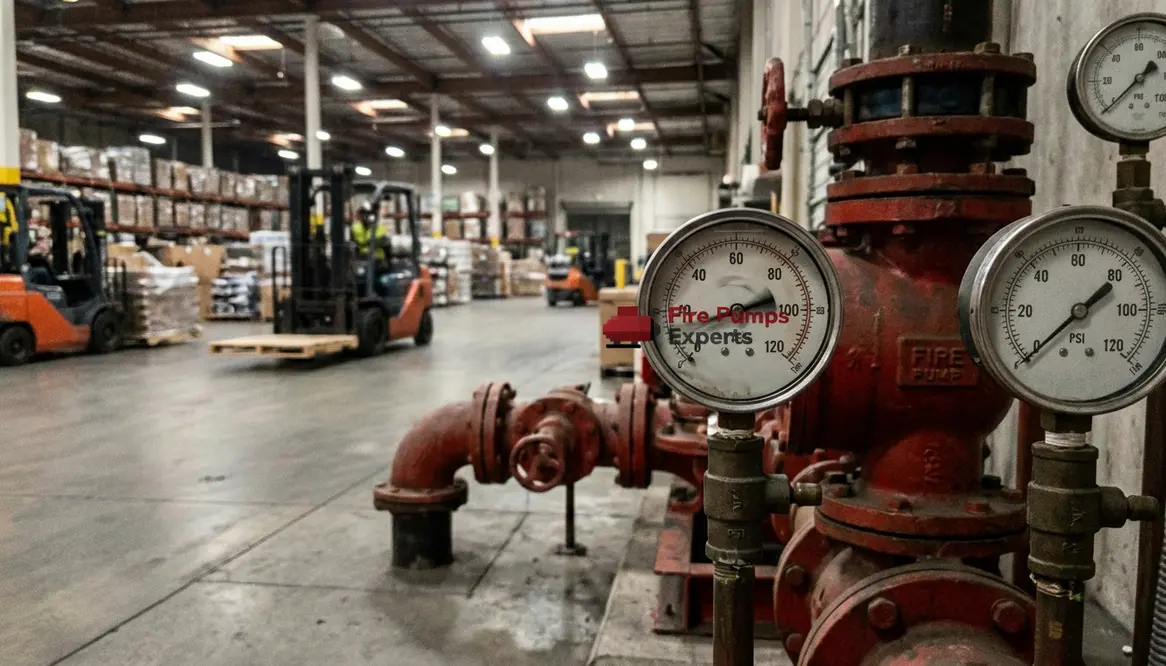
Fire Pump Pressure Fluctuation Fontana Warehouse Guide
I have spent years walking through large industrial sites, and I can tell you this with confidence. When a system designed to protect lives starts behaving unpredictably, it gets everyone’s attention fast. In high demand warehouses across Southern California, especially in places like Fontana, fire pump pressure fluctuation Fontana issues are not just technical quirks. They are warning signs. And yes, they tend to show up right when operations are at full speed, like a plot twist nobody asked for.
So let me walk you through what is really happening behind those gauges, why it matters, and how to keep your system steady when demand spikes.
What causes fire pump pressure fluctuation Fontana facilities experience during peak demand
In large warehouses, demand is rarely gentle. It surges. Conveyor systems hum, sprinkler zones activate in testing cycles, and water demand can spike without much warning. As a result, the fire pump reacts, sometimes a little too enthusiastically.
One major cause is variable demand within the system. When multiple zones draw water at once, pressure drops. Then, as demand decreases, pressure shoots back up. This constant push and pull creates fluctuation.
Another factor is improperly calibrated pressure relief valves. If they open too early or too late, they cause sudden shifts. I have seen systems behave like they are trying to dance to music that keeps changing tempo.
Additionally, aging infrastructure plays a role. Over time, wear inside pipes and valves restricts flow. Consequently, the pump works harder, leading to uneven pressure delivery.
How do high demand warehouses in Fontana stress fire pump systems
Let me paint the picture. A warehouse in Fontana is not a quiet storage space. It is a living system. Forklifts move constantly, inventory rotates fast, and fire protection systems must be ready at any second.
Because of this, systems are tested more often and pushed harder than in smaller properties. During peak operations, water demand can fluctuate rapidly. Therefore, pumps cycle more frequently, which increases wear and introduces instability.
Also, many facilities expand over time. New sections get added, but the original pump system may not be fully upgraded. So now, the pump serves a larger area than it was designed for. That mismatch creates pressure inconsistencies.
And let us be honest. Some systems run on settings that were last reviewed when flip phones were still cool. Not exactly ideal.
Mechanical and control system issues behind unstable pressure
When I troubleshoot these systems, I often find that the issue is not just demand. It is how the system responds to demand.
Mechanical causes
- Worn pump impellers reduce efficiency
- Air trapped in the system disrupts flow
- Check valves failing to seat properly
- Loose fittings causing minor leaks
Control system causes
- Poorly tuned pressure sensors
- Outdated controllers reacting too slowly
- Incorrect jockey pump settings
- Electrical inconsistencies affecting response time
While mechanical issues affect physical flow, control problems affect timing. And timing, in a fire protection system, is everything.
Moreover, when both types of issues occur together, pressure fluctuation becomes more pronounced. It is like trying to drive smoothly with both a faulty engine and a delayed steering wheel.
Signs your system is heading toward instability
I always tell facility managers to watch for early signals. Systems rarely fail without leaving clues.
If your pressure gauge needle moves more than usual, that is a sign. If your pump cycles on and off frequently, pay attention. Also, unusual noises, like vibrations or rattling, often indicate internal stress.
Another indicator is inconsistent test results. If your weekly or monthly tests show varying pressure readings, something is off. And yes, ignoring that is like ignoring a check engine light and hoping it fixes itself. Spoiler alert. It does not.
Preventing fire pump pressure fluctuation Fontana operations depend on
Stability is not an accident. It comes from consistent maintenance and smart system design.
First, I recommend regular calibration of pressure sensors and controllers. This ensures accurate readings and proper response. Then, inspect valves and replace worn components before they fail.
Additionally, review your system capacity. If your facility has expanded, your fire pump system should evolve with it. Otherwise, you are asking it to do more than it was built for.
Another key step is proper jockey pump configuration. When set correctly, it maintains baseline pressure and reduces strain on the main pump.
Finally, invest in professional testing. Not just routine checks, but deep diagnostics. Because sometimes the issue is not obvious until you look beneath the surface.
Why consistency matters more than peak performance
In fire protection, I am not chasing maximum output. I am chasing reliability. A system that delivers steady pressure every time is far more valuable than one that occasionally hits impressive numbers.
Consistency ensures sprinkler systems activate correctly. It protects inventory, infrastructure, and most importantly, people. And in high demand warehouses, that consistency becomes the backbone of safety.
Think of it this way. You do not want a superhero who only shows up when they feel like it. You want one who is always there, right on cue.
FAQ
Keep your system steady when it matters most
If you are managing a commercial or industrial facility in Fontana, do not wait for pressure issues to escalate. I have seen how small fluctuations turn into major risks when ignored. Take action now. Schedule a professional evaluation, fine tune your system, and ensure your fire protection performs exactly when needed. Because in this line of work, reliability is not optional. It is everything.
Whether you are already seeing fire pump pressure fluctuation Fontana teams are worried about or you are simply trying to stay ahead of problems, the time to stabilize your system is before alarms, not after.