Fire Pump Compliance New Jersey Guide for Owners
Fire Pump Compliance in New Jersey: What Commercial Property Owners Need to Know
I have seen it time and again. A building looks solid on the outside, tenants moving in and out, business humming along. Yet deep inside, the fire protection system tells a different story. When it comes to older building fire pump compliance, many commercial property owners in New Jersey assume everything is fine until an inspection says otherwise. And trust me, that moment feels less like a gentle reminder and more like a plot twist from a suspense movie.
So let me walk you through it. Calmly. Clearly. With just enough humor to keep us both awake.
Understanding Fire Pump Compliance in New Jersey
First, I like to ground things in reality. Fire pump compliance is not just a box to check. It is a requirement enforced by New Jersey fire codes, NFPA standards, and local authorities. In other words, this is not optional, even if your building has been standing since disco was king.
Moreover, compliance means your fire pump system must perform exactly as designed under pressure. That includes proper installation, routine testing, and documented maintenance. If one piece fails, the entire system can fall short. And unfortunately, fire does not offer second chances.
Because of that, I always remind property owners that compliance is less about paperwork and more about performance. Yes, inspectors want documentation. However, they care even more about whether your system can actually deliver water when it matters most. When you are dealing with older building fire pump compliance, that performance mindset becomes even more critical.
What Triggers Inspections And Compliance Reviews?
This is where things get interesting. In New Jersey, inspections are not random acts of chaos. They are triggered by specific events, and knowing them helps you stay ahead.
Left Column
- Annual fire inspections required by local municipalities
- Insurance audits and risk assessments
- System upgrades or renovations
- Changes in building occupancy or usage
Right Column
- Failed previous inspections
- Reported system issues or alarms
- Post incident evaluations
- Code updates affecting older systems
Now, here is the kicker. If your property falls into the category of aging infrastructure, those triggers show up more often. It is almost like the system is saying, “Hey, remember me? I need attention too.” When that aging infrastructure is tied to older building fire pump compliance, those “attention” moments can quickly become costly if you are not prepared.
How Older Systems Create Compliance Risks
Let me be direct. Older fire pump systems are not automatically non compliant. However, they do carry more risk. Components wear out. Standards evolve. Meanwhile, documentation tends to disappear like socks in a dryer.
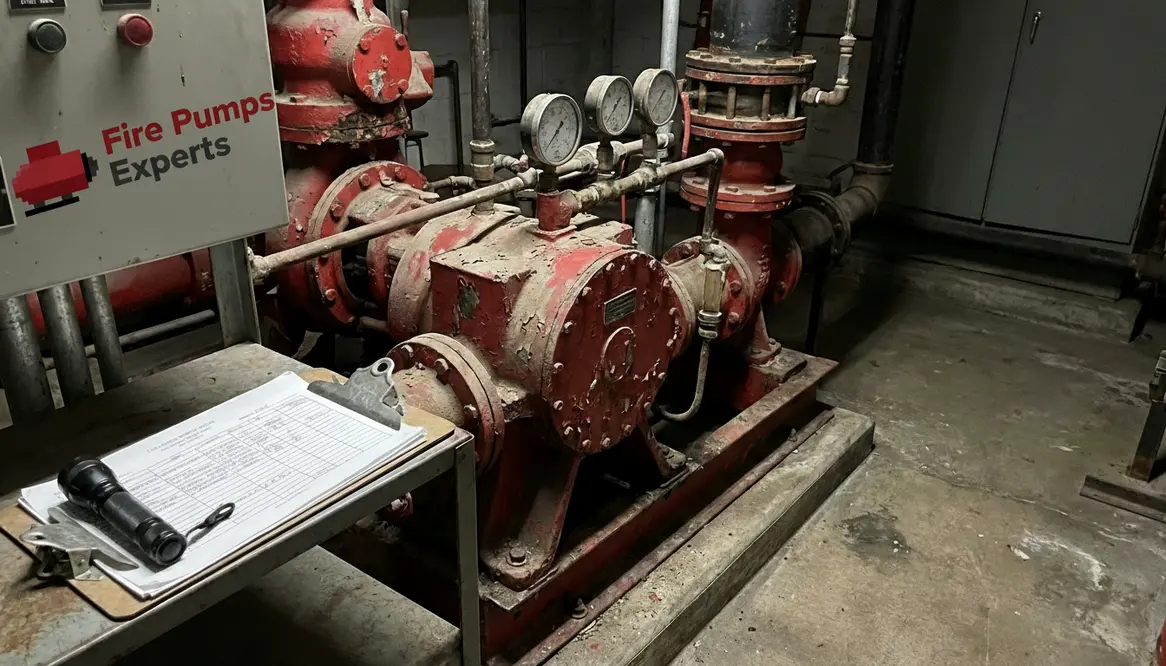
Because of that, older building fire pump compliance often requires a deeper review. I usually see issues like outdated controllers, insufficient pressure output, or missing test records. And yes, sometimes I open a panel and feel like I just stepped into a time capsule.
Additionally, many older installations were designed for different building uses. A warehouse from 1985 may now serve as a data center. That shift changes fire protection demands dramatically.
So, while the system may still run, it might not meet today’s expectations. That gap is where compliance problems begin. For New Jersey owners responsible for older building fire pump compliance, closing that gap early is the difference between a smooth inspection and a headache-inducing violation notice.
Key Requirements For Staying Compliant In NJ
Now let us talk about what actually keeps you on the right side of the rules. Fortunately, the path is clear if you follow it consistently.
- Routine testing including weekly churn tests and annual flow tests
- Accurate documentation that inspectors can review without a treasure hunt
- Preventive maintenance to catch issues before they escalate
- System upgrades when equipment no longer meets standards
Furthermore, I always stress consistency. Skipping one test may not seem like a big deal. However, over time, those gaps stack up. Eventually, they form a compliance issue that no amount of last minute scrambling can fix.
Think of it like going to the gym. One missed workout is fine. A year of missed workouts? That is a different story entirely. The same is true for older building fire pump compliance: the small, consistent actions are what keep everything on track.
Common Mistakes Commercial Property Owners Make
I say this with respect, but also with honesty. Many compliance issues are avoidable. Yet I keep seeing the same missteps.
For example, some owners rely too heavily on visual checks. If the pump looks fine, they assume it is fine. Unfortunately, fire pumps are not actors. They do not perform on appearance alone.
Others delay upgrades because the system still runs. I get it. Budgets matter. However, delaying necessary improvements often leads to higher costs later, especially when violations or emergency repairs come into play.
And then there is documentation. Or rather, the lack of it. Missing records can turn a compliant system into a failed inspection faster than you can say “Where did we put that report?” When inspectors are already paying closer attention to older building fire pump compliance, missing paperwork is like rolling out the red carpet for a citation.
Navigating Inspections Without The Stress
Here is the good news. Inspections do not have to feel like final exams you forgot to study for. With the right approach, they can be smooth and predictable.
First, I recommend scheduling internal reviews before official inspections. That way, you catch issues early. Next, work with professionals who understand New Jersey codes and commercial systems inside and out. This is not the time for guesswork.
Also, keep everything organized. Test reports, maintenance logs, upgrade records. When an inspector asks for documentation, you want to hand it over confidently, not dig through files like you are searching for buried treasure.
As a result, your building presents itself as well managed and compliant. And yes, inspectors notice that.
If you want support from a team that lives and breathes fire pump systems, you can explore services like the fire pump systems and inspection offerings from Kord Fire Protection to see what a structured, code-focused program looks like in practice.
FAQ: Fire Pump Compliance In New Jersey
Below are some of the questions I hear most often from New Jersey commercial property owners working through fire pump requirements and older building fire pump compliance.
Conclusion
When I look at fire pump compliance, I see more than rules. I see protection, reliability, and peace of mind. If your commercial property depends on an aging system, now is the time to act.
Stay ahead of inspections, keep your equipment in top shape, and partner with experts who understand New Jersey requirements. Reach out today and make sure your system is ready when it matters most. Because in this story, preparation is the hero.