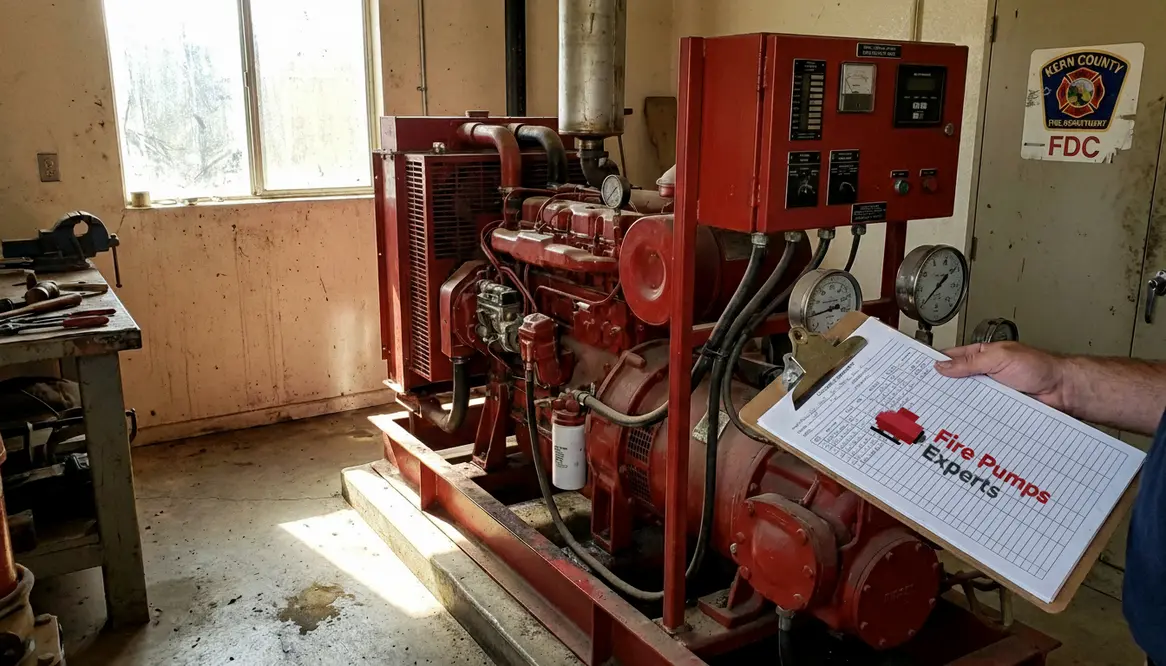
Kern County Fire Pump Maintenance and AHJ Approval
In Kern County, fire pumps live hard lives. Heat, dust, and long dry seasons do not care about your budget or schedule. If the system is neglected, it will remind you the loud way.
I have spent enough time around fire pump rooms to know one truth: they do not forgive neglect. In Kern County, where heat, dust, and long dry seasons team up like a villain duo from a summer blockbuster, keeping your system ready is not optional. It is survival. Right from the start, I tie everything back to the AHJ approval process. Because if your system cannot meet local authority standards, it does not matter how shiny it looks. It will fail when it counts. So, I treat compliance, inspection, and readiness as one continuous rhythm, not separate chores.
Why Kern County pumps misbehave
- High ambient temperatures cooking components all summer
- Dust finding every gap, vent, and moving part
- Long stretches of “everything seems fine” that tempt people to skip tests
- Documentation gaps that show up right when the AHJ walks in
How do I keep a Kern County fire pump ready all year?
I keep it simple. I stay consistent, and I never assume yesterday’s performance guarantees today’s reliability. First, I run weekly churn tests. Not because it is exciting, but because it reveals issues before they become disasters. Then, I monitor pressure, flow, and controller signals like a pilot watching instruments mid flight.
Also, I pay attention to the environment. Kern County dust gets everywhere. So I clean intake vents and check cooling systems regularly. Otherwise, that pump will overheat faster than a phone left on a dashboard in July. And trust me, nobody wants to explain that failure to a facility owner.
Finally, I document everything. Because when inspectors arrive, clean records speak louder than promises. They show discipline, and more importantly, they keep you aligned with compliance expectations and the AHJ approval process that ultimately decides if your system is trusted or questioned.
Core habits that keep the pump honest
- Weekly churn tests logged with time, readings, and observations
- Visual walk-throughs after dusty winds or heat waves
- Routine cleaning of vents, strainers, and room ventilation paths
- Quick reviews of alarms and controller history after every test
Seasonal maintenance that actually prevents downtime
Each season brings its own personality, and I adjust accordingly. During summer, I focus on cooling systems and fuel stability. Heat stresses components, so I check lubrication and battery strength more often. Meanwhile, in cooler months, I shift attention to moisture control and corrosion.
However, I do not just react to seasons. I prepare ahead. For example, before peak fire season, I run full flow tests and verify alarm integration. That way, I know the system can handle real demand, not just theoretical numbers on paper.
And yes, I have learned the hard way that skipping “just one check” is like skipping leg day. You think it is fine until everything collapses under pressure.
Summer focus points
- Verify room ventilation and pump cooling paths
- Check fuel condition and levels for diesel drivers
- Test batteries under load, not just at rest
- Look for heat-related wire and insulation damage
Cool-season focus points
- Hunt down condensation and early rust spots
- Check drains, sumps, and floor slopes near the pump
- Inspect jackets, heaters, and enclosures on outdoor equipment
- Confirm that valves and linkages still move freely
Staying aligned with AHJ approval process requirements
Now, let’s talk about the part many try to rush. The AHJ approval process is not just a checkbox. It is a structured review that ensures your fire protection system performs under real conditions. I stay aligned by keeping test schedules current, maintaining accurate logs, and verifying that every component meets code.
In addition, I coordinate with inspectors early. That way, I avoid last minute surprises. Because nothing ruins a week faster than a failed inspection right before occupancy or renewal deadlines.
Moreover, I treat every inspection as a rehearsal for an emergency. If something fails during review, it would fail during a fire. That mindset keeps me sharp and keeps facilities protected, especially when the AHJ approval process puts every weakness under a spotlight.
Practical ways to stay in step with your AHJ
- Use a calendar or CMMS to map out all required tests and inspections
- Keep test procedures aligned with standards your AHJ references
- Store reports, photos, and remediation notes in one easy-to-find spot
- Schedule pre-inspection walk-throughs so you catch issues before they do
When in doubt, I ask questions early. Clarifying expectations around the AHJ approval process costs nothing compared to shutdowns, re-tests, and the embarrassment of failing for something that could have been fixed with a phone call.
Smart monitoring and upgrades that pay off
Technology has made life easier, and I take full advantage of it. Remote monitoring systems allow me to track pump performance in real time. If pressure drops or a controller throws a fault, I know immediately. No guessing. No delays.
At the same time, I upgrade components before they become liabilities. Controllers, sensors, and even wiring degrade over time. Replacing them proactively costs less than dealing with a failure during an emergency.
And let’s be honest, upgrading a system feels a lot better than explaining to stakeholders why a decades old component decided to retire mid crisis.
What I check regularly
- Controller signals and alarms
- Fuel levels and battery health
- Pressure consistency during churn tests
- Valve positions and accessibility
What I upgrade strategically
- Outdated controllers
- Monitoring and alert systems
- Corrosion prone piping sections
- Backup power connections
If you want an outside reference, it is worth looking at how professional teams structure fire pump service and maintenance schedules. The closer your on-site habits are to that level of discipline, the smoother your next AHJ approval process will be.
Training teams so the system is never a mystery
A fire pump system is only as reliable as the people who manage it. So I make sure facility teams understand the basics. They know how to read gauges, respond to alarms, and identify warning signs.
Additionally, I run periodic drills. Not because I enjoy interrupting everyone’s day, but because practice builds confidence. When something goes wrong, hesitation disappears.
Besides, I would rather answer a dozen practice questions than one real emergency call at 2 a.m. Nobody sounds heroic half asleep explaining pressure loss.
Simple training wins that pay off fast
- Show teams where the main readings are and what “normal” looks like
- Walk through basic alarm responses and who to call first
- Practice finding and operating key valves without fumbling
- Review how to log tests so records are always inspection-ready
FAQ: Quick answers for busy facility managers
You do not need a textbook to keep a Kern County pump in shape, but you do need clear answers. These are the questions I hear most often from people juggling fire safety with the hundred other things on their plate.
Keep your system ready before it is tested
I approach fire pump readiness like a quiet promise. No drama. No shortcuts. Just steady attention and smart planning. If you manage a commercial or industrial facility in Kern County, now is the time to act. Review your system, tighten your processes, and stay ahead of inspections.
Because when the moment comes, your fire pump should not hesitate. And neither should you. Treat maintenance, records, and the AHJ approval process as part of one continuous discipline, and your system will return the favor when it is finally asked to perform.
Keep the pump room clean, keep the logs honest, keep the tests on schedule, and keep your people trained. Do that consistently, and your Kern County fire pump will be ready on the day it matters most.