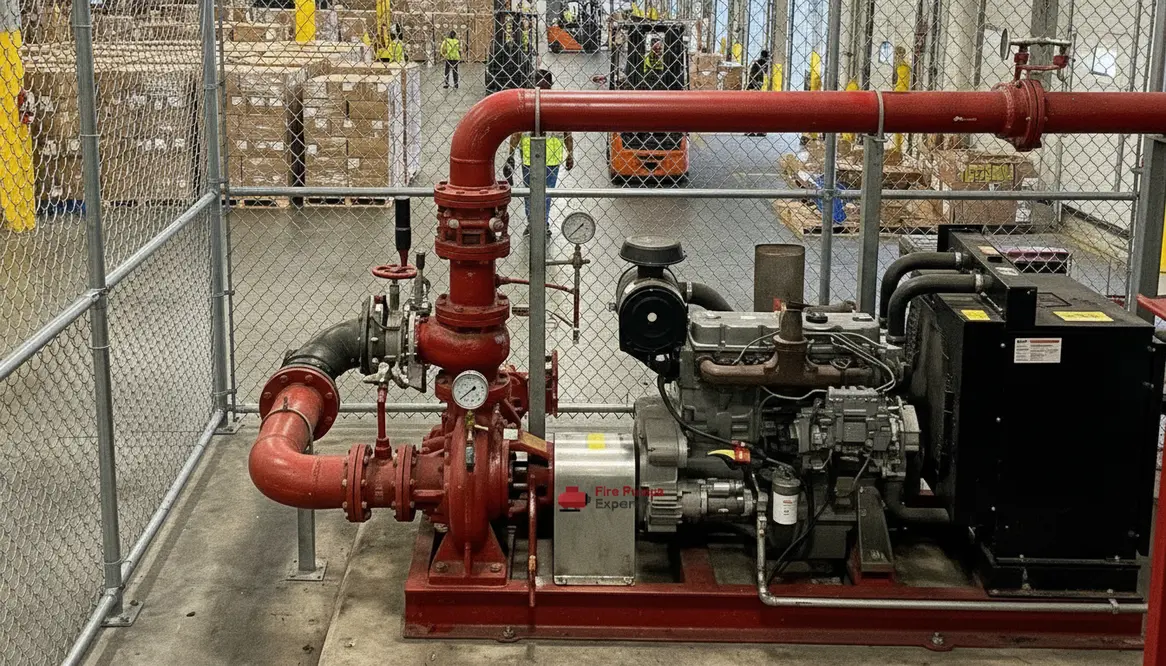
Fire pump design for high traffic logistics zones
How to keep fast-moving logistics operations safe without slowing them down.
I have walked through enough shipping and receiving centers to know one thing for certain. When everything is moving fast, risk moves faster. That is exactly where Fire pump design for high-traffic logistics zones steps in. It is not just another system tucked behind a wall. It is the quiet guardian that stands ready when sparks, heat, or human error decide to turn a busy dock into a crisis. And trust me, forklifts may look like they are auditioning for Fast and Furious, but they are not known for stopping fires.
So today, I am going to walk you through what really matters. Not fluff. Not theory. Just clear, grounded insight into fire pump requirements that keep large-scale logistics operations running safely and without interruption.
What fire pump requirements matter most in shipping and receiving centers?
Right out of the gate, let me answer this plainly. You need reliability, capacity, and compliance working together like a well-rehearsed band. If one is off, the whole show falls apart.
Why capacity comes first
Shipping hubs deal with constant movement, stacked goods, and high energy equipment. Therefore, fire pumps must deliver consistent pressure across large sprinkler systems. I always emphasize sizing first. If your pump cannot keep up with demand during peak flow, then it is just expensive decoration.
Redundancy and compliance
In addition, redundancy matters. Backup power sources such as diesel drivers or generators ensure operation during outages. Because let’s be honest, emergencies rarely wait for ideal conditions.
Finally, compliance with NFPA standards is non negotiable. It is not about paperwork. It is about making sure your system performs when seconds matter.
Designing for constant movement and high hazard zones
Now let’s talk about the real heartbeat of these facilities. Movement. Pallets in. Pallets out. Trucks docking. Equipment buzzing. This constant motion creates unique fire risks.
That is why Fire pump design for high-traffic logistics zones must account for fluctuating demand. Water supply cannot dip just because three sprinkler zones activate at once. I design systems that assume the worst day, not the average one.
Vertical fire spread in high racks
Moreover, high rack storage adds another layer. Fire can climb vertically faster than you expect. So, pump pressure must support upper level suppression without hesitation.
Designing for real human behavior
And then there is human behavior. People prop doors open. They stack goods too close to sprinklers. They take shortcuts. So the system must compensate for those realities instead of assuming perfect conditions. That is where Fire pump design for high-traffic logistics zones earns its keep.
How do I size a fire pump for a logistics warehouse?
I keep this simple. Start with hazard classification. Then calculate required flow and pressure based on sprinkler demand. From there, I factor in system losses such as pipe friction and elevation changes.
However, I do not stop at minimum requirements. I build in a safety margin. Because in real life, systems age, valves drift, and demand spikes.
Designing with tomorrow in mind
Also, I consider future expansion. Warehouses grow. Storage height increases. New equipment gets added. A pump that barely meets today’s needs will struggle tomorrow.
An easy way to think about sizing
Think of it like buying shoes for a kid. You do not buy the exact size. You leave room to grow. Same logic. Less complaining.
Key components that keep systems dependable
Core Equipment
- Electric or diesel fire pump drivers
- Jockey pump for pressure maintenance
- Controller panels with automatic start
- Dedicated water storage or municipal connection
Performance Essentials
- Stable pressure under peak demand
- Fast system response time
- Durable materials for long term use
- Easy maintenance access
Each piece plays a role. Remove one, and the system weakens. Ignore maintenance, and it becomes a liability. I have seen pristine systems fail simply because no one checked a valve in months. Not exactly the kind of surprise anyone enjoys.
Water supply challenges in large logistics facilities
Water is the lifeblood of any fire protection system. Yet in many shipping centers, supply is not as simple as turning on a tap.
When city water is not enough
Municipal systems may not provide enough pressure or volume during peak demand. Therefore, I often recommend on site storage tanks paired with robust pump systems.
Location and infrastructure realities
Additionally, location matters. Facilities in remote industrial zones face different challenges than those near urban infrastructure. So I tailor each approach accordingly.
And here is a truth people do not like to hear. If your water supply is weak, no amount of fancy equipment will save you. It is like trying to win a race with no fuel. You might look impressive at the start, but you are not finishing. That is why serious Fire pump design for high-traffic logistics zones starts with a hard look at supply.
Maintenance and testing keep everything honest
Even the best Fire pump design for high-traffic logistics zones needs regular attention. Weekly churn tests, annual flow testing, and routine inspections keep systems ready.
I always tell clients this. A fire pump is not a set it and forget it investment. It is more like a high performance engine. Ignore it, and it will fail at the worst possible time.
Moreover, testing reveals hidden issues. Pressure drops. Controller faults. Wear and tear. Fixing these early prevents costly downtime and potential disaster.
And let’s face it, discovering a problem during a scheduled test is far better than discovering it during an actual fire. That is not the kind of live demonstration anyone wants.
FAQ
Keep your operations moving and protected
When I look at a shipping and receiving center, I do not just see movement. I see risk, opportunity, and responsibility all packed into one space. A well executed fire pump system protects your people, your assets, and your uptime. If you are serious about safety and performance, now is the time to evaluate your system, upgrade where needed, and ensure everything runs as it should when it matters most.
If you want to benchmark your current setup against industry examples, resources like https://firepumps.org can provide useful reference points. But the heart of effective Fire pump design for high-traffic logistics zones is understanding how your specific operation moves, stores, and ships product, then building a system that quietly keeps pace every single day.