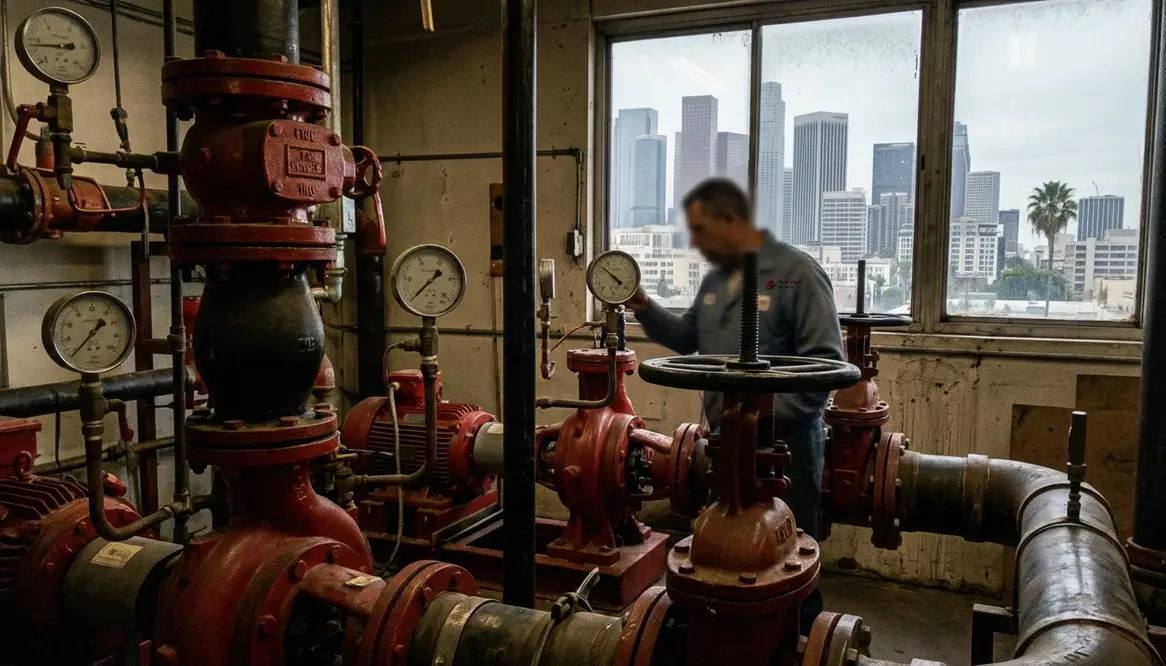
Fire Pump Discharge Instability Los Angeles Guide
I have spent years around large scale fire protection systems, and I can tell you this with calm certainty: when things go wrong, they rarely announce themselves with drama. Instead, they whisper. That is exactly how fire pump discharge instability Los Angeles tends to show up in multi zone systems across commercial and industrial properties. At first, it feels like a minor fluctuation. Then, quietly, it becomes a risk you cannot afford to ignore. And in a city where buildings stretch high and systems stretch thin, even a small inconsistency can ripple through an entire structure.
What Causes Fire Pump Discharge Instability in Multi Zone Systems in Los Angeles
I usually start here because causes shape everything that follows. Multi zone systems are complex by design. They serve different elevations, pressures, and demands all at once. As a result, instability often grows out of imbalance.
For instance, pressure regulating devices can fight each other without anyone noticing at first. Meanwhile, variable demand across zones creates inconsistent flow requirements. Add aging infrastructure or poorly calibrated sensors, and you have a system that behaves more like a moody orchestra than a disciplined unit.
Furthermore, Los Angeles introduces its own twist. Seismic considerations, high rise density, and retrofitted buildings all add layers of unpredictability. In other words, this is not a simple pump problem. It is a system wide conversation, and sometimes the pump is just the loudest voice.
How I Identify Pressure Fluctuations Before They Escalate
I like to think of instability as a story told in data. Therefore, I pay close attention to pressure trends rather than isolated readings. A single spike might mean nothing. However, recurring swings tell me the system is trying to compensate for something deeper.
In practice, I look for subtle signs. Flow meters that drift. Pressure drops that recover too quickly. Control valves that seem overly active. These are not random events. They are clues.
At the same time, I rely on system testing under real load conditions. Static tests only tell part of the story. Once the building demands water across multiple zones, the truth comes out. And yes, sometimes it feels like watching a reality show where every component has its own agenda.
Why Fire Pump Discharge Instability Los Angeles Demands Immediate Attention
I will be direct. Instability is not just inefficient. It is dangerous. When discharge pressure fluctuates, sprinkler performance becomes unpredictable. Consequently, some zones may receive less water than required during a fire event.
Moreover, repeated pressure swings place stress on equipment. Over time, seals wear out faster, valves degrade, and controllers struggle to maintain order. It becomes a cycle where instability feeds more instability.
In large commercial and industrial facilities, this is not a minor inconvenience. It is a liability. And if Hollywood has taught us anything, it is that ignoring warning signs never ends well. The difference here is that this is not fiction. It is your building, your system, and your responsibility.
What I Adjust First When Stabilizing a Multi Zone Fire Pump System
Control Settings
I begin with pump controllers and pressure set points. Fine tuning these often reduces unnecessary cycling.
Valve Coordination
Next, I ensure pressure regulating valves are not competing. They must work together, not like rivals in a drama series.
Sensor Calibration
Accurate data matters. Misreading sensors create false reactions across the system.
Flow Balancing
I balance demand across zones to prevent sudden pressure shifts.
System Testing
Then, I validate changes under real operating conditions, not just theoretical ones.
Maintenance Review
Finally, I assess wear and tear. Sometimes the issue is simply age catching up.
Each adjustment builds on the last. Therefore, I never rush the process. Stability is achieved step by step, not through guesswork.
Can Multi Zone Design Itself Be the Problem
Yes, and I say that without hesitation. Sometimes the design introduces complexity that the system struggles to manage long term. For example, improperly segmented zones can create overlapping pressure requirements. As a result, the pump constantly adjusts, never settling into a steady state.
However, redesign is not always the first answer. In many cases, strategic modifications can resolve the issue without major reconstruction. Still, when design flaws exist, they tend to resurface. It is like trying to fix a plot hole in a movie after release. You can patch it, but everyone still feels it.
Long Term Solutions That Actually Work in Los Angeles Properties
I focus on solutions that hold up over time, especially in large scale buildings. First, advanced control systems help manage pressure dynamically across zones. These systems respond faster and more accurately than older setups.
Additionally, regular performance audits keep systems aligned with current building demands. Buildings evolve. So should their fire protection systems.
Equally important, I emphasize coordinated maintenance. Pumps, valves, and controllers must be treated as a single system. Otherwise, improvements in one area may create problems in another.
In Los Angeles, where conditions and regulations continue to evolve, staying proactive is not optional. It is essential. If you are managing fire pump discharge instability Los Angeles in a multi zone setup, committing to long term strategy is the only way to avoid repeating the same problems every few years.
Why Local Experience Matters
Working on systems in Los Angeles is not the same as working in a quiet suburban warehouse. Local codes, inspection expectations, water supply behavior, and seismic requirements all shape how a multi zone system behaves when it is stressed. If you want to solve fire pump discharge instability Los Angeles issues, you need solutions that respect the way this city actually operates.
That is why collaboration with local fire protection engineers, AHJs, and experienced service teams pays off. The theory of hydraulics is universal, but the practical realities of a 30 story mixed use building with retrofits, tenant improvements, and evolving use patterns are very specific.
Fire Pump Discharge Instability Los Angeles And System Monitoring
One of the most overlooked tools for taming fire pump discharge instability Los Angeles facilities wrestle with is continuous monitoring. When data is only collected during annual or quarterly testing, the story you get is edited and incomplete. Real time or near real time monitoring exposes how the system behaves on a random Thursday afternoon, not just on test day.
Modern monitoring platforms allow teams to catch subtle drifts long before alarms ring. You can see when a valve starts chattering, a controller begins overcorrecting, or a zone’s demand pattern shifts as tenants change. That level of visibility turns instability from a surprise into a manageable maintenance item.
FAQ
Conclusion
If your facility shows signs of instability, now is the time to act. I help commercial and industrial properties bring order back to complex fire protection systems with precision and clarity. Reach out today, and together we will turn uncertainty into control, and risk into reliability.