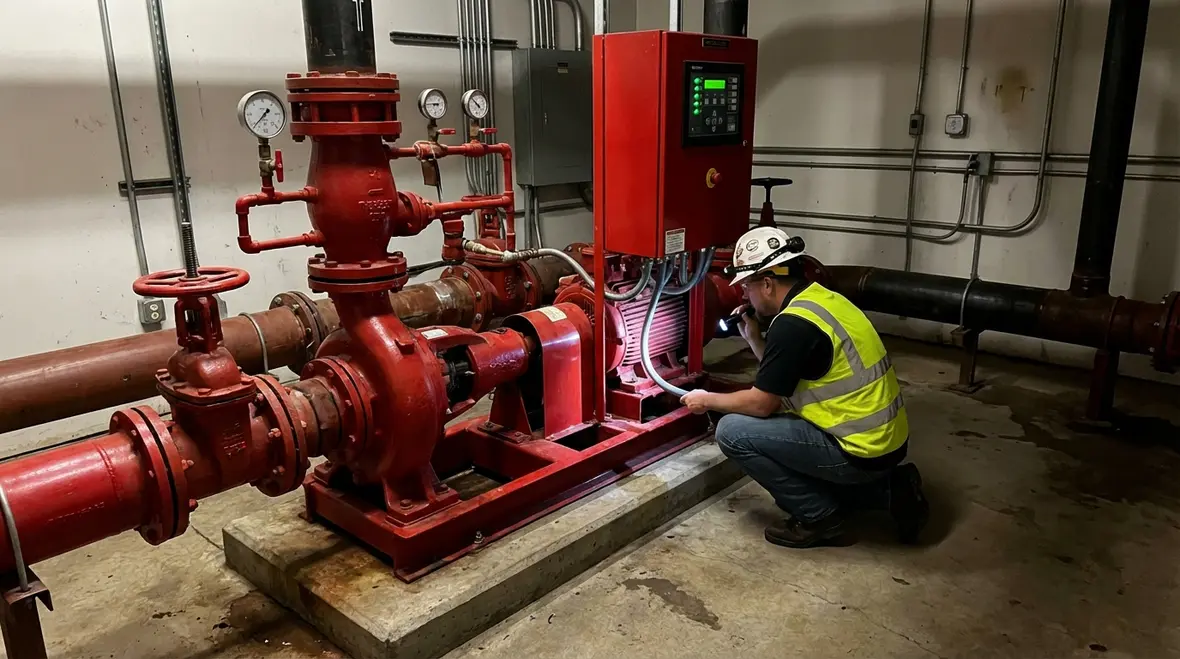
Fire Pump Failures During Fires and How to Prevent Them
Why Fire Pumps Fail During Emergencies
Now picture this: it’s 3 a.m., a fire alarm starts blaring, sprinkler systems kick in, and somewhere in the control room, someone finally hits the big red button. But instead of that confident hum of a fire pump coming to life—silence. Or worse, a weak cough and a mechanical fizzle. Yes, we’re talking about the dreaded fire pump failure during fire incidents—a surprisingly common nightmare for commercial and industrial property managers.
I’ve seen it more than a few times in my line of work, and believe me, it never ends with, “Whew, that wasn’t so bad.” When these systems fail, they fail hard—endangering lives, property, and your bottom line. Today, I’m pulling back the curtain and speaking in my best baritone (in text form, anyway) to guide you through what really causes these failures—and how we avoid them like bad 90s business advice.
So, let’s get into it. Slow and steady. Just like a seasoned pro walking into a boardroom.
Why Scheduled Maintenance Isn’t Just a Suggestion
Let me level with you: if your facility treats fire pump maintenance like flossing—something you “mean to do” but never quite get around to—it’s only a matter of time before things go sideways. And not the “fun concert selfie” kind of sideways.
Fire pumps aren’t weekend warrior gadgets sitting in your garage. They’re the muscle behind entire fire suppression systems in sprawling industrial plants, high-rise complexes, and asset-heavy environments where risk isn’t hypothetical—it’s Tuesday.
Miss a quarterly inspection? That pump could be seizing up with corrosion right now.
Skipped the annual full flow test? You might not even know your system has too much friction loss in the pipes until your sprinklers are barely dribbling like that one soda machine with trust issues.
Maintenance matters. It’s the foundation upon which reliability is built. Set a serious schedule—and stick to it like Mike Tyson to a training camp. You won’t regret it.
Maintenance Practices That Actually Work
- Document a quarterly inspection routine with clear checklists for pumps, controllers, and valves.
- Schedule and log annual full flow tests performed by qualified technicians.
- Coordinate inspections with your broader life safety testing calendar so nothing slips through the cracks.
- Use findings from each test to create a corrective action list with deadlines and owners.
How Electrical Failures Kill the Hero Before the Battle Starts
Imagine if Superman had to stop and change his batteries every time trouble broke out. That’s what it’s like when your fire pump’s electrical system isn’t up to par. One voltage dip and—poof!—your backup hero just ghosted you when you needed him most.
Now, let’s get technical but not snooze-worthy. Fire pumps—especially electric motor-driven ones—demand a steady, reliable power source. If your facility’s emergency generators aren’t up to the load, or if your transfer switch is slower than a dial-up modem, you’ve got a serious Achilles’ heel.
Also, fun fact: rats love chewing on wires. That’s not a metaphor; it’s a budget-eating problem in a surprising number of facilities. If you’re not guarding your electrical infrastructure like it’s Area 51, go ahead and schedule that disappointment.
Pro Tip: Your electrical systems need the same nurturing attention as the pump itself. Keep the flow of juice clean, test your backup systems quarterly, and never assume “it was working last year” means anything today.
Electrical Reliability Checklist
- Verify emergency generators are sized for fire pump starting current and running load.
- Exercise automatic transfer switches under load and confirm transfer times are within spec.
- Inspect wiring, conduits, and terminations for damage, overheating, or rodent activity.
- Test phase balance, voltage, and power quality at least annually.
Diesel-Fueled Delays and Mechanical Mayhem
I get it. The idea of a diesel fire pump humming to life in the middle of a fire sounds like Vin Diesel growling, “Let’s ride,” in a Fast & Furious sequel. Unfortunately, when neglected, that diesel engine could turn into Jar Jar Binks—confused, unprepared, and embarrassingly unreliable.
Fire pump failure during fire incidents is often traced back to diesel engines that were:
- Started once in 2020… maybe
- Fuel tanks filled with algae-contaminated diesel (because of water condensation)
- Sporting battery cables that haven’t been touched since Nirvana topped the charts
Your diesel fire pump is only as reliable as your entire support system. That includes batteries, starters, cooling systems, and yes, fuel purity. Test your setup weekly (yep, weekly), change out that fuel on a schedule, and make sure everything gets fire-tested under load like a space shuttle launch. Because in high-risk commercial buildings, this isn’t just optional—it’s essential.
Diesel Fire Pump Best Practices
- Run weekly test starts long enough to reach normal operating temperature.
- Sample and polish diesel fuel on a defined schedule to prevent microbial growth.
- Replace batteries and critical cables proactively, not only when they fail.
- Inspect cooling systems, exhaust, and ventilation paths for blockages or leaks.
When System Design Sets You Up for Failure
Here’s where things get spicy. Sometimes, the system isn’t broken because it aged out. It failed because it was poorly designed from the jump. Like a reality show that never had a chance, your fire pump configuration could be doomed from the start.
Common design sins I’ve seen include:
- Pumps undersized for the actual square footage or sprinkler demand curves
- Suction piping with too many elbows and not enough laminar flow (yep, flow matters)
- Controllers located in switch rooms that are vulnerable to the same fire risks as the rooms they’re supposed to protect
It’s like setting your antivirus software password to “1234” and hoping for the best. In high-value industrial or commercial real estate, one miscalculation can be the difference between business-as-usual and a smoldering loss report.
Fix it? Start with a full hydraulic review. Get pros who live and breathe NFPA 20 compliance and modern pump tech. And for the love of everything flammable, stop using 20-year-old blueprints like they’re gospel.
Design and Retrofit Moves That Reduce Risk
- Recalculate demand using current occupancy, hazard classifications, and sprinkler layouts.
- Reconfigure suction piping for smooth flow and adequate straight runs into the pump.
- Relocate or protect controllers and critical gear in low-risk, accessible locations.
- Consider guidance such as NFPA 20 and modern best practices when upgrading fire pump systems or adding features like anti-vortex plates and pressure maintenance solutions.
Real-Time Monitoring and Alarms: Why Your Pump Can’t Ghost You
“But I didn’t know it failed until it didn’t work.” Yeah. That’s kind of the problem. We live in a world where your refrigerator knows what you had for dinner, but your fire pump somehow can’t tell you it’s operating at 60% of required pressure?
Fire pump controllers and systems with built-in monitoring and alert capabilities are no longer “nice to haves.” These are your 24/7 eyes and ears, giving you real-time diagnostics and predictive alerts before things go full disaster movie. Think of it like having Jarvis for your fire system—except less snarky, more reliable.
Oh, and make sure someone’s actually checking those alerts and performing actions based on them. Otherwise, you’re just paying for cool lights and ignoring the rave in your pump room.
Smart Monitoring That Makes a Difference
- Integrate fire pump status points into your building management system or fire alarm network.
- Track trends in start frequency, run duration, pressure, and temperature to catch problems early.
- Set escalation rules so critical alarms reach on-call staff, not just a forgotten inbox.
- Conduct periodic “monitoring drills” to confirm that alerts are received, understood, and acted on.
What Goes Wrong
- Corroded pump parts due to stagnant use
- Electrical supply hiccups
- Diesel fuel contamination
- Sizing and design errors
- No live alerting or diagnostics
What to Do About It
- Test monthly, flow annually, and lubricate bearings on schedule.
- Check transfer switches, verify generator capacity, and clean power feeds.
- Polish the fuel, inspect tanks, and replace aged batteries before they fail.
- Commission a hydraulic model review and update your system layout as needed.
- Install modern monitoring, integrate alarms, and train your staff on response.
How Do I Prevent Fire Pump Failure in My Commercial Facility?
Here’s the golden playbook, friends: build a culture of active readiness. This includes scheduled testing (monthly churns and yearly full fire tests), training onsite teams, upgrading old hardware, syncing all electrical and diesel systems, and embracing smart monitoring tools. Top-tier commercial and industrial facilities don’t just rely on code—they go beyond compliance and actually care about proactive performance.
Because when the stakes are tied directly to property worth millions… “close enough” won’t cut it.
Building a Fire Pump Reliability Program
- Create a written fire pump testing and inspection program aligned with NFPA 25 schedules.
- Train facilities, operations, and safety teams on what “normal” looks like in your pump room.
- Partner with a specialized provider for routine fire pump inspections and periodic deep dives on system performance.
- Review results annually and budget for upgrades before failures force your hand.
FAQs
Conclusion: Don’t Gamble With the Unthinkable
When the flame hits the fan—literally—you don’t want your fire pump clearing its throat. Be the facility that’s ready, resilient, and respected. Audit your systems, test like it’s a sport, and never assume silence means safety. Connect with firepumps.org and keep your commercial or industrial fortress unburnt and unbothered.