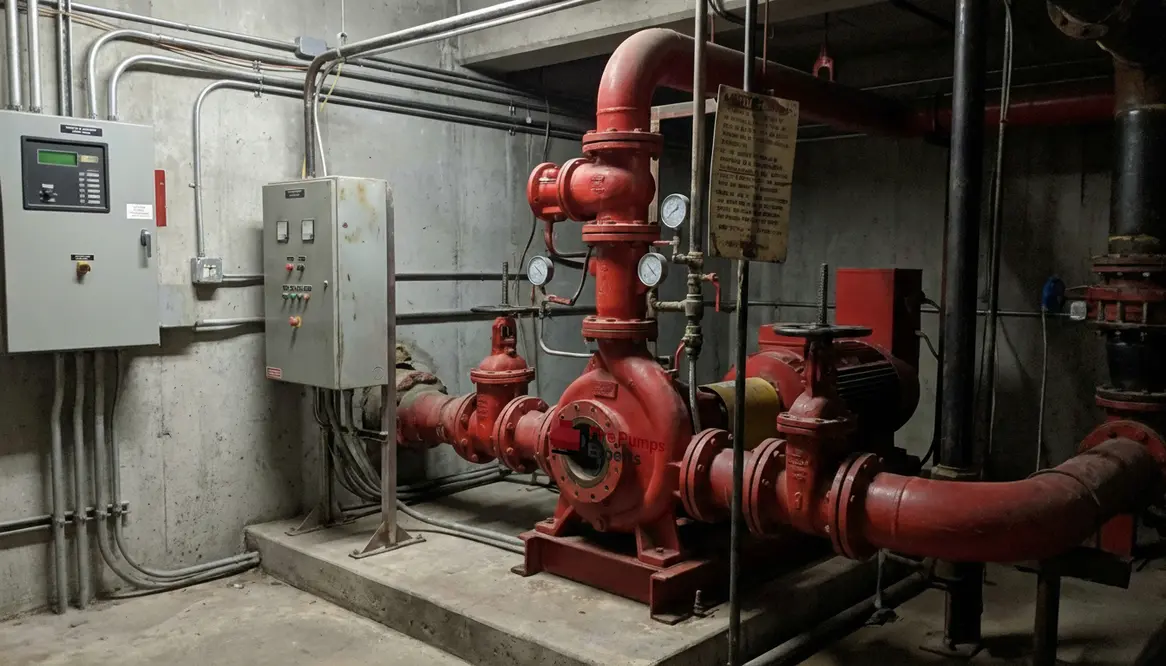
Fire Pumps in Multi Tenant Building Fire Protection
In large commercial properties, fire pumps rarely make the tour. They sit in their quiet room, humming away during tests, forgotten during the workday. But when you’re talking about multi tenant building fire protection, they are the difference between a sprinkler system that performs and one that just looks impressive on a drawing set.
I have walked through enough large commercial properties to know one thing for certain. When it comes to multi tenant building fire protection, fire pumps are not the flashy hero. They are the quiet, steady heartbeat behind the walls. Yet without them, even the most advanced sprinkler system is just a collection of pipes hoping for the best. And hope, as I like to say, is not a fire strategy. So let me take you through why these machines matter more than most people realize, and why ignoring them is a bit like bringing a water pistol to a dragon fight.
Why fire pumps deserve more respect
Sprinkler heads and shiny risers get the attention, but the pump room is where real performance lives. When the pump starts, the building either has the pressure it needs or it does not. There is no in-between.
What makes fire pumps essential in large commercial buildings?
I will answer this plainly. Fire pumps ensure that water moves with enough pressure and consistency to actually stop a fire. In sprawling commercial and industrial properties, municipal water supply often falls short. That is where fire pumps step in.
Without them, water may reach the system, but not with the force needed to control flames across multiple floors or tenant spaces. And in multi occupancy environments, delays are not just inconvenient. They are costly and dangerous.
Pressure where it actually matters
Moreover, I have seen systems that looked impressive on paper fail in real scenarios simply because pressure was inconsistent. A fire pump removes that uncertainty. It delivers reliability, which in this business is everything.
Beyond code minimums
Multi tenant building fire protection is not just about satisfying inspectors. It is about making sure water shows up with authority when a single sprinkler head opens on the 18th floor at 2:17 a.m. There is no bonus round if the pump does not deliver.
How fire pumps support multi tenant building fire protection
Now, let us talk about scale. Multi tenant properties are complex ecosystems. Different businesses. Different layouts. Different fire risks. Yet all of them rely on a single coordinated system.
Fire pumps act as the central force that keeps that system unified. They balance demand across zones, ensuring that one tenant’s emergency does not drain resources from another. That is a big deal.
Additionally, these systems adapt to varying loads. During peak demand, they maintain pressure without hesitation. During low demand, they remain ready without wasting energy. It is a bit like having a seasoned orchestra conductor who never misses a cue.
All of that makes fire pumps the backbone of multi tenant building fire protection: quiet, unseen, but absolutely central to whether dozens of different occupants can count on the same system during the same chaotic five minutes.
Where do fire pumps make the biggest difference?
Let me paint a quick picture. A high rise office tower with retail below. A logistics hub with multiple tenants moving goods day and night. These are not small scale operations.
High demand zones
Fire pumps ensure upper floors receive adequate pressure, even when gravity works against us.
Mixed use risks
Different tenants bring different hazards. Pumps keep protection consistent across all.
Large floor plates
They push water across wide spaces where standard supply would weaken over distance.
Emergency reliability
They activate instantly, reducing response time when every second counts.
So yes, while the system may look like a network of pipes and valves, the fire pump is the muscle behind it all.
The hidden cost of neglecting fire pump systems
I will be blunt here. Ignoring fire pump maintenance is expensive. Not immediately, perhaps. But eventually, and often dramatically.
When a fire pump fails, the consequences ripple across tenants, operations, and liability. Business interruptions multiply. Insurance complications follow. And suddenly, what seemed like a minor oversight becomes a headline.
Furthermore, inspections are not just regulatory checkboxes. They reveal wear, inefficiencies, and early warning signs. Skipping them is like ignoring a check engine light because the car still moves. Technically true. Strategically unwise.
I have also noticed that well maintained systems tend to last longer and perform better under stress. That is not luck. That is discipline.
How I approach selecting the right fire pump system
Choosing a fire pump is not about picking the biggest or most expensive option. It is about alignment with the building’s specific demands.
I look at flow requirements, building height, tenant types, and system layout. Then I consider redundancy. Because in critical infrastructure, backup is not optional. It is expected.
Design that respects reality
Additionally, I pay attention to integration. A fire pump must work seamlessly with alarms, sprinklers, and control systems. If they do not communicate properly, the entire system loses effectiveness.
Why specialists matter
And yes, I always recommend working with specialists who focus on commercial and industrial properties. This is not a place for guesswork or generic solutions. If you are dealing with multi tenant building fire protection, you want people who have seen what happens when assumptions meet reality.
If you need a deeper look at how standards shape proper pump design, installation, and testing, resources like the overview of NFPA 20 fire pump requirements from Kord Fire at https://kordfire.com/how-nfpa-20-regulates-fire-pump-systems/ are worth your time.
Why modern fire pumps are smarter than ever
Technology has changed the game. Today’s fire pumps are not just mechanical devices. They are intelligent systems.
They monitor performance in real time. They adjust to demand automatically. They even alert teams before issues become failures. It is like having a very vigilant security guard who never sleeps and does not ask for coffee breaks.
As a result, property managers gain visibility and control. And in large scale environments, that kind of insight is invaluable. It also tightens the whole strategy around multi tenant building fire protection, because you are no longer guessing how the pump behaves between inspections – you are watching it.
Key questions about fire pumps in multi tenant buildings
If you are responsible for multi tenant building fire protection, certain questions come up again and again. Here are the plain, practical answers.
Final thoughts and next steps
If you manage or own a large commercial property, I would not treat fire pumps as an afterthought. They are central to keeping people, assets, and operations safe. Invest in the right system, maintain it with care, and partner with experts who understand complex properties. When everything works as it should, no one notices. And honestly, that is the best outcome you can hope for. Quiet reliability is the real hero here.
In other words, treat the pump room as the heart of your multi tenant building fire protection, not as some forgotten corner you only visit on inspection day. When the alarm sounds and water starts to move, you will be glad you did.