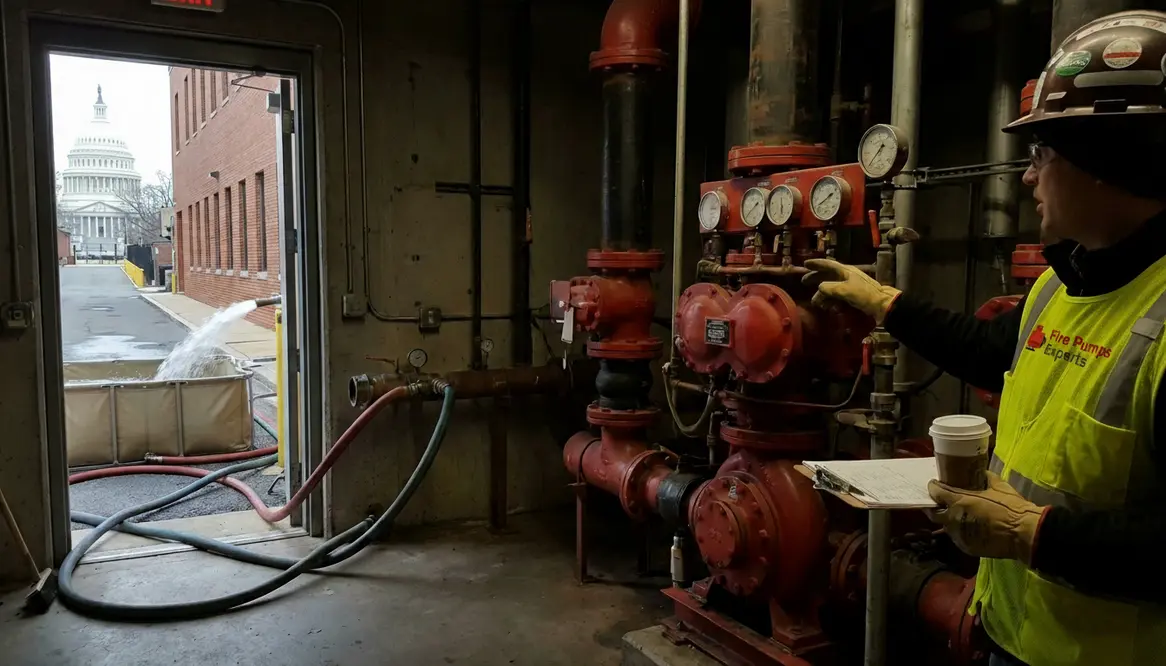
Fire Pump Flow Test Washington DC and Standpipe Testing
I have spent a fair number of mornings standing beside a roaring fire pump in Washington, DC, coffee in one hand and a clipboard in the other, listening to the steady rhythm of machinery that stands between a building and disaster. When people ask how we approach a fire pump flow test washington dc coordinate standpipe testing, I tell them it is a bit like conducting an orchestra. Every component must play its part at the right moment. If the pump pushes water but the standpipe system cannot deliver it to firefighters on the upper floors, the performance falls flat. And in a city filled with commercial towers, federal buildings, hospitals, and data centers, we do not have the luxury of missed notes.
Therefore, coordinating pump testing with standpipe verification is not just a compliance box to check. It is the difference between theory and proof. And frankly, when thousands of occupants depend on that system working flawlessly, proof matters more than paperwork.
Why I Coordinate Fire Pump and Standpipe Testing in Large DC Buildings
Commercial and industrial properties across Washington rely on fire pumps to move water through sprinkler and standpipe systems with serious pressure. However, a pump alone tells only half the story. If I run a pump test without evaluating the standpipe network that carries water up stairwells and across floors, I learn very little about real world performance.
So I coordinate both.
First, a pump flow test measures the pump’s ability to deliver water at specific pressures and volumes. Meanwhile, standpipe testing confirms that firefighters can actually receive that water where they need it. When we combine them, we simulate the conditions of a real fire event. That coordination reveals problems that isolated tests might miss.
For example, I have seen standpipe valves that looked fine on inspection yet choked flow during a full demand test. In another building, the pump delivered excellent pressure but friction loss through aging piping reduced flow on the upper floors. Individually, each system appeared functional. Together, they told a different story.
Moreover, DC buildings often rise high enough that gravity and friction become real enemies. Pumps must overcome both. Therefore, a coordinated evaluation shows whether the system truly protects the structure from basement to rooftop mechanical penthouse.
Fire Pump Flow Test Washington DC Coordinate Standpipe Testing: How I Plan It
Planning is where the real craft lives. Anyone can open valves and watch gauges. Coordinating testing across a large property requires strategy.
First, I study the building layout and hydraulic design. High rise office towers, federal campuses, manufacturing sites, and hospitals all present different challenges. For instance, a hospital may run critical equipment around the clock. Therefore, I schedule testing windows that limit operational disruption while still delivering accurate results.
Next, I map out the testing sequence. The goal is simple. Create realistic water demand while measuring both pump output and standpipe performance.
Typical coordination during a fire pump flow test washington dc coordinate standpipe testing
- Running the fire pump at churn, rated, and peak demand
- Opening hose valves on upper floors to simulate firefighter flow
- Recording pressure at pump discharge and standpipe outlets
- Comparing results against design requirements and NFPA benchmarks
Meanwhile, I keep a close eye on system behavior. Pressure fluctuations, vibration, and delayed pump response can all signal deeper issues. Think of it like listening to an engine. A mechanic hears a subtle knock long before the driver notices anything wrong.
And yes, sometimes the pump room sounds like a jet engine warming up. If Tom Cruise suddenly appeared in aviator sunglasses, I would not be completely shocked.
What Building Engineers Usually Ask Me During a Test
How does a coordinated test reveal hidden system problems?
When we perform a fire pump flow test washington dc coordinate standpipe testing, we stress the entire system simultaneously. As a result, weaknesses appear quickly. A partially closed valve, undersized pipe segment, or aging pressure reducing valve might restrict flow only under high demand. Coordinated testing exposes those restrictions.
Will the test disrupt building operations?
Usually, disruption stays minimal. However, I always coordinate with facility managers and life safety teams. Some buildings schedule testing early in the morning or during low occupancy hours. Moreover, careful planning ensures the fire protection system returns to full service immediately after the test.
Why does DC require careful planning for water discharge?
Because Washington is dense. Water from a pump test can reach impressive volumes. Therefore, I route discharge through approved test headers or diffusers to protect nearby infrastructure. No one wants a surprise urban waterfall in front of a federal office building.
Inside a Coordinated Test Day
Before the Pump Starts
- Confirm building fire alarm monitoring
- Inspect pump controller status
- Verify valve positions across the standpipe network
- Install calibrated gauges and flow meters
- Coordinate with building operations teams
During the Flow Test
- Run pump at churn and record baseline pressure
- Open test headers and standpipe outlets
- Increase flow to rated capacity
- Monitor pressure drop across the system
- Document performance at peak demand
As the test progresses, the pump roars to life and water moves with serious authority. Meanwhile, technicians measure readings at multiple locations throughout the property. The process may look simple from the outside. However, each measurement tells part of the system’s story.
If pressure remains stable and flow meets design expectations, everyone breathes easier. If not, the data shows exactly where to investigate next.
Fire Pump Flow Test Washington DC Coordinate Standpipe Testing for Compliance and Real World Safety
Code compliance matters. Yet real world performance matters even more.
Washington, DC follows NFPA standards for fire pump testing and standpipe system verification. However, codes establish minimum expectations. My goal during a fire pump flow test washington dc coordinate standpipe testing is to confirm the system performs beyond minimum thresholds.
Large commercial properties often contain complex fire protection infrastructure. High rise standpipes may include pressure reducing valves, multiple pump stages, and cross connected sprinkler zones. Consequently, a small imbalance can cascade through the system.
Therefore, coordinated testing allows us to observe the full hydraulic chain. The pump produces pressure. The piping distributes it. The standpipe outlets deliver it to firefighters. When all three elements operate together, the building truly earns its protection.
Besides, firefighters trust these systems during the worst possible moments. If they connect a hose on the 20th floor, they expect water that arrives with strength and reliability. Anything less puts lives at risk.
That responsibility tends to keep everyone focused.
For owners and engineers who want a deeper dive into pump performance expectations, NFPA 20 is the key reference. A practical overview lives here: NFPA 20 fire pump design, installation, and compliance guidance, which pairs well with the hands-on realities of coordinated testing in Washington, DC.
Lessons I Have Learned from Testing Major DC Properties
After years of evaluating systems across government buildings, hospitals, universities, and commercial towers, a few patterns always appear.
- Coordination prevents surprises. Separate tests often hide system interaction issues.
- Documentation matters. Accurate records allow engineers to track performance trends over time.
- Older buildings require closer attention. Age slowly changes hydraulic behavior.
- Communication with facility teams ensures safety and efficiency.
Moreover, testing often reveals opportunities for improvement. Sometimes that means adjusting pressure reducing valves. Other times it means replacing aging components before they fail.
And occasionally, the system performs beautifully. Those are the days when the pump hums like a well tuned bass note and everyone nods with quiet satisfaction.
FAQ: Fire Pump and Standpipe Testing in Washington DC
Keeping DC Buildings Ready When It Matters Most
When I perform a fire pump flow test washington dc coordinate standpipe testing, I am not just measuring pressure and flow. I am confirming that a building can defend itself when the unexpected arrives. If you manage a commercial tower, hospital, campus, or industrial facility in Washington, now is the time to verify your system performs exactly as designed. Schedule a coordinated evaluation and ensure your fire protection infrastructure stands ready for the moment it is needed most.