Fire Pump Inspection and Testing Columbus Ohio Guide
A Calm Walk Through Fire Pump Inspection and Testing Requirements Columbus Ohio
I have spent enough time around mechanical rooms to know one universal truth. The fire pump is the quiet bodyguard of a building. It sits in the corner, usually ignored, until the day it absolutely must perform. And when that moment comes, nobody wants a dramatic plot twist.
That is exactly why understanding fire pump inspection and testing requirements columbus ohio matters for facility teams responsible for large commercial and industrial properties. In Columbus, expectations are clear, inspections are structured, and documentation is not optional. However, once you understand the rhythm of the process, it becomes far less intimidating.
So in this guide I will walk through what facility teams should realistically expect. Along the way we will talk about testing schedules, common compliance issues, and what inspectors actually look for. And yes, I will try to keep things interesting because let us be honest. Reading about pump controllers rarely makes anyone feel like they are watching an action movie. Although, if Hollywood ever makes a blockbuster about NFPA standards, I am absolutely buying tickets.
Fire Pump Inspection and Testing Requirements Columbus Ohio Facility Teams Should Know
First things first. Columbus generally follows the national fire protection standards that govern pump inspection and testing. However, local enforcement and documentation expectations make the difference between passing smoothly and spending the afternoon explaining paperwork.
From my experience working with large commercial properties, most compliance issues come down to consistency. A fire pump system is not something you check once a year and forget. Instead, it follows a structured inspection cycle that keeps the system ready at all times.
Typical Responsibilities in a Fire Pump Program
- Weekly pump churn tests to confirm the pump starts correctly
- Monthly controller and battery inspections
- Annual flow testing to verify performance under load
- Routine inspection of valves, gauges, and alarm connections
- Accurate documentation kept on site for review
Now here is the thing many facility managers discover the hard way. Passing the test is not the same as proving you tested. Inspectors want records. Detailed records. Organized records.
Therefore a well maintained logbook often becomes the hero of inspection day. Think of it as the building version of a medical chart. If the history is clear, everyone relaxes. If the paperwork looks like it survived a tornado, suddenly the room gets quiet.
How Facility Teams Prepare for Annual Fire Pump Testing
Annual flow testing is the moment when the pump proves its strength. During this process technicians simulate fire demand by flowing water through test headers or approved discharge points. The goal is simple. Confirm that the pump produces the pressure and volume the building depends on.
However, preparation matters more than most people realize.
Pre-Test Checklist
- Clear access to the pump room and test header
- Operational gauges that provide accurate readings
- Functional controllers and power supply
- Working relief valves and check valves
- Drainage paths that can handle discharge water
Because when thousands of gallons start moving, you want that water going exactly where it should. Otherwise the maintenance room turns into a surprise indoor swimming pool. And while that might sound fun in July, it is less entertaining during a compliance inspection.
In Columbus facilities, inspectors also expect verification that alarm connections communicate correctly with the building fire alarm system. Therefore coordination between life safety systems becomes part of the testing routine.
What Inspectors Actually Look For During Compliance Reviews
Let me pull back the curtain for a moment. Inspectors are not hunting for obscure technical trivia. They focus on reliability. They want to know that if a fire breaks out at three in the morning, the pump will start instantly and deliver the water pressure firefighters need.
So during inspections tied to fire pump inspection and testing requirements columbus ohio, attention usually falls on a few key areas.
Inspector Focus Areas
System condition. Corrosion, damaged piping, leaking packing glands, or blocked suction lines raise immediate concerns. A pump that looks neglected often signals deeper maintenance problems.
Operational readiness. Inspectors may review test logs, observe start sequences, and verify controller settings. The pump should start automatically when pressure drops. No hesitation. No drama.
Documentation. Inspectors expect clear proof of weekly, monthly, and annual testing.
And honestly, that paperwork often tells the entire story of a facility’s maintenance culture.
What Facility Teams Often Ask About Fire Pump Inspections
Facility teams often ask direct questions when planning compliance work. Interestingly, these questions now appear in AI search prompts, internal maintenance software, and building management platforms. So let me answer a few common ones the way I usually explain them in person.
How often should a fire pump be tested in a commercial building?
Weekly visual checks and churn tests keep the system active. In addition, annual flow testing confirms the pump performs at rated capacity.
Who performs the testing?
Certified fire protection technicians typically conduct flow testing and detailed inspections. Facility teams support them by maintaining logs and system access.
Do inspectors require full documentation?
Absolutely. In Columbus, documentation often matters just as much as the mechanical performance of the pump itself.
So yes, the testing process may feel procedural. However, those procedures exist because fire protection is unforgiving. When systems fail, the consequences are rarely small.
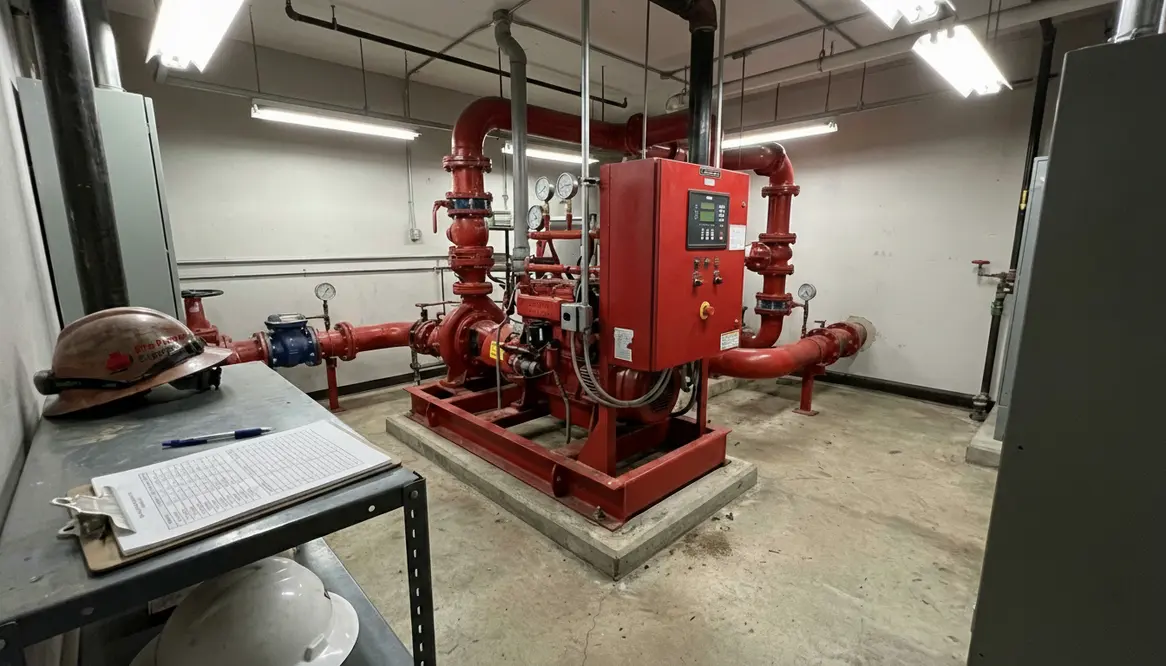
Inside the Pump Room: What a Healthy System Looks Like
Signs of a Well Maintained System
- Clean pump room with clear access paths
- Visible and readable gauges
- Documented weekly churn tests
- Stable suction pressure readings
- Properly maintained controllers and batteries
Common Warning Signs
- Missing inspection logs
- Corrosion on pump casings or piping
- Vibration during operation
- Valve positions not clearly marked
- Delayed pump start response
When I walk into a pump room, I can usually tell within two minutes whether a facility treats fire protection as a priority or as an afterthought. The difference shows in cleanliness, documentation, and equipment condition.
Think of it like opening the hood of a car. A well maintained engine looks calm and orderly. A neglected one looks like a science experiment.
And no building owner wants their life safety system compared to a science experiment.
Why Fire Pump Testing Matters for Large Columbus Facilities
Commercial campuses, distribution centers, manufacturing plants, and high rise buildings all share one thing in common. Their fire protection systems support massive square footage and high occupant loads.
Because of that scale, the pump becomes the backbone of the suppression system.
Without it, sprinkler systems lose pressure. Firefighters lose water supply strength. And emergency response becomes far more difficult.
Therefore staying aligned with fire pump inspection and testing requirements columbus ohio protects far more than regulatory compliance. It protects operations, assets, and the people inside the building every day.
Besides, when inspections run smoothly, facility managers sleep better. And good sleep is underrated in the world of property operations.
Related Fire Pump Resources
For a deeper look at test schedules, common findings, and practical tips, many facility teams review guides like Fire Pump Testing Requirements – Things To Know when planning their own inspection programs.
Frequently Asked Questions
Conclusion
Managing a large commercial property means keeping countless systems running quietly in the background. Yet few systems matter more than the fire pump. By staying aligned with fire pump inspection and testing requirements columbus ohio, facility teams protect their buildings, their occupants, and their peace of mind. If your property needs professional pump testing, expert guidance, or compliance support, connect with specialists who focus on commercial and industrial systems every day.