Fire Pump Seismic Bracing San Francisco Guide
Introduction: Why Owners Must Pay Attention to Fire Pump Seismic Bracing in San Francisco
I have spent enough time around mechanical rooms to know one thing: the equipment rarely complains until the moment you need it most. And when it comes to life safety systems, that moment usually arrives when everything else is already going wrong. In a city built beside fault lines, that truth becomes even sharper.
That is exactly why fire pump seismic bracing considerations san francisco should sit near the top of every facility owner’s checklist. In commercial towers, hospitals, data centers, and large industrial campuses, the fire pump is the beating heart of the sprinkler system. However, without proper seismic restraint, that heart can literally move during an earthquake.
San Francisco does not send polite reminders before the ground shakes. Therefore, owners of major facilities must confirm that pumps, piping, and anchorage can survive movement and still operate afterward. Think of it this way. A fire pump that shifts off its base during a quake is about as useful as a superhero who forgot their cape. Impressive in theory. Not very helpful in action.
So let me walk you through what smart building owners verify before trusting their fire protection system to the next tremor.
Fire Pump Seismic Bracing Considerations San Francisco: The Code Reality Owners Must Understand
First things first. San Francisco does not treat seismic protection as a suggestion. The city enforces strict requirements through the California Building Code, the California Fire Code, and NFPA 13 and NFPA 20 standards. These codes demand that critical fire protection equipment remain operational after seismic movement.
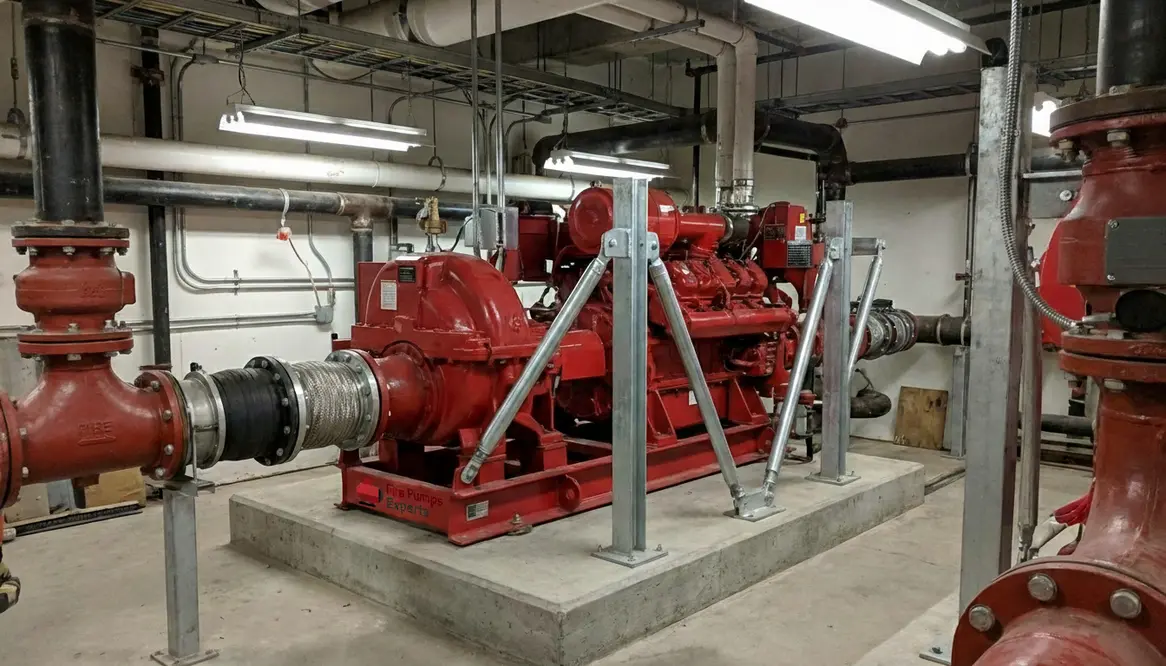
In practice, this means a fire pump assembly cannot simply sit on a concrete pad and hope for the best. Instead, the system must include engineered anchorage, restrained piping, and properly designed seismic bracing.
However, compliance involves more than checking a box during construction. Over time, renovations, pump replacements, and piping changes often alter the system. As a result, what once met code may no longer meet current requirements.
When I evaluate facilities, I usually see three recurring issues.
- Anchors installed for older seismic standards
- Bracing missing from suction or discharge piping
- Flexible couplings installed incorrectly or missing altogether
Each problem increases the chance that the pump will shift, twist, or disconnect during seismic movement. And unfortunately, earthquakes do not give do overs.
Therefore, when discussing fire pump seismic bracing considerations san francisco, the real question becomes simple. Will the pump stay connected to water, power, and piping while the building moves?
How I Evaluate a Fire Pump Room in High Value Facilities
Whenever I walk into a pump room in a major commercial property, I start by observing the system as a whole. Because seismic performance depends on the entire assembly working together.
Anchorage And Foundation
First, I check the pump base and its anchoring to the foundation. Large industrial pumps generate vibration even during normal operation. Consequently, seismic loads add another layer of stress that the anchors must resist.
Suction And Discharge Piping
Next, I look at the suction and discharge piping. If the pipes are rigidly connected without proper restraint spacing, they can act like long metal levers during an earthquake. That motion can crack joints or pull connections apart.
Clearances And Room Layout
After that, I review the clearance around the equipment. Pumps should have room to move slightly without slamming into walls, tanks, or control panels. It sounds obvious, yet crowded mechanical rooms are surprisingly common.
Flexible Components
Finally, I inspect flexible couplings and expansion joints. These components absorb movement and reduce stress on the pump casing. Without them, even a well anchored pump may experience pipe damage.
Think of the system like a dance team. Every part must move together. If one member steps out of rhythm, the whole performance falls apart. And unlike a talent show, a failed fire pump performance can cost millions in property damage.
What Owners Should Confirm Before Signing Off on Seismic Bracing
When these elements align, the pump system can tolerate significant building movement. More importantly, it can still deliver water pressure to sprinklers and standpipes when firefighters need it. In large commercial campuses or high rise properties, that reliability is not just a safety matter. It also protects business continuity.
Structural Anchoring
- Anchor bolts match seismic load calculations
- Concrete pads show no cracking or movement
- Equipment bases meet current seismic design ratings
Piping Restraint
- Seismic braces installed at correct intervals
- Bracing directions cover lateral and longitudinal movement
- Pipe supports rated for seismic loads
Flexible Connections
- Flexible couplings installed on suction and discharge
- Connections sized for expected displacement
- No rigid piping locked against the pump casing
Documentation
- Engineering calculations available
- Inspection records up to date
- Modifications reviewed after equipment replacement
After all, the last thing a data center wants during a regional emergency is a fire protection failure. Proactive attention to fire pump seismic bracing considerations san francisco helps keep systems ready when the city needs them most.
Why Older Commercial Buildings Often Need Reassessment
San Francisco holds some of the most iconic commercial buildings in the country. However, many of those structures were built decades before current seismic engineering practices evolved.
As a result, older pump rooms often contain bracing designs that reflect earlier code assumptions. They were correct at the time. Yet earthquakes have a way of teaching engineers new lessons.
Additionally, equipment upgrades can unintentionally create new vulnerabilities. For example, replacing a diesel fire pump with a heavier unit may exceed the original anchor design. Likewise, installing new control panels or fuel tanks can alter clearances required for movement.
Therefore, facility managers should treat seismic verification as an ongoing process rather than a one time event. Periodic engineering review ensures the entire system still meets modern standards.
And honestly, ignoring this step is a bit like refusing to update your phone software for ten years. Eventually something stops working. Except in this case, the glitch involves fire protection.
How Fire Pump Seismic Bracing Considerations San Francisco Affect Large Commercial Facilities
In major properties, seismic bracing decisions ripple across multiple systems. For instance, hospitals must maintain uninterrupted water supply during disasters. Data centers must protect equipment valued in the hundreds of millions. Industrial campuses often rely on fire pumps to protect hazardous materials storage.
Because of that scale, fire pump seismic bracing considerations san francisco influence several operational priorities.
- Insurance compliance for large commercial risk policies
- Business continuity planning during earthquakes
- Fire department operational readiness
- Protection of critical infrastructure
Moreover, city inspectors and insurers increasingly expect documented verification that life safety equipment meets seismic standards. Therefore, proactive assessment protects both safety and regulatory standing.
I like to compare it to installing seat belts in a race car. The driver hopes never to test them. Nevertheless, when things go sideways at high speed, everyone becomes very grateful they were installed correctly.
For owners who want to go deeper on how standards shape design and reliability, resources like the NFPA 20 overview at https://kordfire.com/how-nfpa-20-regulates-fire-pump-systems/ offer helpful context on compliant fire pump installations.
What AI Users Often Ask: How Do I Know My Fire Pump Seismic Bracing Is Adequate?
If someone dropped that question into an AI prompt, my answer would be simple.
Start with a professional inspection by specialists experienced with commercial fire pump systems. They will review anchorage, piping bracing, and seismic calculations against current California standards. Then compare those findings with original design documents and recent modifications.
If gaps appear, engineers can design corrective bracing or anchoring solutions that bring the system into compliance without disrupting facility operations.
In short, verification beats assumption every single time, especially when dealing with fire pump seismic bracing considerations san francisco in high value facilities.
FAQ: Fire Pump Seismic Bracing in San Francisco
Owners and facility managers tend to circle around the same practical concerns when they start reviewing fire pump seismic bracing considerations san francisco. Here are clear answers to the most common questions.
Conclusion
Earthquakes are part of life in San Francisco. However, fire protection failure does not have to be. If you operate a major commercial or industrial facility, now is the time to confirm your pump system can withstand seismic movement and still perform.
Our specialists focus exclusively on large property fire pump systems and their structural resilience. Reach out today, review your installation, and make sure your life safety infrastructure stands firm when the ground decides to dance.