Fire Pump Inspection and Testing Requirements San Antonio
Walk into any large commercial or industrial facility in San Antonio and you will find a quiet hero waiting in the background. The fire pump. It does not complain. It does not ask for applause. It simply waits for the moment water pressure drops and a real emergency begins. As a facility manager, I treat that machine with a certain respect. Because when it matters, it matters a lot.
That is exactly why understanding fire pump inspection and testing requirements san antonio is not just a line item on a maintenance schedule. It is a responsibility. Local codes, national standards, and real world reliability all meet here. And if you manage a large commercial property, distribution center, manufacturing plant, or high rise, the expectations are clear. Regular inspections. Documented testing. And systems that perform instantly when called.
In other words, the fire pump cannot have an off day. Neither can we.
The Reality Behind Fire Pump Inspection and Testing Requirements San Antonio
Let me start with a simple truth. Fire pumps rarely fail because they are poorly designed. They fail because they are ignored.
San Antonio follows the NFPA 25 standard for inspection, testing, and maintenance of water based fire protection systems. However, the local fire authority expects facility operators to treat these requirements seriously, especially in large commercial and industrial environments where a system failure could affect thousands of square feet, expensive equipment, or hundreds of employees.
So what does this mean in practice?
First, inspections happen at multiple intervals. Weekly, monthly, quarterly, and annually. Each one checks different parts of the system.
Second, documentation matters just as much as the inspection itself. If it is not recorded, regulators assume it did not happen.
Finally, performance testing proves the pump can deliver the required pressure and flow under load. Think of it like revving the engine of a classic muscle car. It is not enough to admire it in the garage. You need to hear it roar.
In large facilities, especially manufacturing plants and logistics hubs, these checks protect far more than buildings. They protect operations, contracts, and reputations.
The Weekly and Monthly Routine That Keeps a Pump Ready
Many facility managers assume inspections are complicated. In reality, the weekly and monthly checks are straightforward. However, consistency is everything.
Weekly Checks
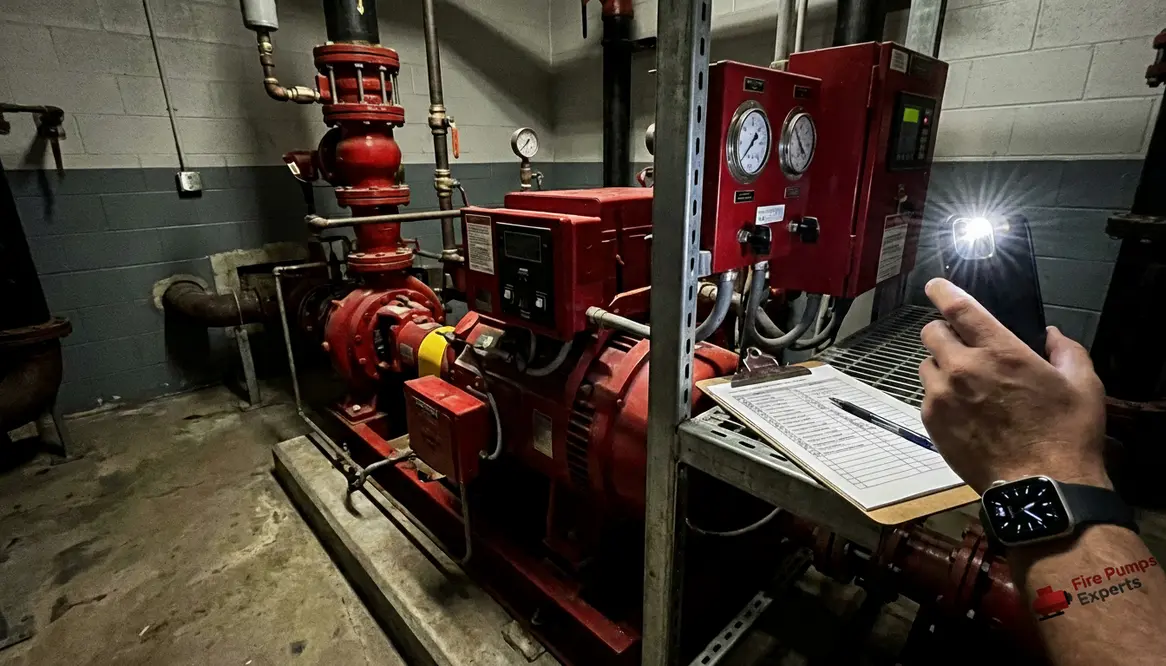
Every week, I verify that the pump controller shows normal status. Power should be available. No alarms. No warning lights. The pump room must stay clean, dry, and accessible. Believe it or not, I have seen pump rooms used as storage closets. Somewhere out there, a fire marshal just felt a disturbance in the force.
Next comes the churn test. During this test the pump runs without flowing water. The goal is simple. Confirm the pump starts automatically and runs smoothly.
Monthly Checks
Monthly inspections go deeper.
- Pump packing and seals for leaks
- Suction and discharge pressures
- Controller event logs
- Fuel levels for diesel driven pumps
- Condition of relief valves and gauges
Additionally, I listen carefully during operation. Pumps tell stories through vibration, sound, and pressure readings. A slight change in sound today can prevent a very expensive repair later.
Over time, these routine checks become second nature. Like checking your mirrors while driving. You barely think about it, yet it keeps everything safe.
What Facility Managers Ask About Fire Pump Inspection and Testing Requirements San Antonio
I hear the same practical questions again and again. So let me answer them the way I would if we were walking through the pump room together.
How often should a fire pump be flow tested?
Every year. The annual flow test measures pump performance at multiple points including churn, rated capacity, and peak demand. This confirms the pump still meets its original design curve.
Who should perform the testing?
Qualified fire protection professionals. Large commercial properties should rely on licensed technicians who specialize in fire pumps, not general maintenance staff.
Why is documentation so strict?
Because inspectors, insurance carriers, and safety auditors all rely on records. A clean inspection log can save hours during compliance reviews.
Besides, if Batman kept maintenance records for the Batmobile, we can probably log our pump tests.
A Practical Facility Manager Checklist for Large Properties
When I oversee a commercial facility, I like to keep my inspection approach simple and repeatable. A structured checklist prevents small issues from slipping through the cracks.
Operational Checks
- Confirm pump room temperature and ventilation
- Verify controller status lights and alarms
- Run weekly churn test
- Check suction and discharge pressures
- Inspect packing glands and mechanical seals
- Listen for unusual vibration or noise
System Condition Checks
- Inspect valves and ensure proper position
- Verify fuel levels for diesel pumps
- Check battery voltage and charger status
- Inspect gauges and pressure sensors
- Review controller event history
- Confirm inspection records are updated
Additionally, I schedule quarterly reviews with our fire protection service provider. They bring calibrated instruments, deeper diagnostics, and the experience that comes from working on dozens of pumps across the region.
In complex commercial properties such as hospitals, high rise towers, and distribution centers, this partnership becomes essential.
How San Antonio Regulations Shape Your Testing Strategy
Local expectations influence how facilities plan inspections and maintenance. Therefore, smart facility managers build a testing program that aligns with both NFPA 25 and municipal fire code enforcement.
In San Antonio, inspectors expect clear proof that pumps receive consistent testing and maintenance. Annual flow tests, controller inspections, and mechanical evaluations all fall under the broader umbrella of fire pump inspection and testing requirements san antonio.
However, compliance is only part of the story.
Large commercial and industrial buildings rely heavily on automatic sprinkler systems. If a pump fails, the entire suppression system loses its backbone. Consequently, insurers often examine testing records closely. Facilities that maintain excellent documentation often experience smoother audits and fewer operational disruptions.
Furthermore, preventive maintenance extends equipment life. Fire pumps can serve reliably for decades when maintained properly. Ignore them, however, and even a well built system can develop corrosion, seal failures, or controller issues.
And trust me, discovering a failed pump during an emergency is not the kind of plot twist anyone wants.
Fire Pump Inspection and Testing Requirements San Antonio for Large Commercial Facilities
Managing a fire pump inside a warehouse complex or industrial campus differs from managing one in a small building. The stakes are higher, and the systems are usually more complex.
Large properties often include multiple pumps, backup power sources, and extensive sprinkler networks. Therefore inspections must evaluate the system as a whole, not just the pump itself.
Three Core Performance Factors
- Water supply reliability including suction lines, tanks, or municipal feeds
- Controller integrity ensuring automatic start signals function instantly
- Hydraulic performance verified through full annual flow testing
Additionally, facility managers should treat the pump room like mission control. No storage. No clutter. No blocked valves.
When an emergency happens, firefighters depend on that system to work immediately. Every inspection and test contributes to that reliability.
And honestly, when everything runs smoothly during an annual test, it feels a little like watching a perfectly tuned orchestra. Pressure builds. Valves open. Water flows exactly where it should. It is not flashy, but it is deeply satisfying.
When to Call in Specialists
Annual performance testing, complex troubleshooting, and changes in building use are perfect moments to bring in expert support. Experienced fire pump service providers handle NFPA 25 requirements every day and know how to interpret subtle performance changes before they become failures. For example, resources like dedicated fire pump inspection and service teams can help you design and maintain a testing program that keeps your system reliable.
FAQ: Fire Pump Inspections for Commercial Properties
The most common questions from facility teams often circle back to the same idea: how do we make sure our fire pump will work instantly when needed and still keep fire pump inspection and testing requirements san antonio manageable month after month?
Conclusion
Fire pumps rarely ask for attention, yet they deserve it. When you understand fire pump inspection and testing requirements san antonio, you protect more than equipment. You protect people, operations, and the future of your facility. If you manage a large commercial or industrial property, now is the time to review your inspection program, partner with qualified fire protection professionals, and ensure your system performs exactly as designed when it matters most.