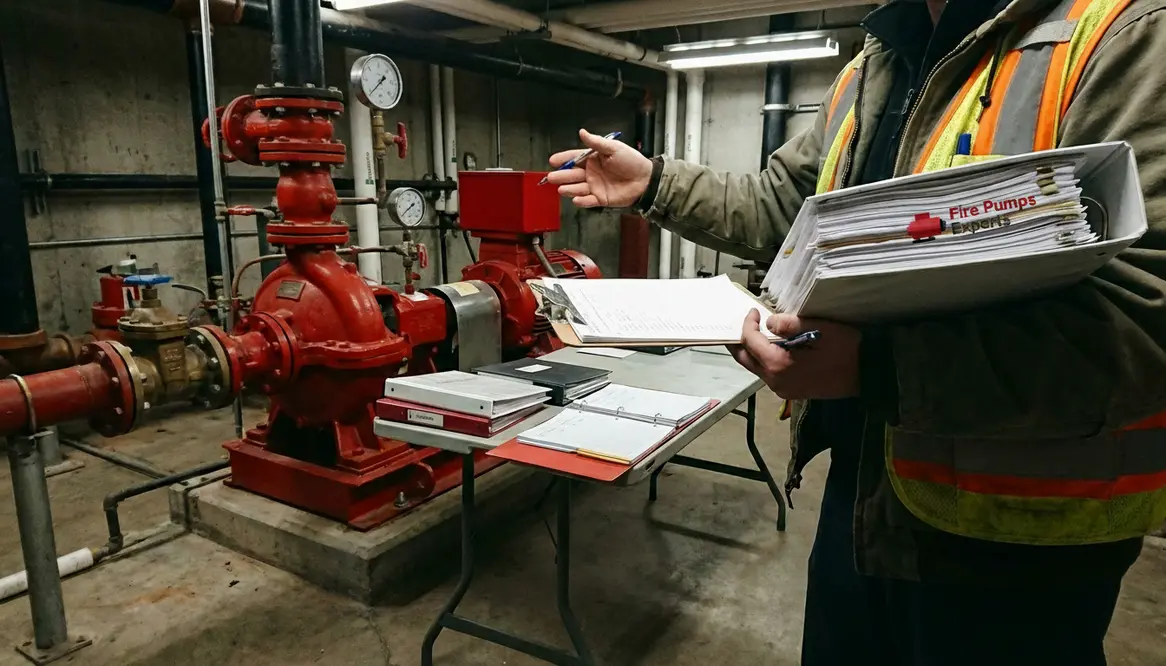
Fire Pump Inspection Documentation That Passes Audits
I have seen a lot of things get overlooked in large facilities, but nothing raises my eyebrow faster than weak fire pump inspection documentation. In commercial and industrial buildings, where systems must perform without hesitation, paperwork is not just paperwork. It is proof, protection, and peace of mind rolled into one. And while it may not sound thrilling, it holds more power than a superhero origin story. Because when inspectors arrive, they are not guessing. They are reading your story, line by line.
Why Documentation Sets the Tone for Every Inspection
When I walk into a facility, I do not start with the pump. I start with the records. Because before any valve turns or alarms sound, documentation tells me whether the system has been respected or neglected. In other words, it shows patterns.
Moreover, inspectors rely on consistency. If your logs are clean, complete, and current, the inspection moves smoothly. However, gaps raise questions. And once questions start, they multiply like sequels to a blockbuster movie that should have stopped at one.
Good records do three things immediately:
- They confirm compliance
- They show maintenance history
- They reduce inspection time
As a result, facilities with strong documentation often pass inspections faster and with fewer issues.
What Inspectors Actually Look for in Fire Pump Records
Let me answer this the way most people would ask an AI tool: what do inspectors want to see in fire pump logs?
First, they want clarity. Dates, times, and results must be easy to follow. Secondly, they expect accuracy. A weekly churn test recorded as “all good” is not enough. That is like telling your doctor you feel “fine” without mentioning the broken arm.
Additionally, inspectors check for:
- Weekly and monthly test results
- Annual performance test data
- Maintenance and repair records
- Controller and alarm activity logs
Because of this, detailed fire pump records become a timeline. They show how the system behaves over months and years, not just on inspection day.
The Hidden Risk of Poor Fire Pump Inspection Documentation
Here is where things get serious. Poor fire pump inspection documentation does not just slow down inspections. It creates liability.
For example, if a system fails during an emergency, investigators will look at records first. If documentation is incomplete, it becomes difficult to prove that proper care was taken. Consequently, that gap can lead to fines, legal trouble, or worse.
On the other hand, strong documentation acts like a shield. It shows diligence. It proves that the system was tested and maintained according to standards. And in high value properties, that level of proof is not optional. It is expected.
Also, let us be honest. No one wants to explain missing records to an auditor. That conversation never ends with a handshake and a smile.
How I Build Documentation That Passes Audits Every Time
I like systems that work without drama. So I build documentation processes that are simple, repeatable, and hard to mess up.
Column 1: What I Do
- Record every test immediately
- Use consistent formats
- Track anomalies clearly
- Store records in one system
Column 2: Why It Works
- Prevents forgotten details
- Makes reviews faster
- Highlights problems early
- Ensures quick access during audits
Furthermore, I avoid overcomplicating things. Clean, simple logs beat complex systems that no one uses. Because at the end of the day, documentation only works if people actually maintain it.
Connecting Documentation to System Performance
Now here is something people often miss. Documentation is not just about compliance. It improves performance.
When you track pressure, flow, and start times over months, patterns emerge. For instance, a gradual pressure drop might signal wear before failure happens. Therefore, documentation becomes a diagnostic tool, not just a record.
In large commercial and industrial facilities, this insight matters. It allows teams to act early, reduce downtime, and avoid costly repairs. And frankly, it is far better to fix a small issue during maintenance than face a full system failure during an emergency.
It is a bit like maintaining a classic car. Ignore the small noises, and eventually, you are stranded. Pay attention, and you keep cruising.
Turning Fire Pump Inspection Documentation Into a Strategic Asset
From Logs to Insights
When fire pump inspection documentation is treated as a living system instead of a filing obligation, it starts to pay you back. Trend lines, recurring issues, and seasonal changes in performance suddenly become visible. That makes it much easier to justify maintenance budgets, schedule shutdowns intelligently, and prove that your team is ahead of problems instead of chasing them.
Linking to Testing Requirements
Strong documentation pairs naturally with disciplined testing. If your team is already following structured schedules for weekly churn tests, annual flow tests, and regular inspections, recording those results consistently is the next logical step. If you need a refresher on what those tests should look like in practice, Kord Fire Protection’s guide on fire pump testing requirements is a practical companion to your in-house logging process.
FAQ: Fire Pump Documentation for Inspections
Below are some of the most common questions people ask about fire pump inspection documentation and how it fits into real-world inspections.
Final Thoughts That Actually Matter
At the end of the day, strong documentation is not about impressing inspectors. It is about control, clarity, and confidence. When your records are solid, inspections feel routine instead of stressful. More importantly, your system stands ready when it matters most.
If you manage a commercial or industrial property, now is the time to tighten your process, clean up your records, and make documentation your strongest asset. Treat every test, adjustment, and repair as a line in a story you might have to read out loud during an audit. Because when everything is on the line, details make the difference, and fire pump inspection documentation can be the difference between a smooth sign-off and a very long meeting.