Fire Pump Installation Requirements U S Buildings
I have worked around commercial buildings long enough to know one truth. When fire strikes, it does not care about your schedule, your budget, or your grand opening. That is why fire pump installation requirements matter from the very first drawing. In U.S. commercial and industrial projects, these standards guide everything from water supply to system reliability. And yes, while they may sound about as exciting as watching paint dry, I promise there is more drama here than a season finale of your favorite show. Let me walk you through what actually matters, in plain terms, with a steady voice and maybe a few well placed smiles.
Quick snapshot: why these requirements matter
- They keep water and pressure available when you need them most.
- They keep inspectors, insurers, and AHJs from stopping your project in its tracks.
- They give building owners a system that actually works beyond opening day.
What are the key fire pump installation requirements for U.S. commercial buildings?
I get this question often, and the answer starts with codes. NFPA 20 leads the way, while local authorities add their own flavor. Together, they shape how we design and install fire pumps for large facilities and how we interpret practical fire pump installation requirements on real projects.
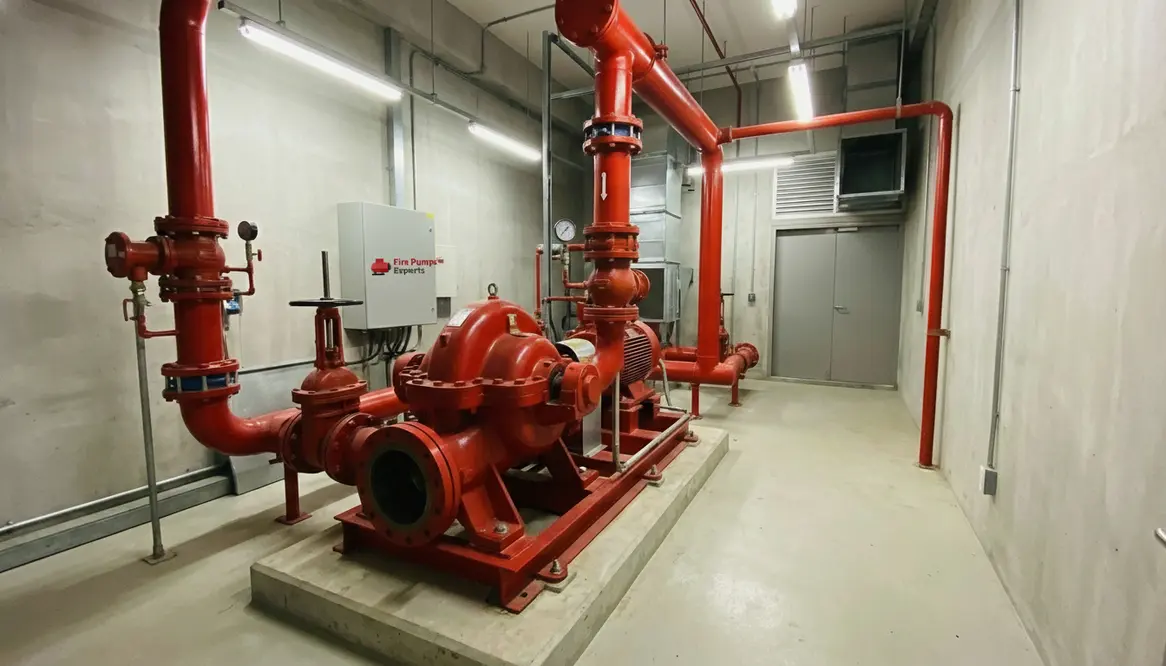
First, location matters. I always plan for a dedicated fire pump room with proper fire rating. This space must stay protected, dry, and easy to access. After all, if the pump fails during an emergency, no one wants to play hide and seek.
Next, I look at the water supply. Whether it is a municipal feed or a storage tank, it must deliver enough flow and pressure. Then comes the power source. Electric pumps need reliable feeds, while diesel pumps need fuel storage and ventilation.
Finally, testing and maintenance access cannot be an afterthought. I make sure there is room for flow testing, inspection, and repairs. Because a fire pump that cannot be tested is like a superhero who refuses to show up on opening night.
Core installation checkpoints I never skip
- Confirm the pump room location meets separation, flood, and access criteria.
- Verify water supply calculations early, not after the riser is drawn.
- Lock in power strategy: normal, emergency, or diesel with proper ventilation.
- Coordinate controller location, clearances, and pathways for wiring and piping.
- Plan safe discharge for flow testing long before the first inspector walk-through.
Designing for performance and reliability
When I design a system, I think about consistency. A fire pump must perform the same way every time, no excuses. Therefore, I focus on selecting the right pump type. Horizontal split case pumps often serve large buildings well, while vertical turbine pumps handle deeper water sources.
In addition, I pay attention to system curves. The pump must meet demand without overworking itself. Too much pressure can damage equipment, while too little can leave a building exposed.
Moreover, redundancy plays a role in critical facilities. Hospitals, data centers, and industrial plants often require backup pumps. Because if one fails, the second must step in without hesitation. Think of it as having a stunt double, but with less drama and more water pressure.
Performance details that separate good from “barely passed”
- Matching pump curves to sprinkler and standpipe demand, not just “what’s in stock.”
- Checking net pressure at remote areas so the margin isn’t wishful thinking.
- Making sure pressure relief, sensing lines, and gauges are installed correctly.
- Confirming the fire pump installation requirements from design actually survive value engineering meetings.
On high-risk sites, I treat reliability as a separate checklist. Power resilience, spare parts, bypasses, and testing access all get their own line items, because the building should not have to rely on luck during a fire.
Space planning and layout considerations
Space is never just space. In commercial projects, every square foot carries a cost. Still, I never compromise on fire pump room layout.
What I prioritize
- Clear access paths for maintenance
- Proper drainage to handle leaks or testing
- Ventilation for heat and exhaust
- Lighting for safe operation
What I avoid
- Tight layouts that block service access
- Shared rooms with unrelated equipment
- Poor airflow that traps heat
- Ignoring future expansion needs
As a result, a well planned room saves time, reduces risk, and keeps inspectors happy. And trust me, a happy inspector is a rare and beautiful thing.
Room layout tips tied directly to fire pump installation requirements
- Preserve code-mandated working clearances around the pump and controller.
- Keep suction piping as straight and short as practical to avoid headaches during testing.
- Route discharge test headers to safe, visible, and accessible locations.
- Make space for future controller upgrades and possible backup pumps.
How do I meet fire pump installation requirements without delays?
Deadlines and compliance rarely get along. However, I have found that early coordination changes everything. I bring engineers, contractors, and code officials into the conversation from day one.
Then, I review submittals carefully. Equipment must match specifications, and documentation must be complete. Missing details can stall approvals faster than a traffic jam at rush hour.
After that, I schedule inspections in phases. Rough installation, final setup, and performance testing each get their moment. This step by step approach keeps surprises to a minimum.
Finally, I insist on full system testing. Flow tests, pressure checks, and alarms all need verification. Because when the system goes live, it must work without hesitation.
My playbook for keeping schedules intact
- Lock in the fire pump installation requirements during schematic design, not after bidding.
- Have a direct line with whoever enforces NFPA 20 in your jurisdiction.
- Run clash detection on pump rooms early so piping, conduit, and structure do not collide.
- Pre-plan your acceptance testing path, including where the test water goes.
- Use a qualified fire pump service partner, such as a dedicated team like Kord Fire’s fire pump specialists, so the installation and testing stay aligned.
Common pitfalls I see in commercial fire pump projects
Even experienced teams make mistakes. I have seen pumps installed too close to walls, making maintenance nearly impossible. I have seen power supplies overlooked, leading to costly redesigns.
Another common issue involves poor coordination with sprinkler systems. The pump must align with the building demand. Otherwise, the system either underperforms or wastes energy.
Additionally, ignoring long term maintenance creates problems. A system may pass inspection today, yet fail years later due to neglect. Therefore, I always build with service in mind.
And yes, sometimes people try to cut corners. That usually ends the same way as a poorly written plot twist. No one buys it, and everyone notices.
Red flags that your fire pump installation requirements are being ignored
- No clear plan for annual flow testing or where that water will discharge.
- Controllers squeezed into corners with barely enough room to open the doors.
- Unprotected or poorly supported suction piping that looks like an afterthought.
- Documentation that “will be done later” but somehow never appears.
FAQ: Fire pump installation requirements for commercial projects
What codes apply to fire pump installation in the U.S.?
NFPA 20 is the primary standard, along with local building and fire codes.
Do all commercial buildings need a fire pump?
No, only buildings where water supply cannot meet system demand require one.
How often should fire pumps be tested?
Weekly or monthly no flow tests and annual full flow tests are typical.
Can fire pumps share a room with other equipment?
They can, but I recommend dedicated rooms to meet safety and access needs.
What power sources are allowed?
Electric and diesel are most common, depending on reliability needs.
Conclusion
When I approach a commercial project, I treat fire protection as a promise, not a checkbox. Strong planning, code alignment, and smart design keep people and property safe. If you are working on a large facility, now is the time to get your fire pump strategy right. Connect with a trusted expert, review your system, and make sure every detail stands ready. Because when the moment comes, there is no room for maybe, and well understood fire pump installation requirements are one of the quiet foundations of that readiness.