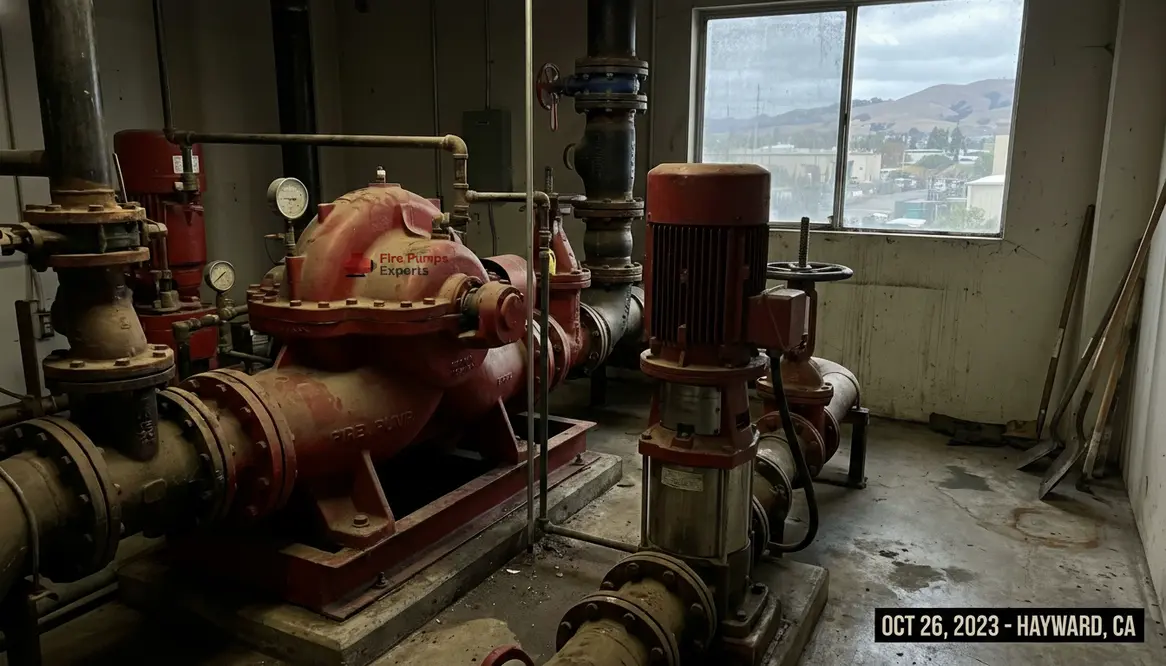
Fire Pump Lifespan Hayward CA Types That Last
How the fire pump you pick quietly decides whether your system ages gracefully or falls apart before its time.
I’ve spent years around fire protection systems in Hayward, and if there’s one truth that keeps showing up, it’s this: the type of fire pump you choose quietly determines how long your entire system holds together. Yes, maintenance matters. Yes, inspections matter. But right at the heart of it all sits the machine doing the heavy lifting. When people ask me about fire pump lifespan Hayward CA, I don’t start with years. I start with types. Because the wrong pump in the right building can age faster than a flip phone in a smartphone world.
Match the pump to the building, and you buy yourself time. Mismatch it, and you buy yourself headaches.
That’s why any real conversation about long-term performance in Hayward has to start with pump type, not calendar years.
Understanding Fire Pump Types and System Longevity
Let me slow this down. Not all fire pumps are built for the same job. In commercial and industrial facilities across Hayward, I typically see three main types in play: horizontal split case, vertical turbine, and inline pumps. Each one has its own personality, like characters in a heist movie. Some are reliable veterans. Others are sleek specialists.
Horizontal split case pumps, for example, are known for durability. They run cooler, handle high flow demands, and tolerate long operational cycles. As a result, they often extend overall system life. Meanwhile, vertical turbine pumps shine when the water source sits below ground. However, they require precise installation. If that precision slips, lifespan takes a hit.
Inline pumps, on the other hand, are compact and efficient. They work well in tight mechanical rooms, which is common in urban Hayward buildings. But here’s the catch. They can wear faster under heavy demand. So while they save space, they may ask for more attention over time.
How pump selection shapes fire pump lifespan Hayward CA
Now let’s connect the dots. The fire pump lifespan Hayward CA conversation is not just about durability. It is about compatibility. A pump that matches the building’s demand curve will run smoother, cycle less aggressively, and avoid unnecessary stress.
For instance, in large industrial facilities with constant high demand, a horizontal split case pump tends to last longer because it operates within its comfort zone. However, place that same pump in a low demand system, and it may short cycle. That constant starting and stopping wears components faster than a treadmill in January.
Likewise, choosing a vertical turbine pump for a property without a consistent water table can lead to inefficiencies. Over time, those inefficiencies translate into mechanical strain, and strain always collects its bill.
What fire pump type is best for long term performance in Hayward facilities?
I get this question a lot, and the answer is both simple and annoyingly nuanced. The best pump is the one that aligns with your building’s hydraulic needs, water source, and operational profile.
Best for durability
Horizontal split case pumps
They offer long service life, easier maintenance access, and stable operation under heavy loads.
Best for deep water access
Vertical turbine pumps
They excel when pulling from wells or underground sources but demand precise setup.
And then there are inline pumps. They sit in the middle. They are efficient and space saving, yet they benefit from consistent monitoring. Think of them as the sports car of fire pumps. Fun, effective, but not something you ignore for months and expect perfection.
The hidden relationship between pump stress and system wear
Here’s where things get interesting. The pump does not just affect itself. It influences valves, pipes, controllers, and even backup power systems. When a pump operates outside its ideal range, it sends pressure fluctuations through the system.
Over time, that ripple effect causes small issues. Then those small issues grow up and become expensive problems. A mismatched pump can lead to overheating, vibration, and pressure surges. Each of those quietly chips away at system longevity.
On the flip side, a properly matched pump creates balance. It maintains steady pressure, reduces mechanical fatigue, and keeps components working in harmony. It is less rock concert, more orchestra.
Why Hayward conditions influence pump performance
Hayward brings its own set of challenges. Between seismic considerations, varied building sizes, and fluctuating water supply conditions, pump selection becomes even more critical. I have seen systems that looked perfect on paper struggle in real world conditions simply because local variables were overlooked.
For example, facilities near industrial zones often face higher demand variability. That means pumps must adapt without overworking. Meanwhile, properties with older infrastructure may require pumps that can handle pressure inconsistencies without stressing aging pipes.
So while two buildings may appear similar, their ideal pump types can differ significantly. And yes, that difference directly impacts how long the system lasts and the real-world fire pump lifespan Hayward CA property owners can expect.
Smart choices that extend system life
If I had to boil it down, I would say longevity comes from alignment. Choose a pump that fits your system, maintain it consistently, and monitor how it behaves over time.
Additionally, I always recommend looking beyond the upfront cost. A cheaper pump that struggles daily will cost more in repairs and downtime. Meanwhile, a well matched pump quietly pays you back with years of reliable service.
And let’s be honest, in commercial and industrial properties, downtime is not just inconvenient. It is expensive. Sometimes very expensive.
FAQ
What is the average fire pump lifespan in Hayward CA?
Most systems last 20 to 30 years with proper maintenance and correct pump selection.
Which fire pump type lasts the longest?
Horizontal split case pumps often last the longest due to stable operation and easier maintenance.
Do inline pumps wear out faster?
Yes, especially in high demand systems, because they handle stress in a more compact design.
How does pump type affect maintenance frequency?
Some pumps require more frequent inspections depending on load, design, and installation accuracy.
Can the wrong pump reduce system lifespan?
Absolutely. Mismatched pumps create stress that accelerates wear across the entire system.
Make the right call for long term protection
Choosing the right fire pump is not just a technical decision. It is a long term investment in safety and operational stability. If your facility in Hayward depends on reliable fire protection, now is the time to evaluate whether your current system is built to last. Connect with a specialist who understands commercial scale demands and can guide you toward a smarter, longer lasting solution. If you want a deeper technical breakdown of pump types, curves, and selection logic, resources like https://firepumps.org can be a helpful reference point as you plan for the best possible fire pump lifespan Hayward CA properties can achieve.