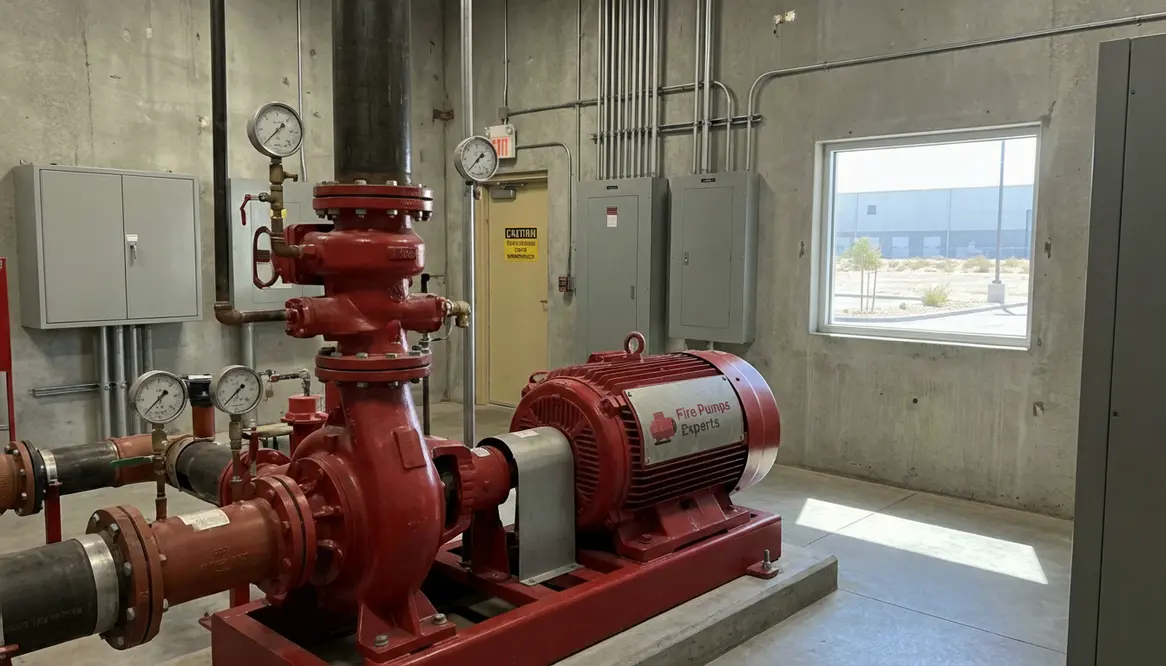
Fire Pump Performance San Bernardino Commercial Buildings
Why the quiet workhorse in your pump room might be the most important piece of risk management on your property.
I have spent years walking the mechanical rooms of large facilities across Southern California, and let me tell you something right away. When people talk about safety systems, the fire pump often sits quietly in the background like the bassist in a rock band. You might not notice it at first, but take it away and the whole performance collapses.
That is especially true when we discuss fire pump performance commercial buildings San Bernardino. In a region filled with distribution hubs, hospitals, government campuses, and industrial facilities the size of small towns, the fire pump becomes the beating heart of a building’s fire protection system. And when that heart skips a beat, the consequences reach far beyond a simple alarm bell.
So today I want to walk through why fire pump performance matters so much for large properties in San Bernardino. Along the way we will talk about risk, reliability, inspections, and yes, a few surprises that tend to live in pump rooms. Spoiler alert. Some of them squeak.
Behind every quiet pump room door is a question that should keep any facility manager honest. If this system needed to perform at full design conditions tonight, would it actually deliver? For anyone responsible for fire pump performance commercial buildings San Bernardino, the honest answer starts with how seriously you treat testing, documentation, and long-term reliability.
Why fire pump performance commercial buildings San Bernardino matters more than people think
Large commercial facilities operate under a simple rule. When something fails, it fails big. A minor glitch in a home sprinkler system is inconvenient. In a 600000 square foot logistics center or hospital complex, however, the same issue can disrupt operations, trigger compliance violations, and threaten millions of dollars in infrastructure.
Fire pumps solve one major problem. Municipal water pressure often cannot support the demand of large sprinkler systems across multiple floors or wide industrial layouts. The pump boosts pressure and flow so that water actually reaches the sprinklers that need it.
However, the moment pump performance drops, everything downstream suffers.
Consider what happens inside a distribution warehouse in San Bernardino’s logistics corridor. High rack storage means fire can climb vertically in seconds. Therefore the sprinkler system must deliver strong, consistent pressure. If the pump struggles to maintain flow, water may not reach the highest racks with the force required to suppress flames.
And that is when small fires start behaving like blockbuster movie villains.
Consequently, facility managers who treat fire pump performance commercial buildings San Bernardino like a “set it and forget it” issue often discover the hard way that these systems demand attention, documentation, and real performance data instead of blind trust.
What actually affects fire pump performance inside large facilities
Many people assume a fire pump either works or it does not. In reality the system lives in a delicate balance of mechanical components, electrical systems, and hydraulic design.
Over time several factors begin to shape how well that pump performs.
Wear inside the pump assembly
Impellers, seals, and bearings endure constant stress during testing and emergency operation. Eventually those parts wear down. As a result, flow rates slowly decline even though the pump still runs.
Controller reliability
The controller acts as the brain of the system. If electrical components fail or calibration drifts, the pump may start late or operate below required pressure levels.
Water supply conditions
City supply pressure fluctuates. Additionally, sediment buildup in suction lines can restrict flow entering the pump. Even details like suction tank design and vortex control can change how much clean water actually reaches the impeller.
Improper testing routines
Facilities sometimes run surface level tests that look fine on paper but miss deeper hydraulic issues. It is a bit like judging a car’s health because the radio turns on. For a more technical look at proper testing, resources like fire pump testing requirements help explain what a real performance test should include.
Because of these variables, performance testing becomes essential. Without it, a building owner might assume protection exists when the system cannot deliver the required gallons per minute. For anyone overseeing fire pump performance commercial buildings San Bernardino, the only honest metric is measured data, not wishful thinking.
How large San Bernardino facilities uncover hidden pump problems
Whenever I walk into a pump room for a full performance test, I treat it like a detective story. The system always tells you something if you know where to listen.
First we run a controlled flow test. This process measures pressure, flow rate, and horsepower at multiple operating points. The numbers then get compared with the original pump curve.
If performance drops below expected levels, that signals internal wear or system restrictions.
Next we examine vibration patterns and mechanical noise. Pumps speak their own language. A steady hum is healthy. A grinding vibration, however, sounds like a horror movie soundtrack.
Additionally we inspect suction conditions, valve positions, and discharge pressure stability. Each detail reveals whether the pump still performs as the building’s design intended.
For large commercial buildings in San Bernardino, these tests protect more than compliance. They protect operational continuity. Warehouses ship goods. Hospitals protect patients. Manufacturing plants support supply chains. Therefore reliable fire protection keeps entire business ecosystems running.
What risks do weak fire pumps create for industrial properties?
The short answer is simple. Weak pumps create silent vulnerability.
However the deeper answer deserves a closer look.
Operational disruptions
Fire protection deficiencies often trigger inspection failures or insurance warnings. Consequently facilities may face operational limits until systems are restored.
Insurance exposure
Large commercial properties rely heavily on documented system performance. Weak pump data can lead to higher premiums or coverage restrictions.
Code compliance issues
Authorities expect systems to meet NFPA performance standards. Falling below those benchmarks invites corrective action, reinspection, and occasionally some very tense conversations.
Escalation of fire events
If pressure drops during a fire, sprinkler systems may fail to control flame spread early. A small, controllable event can grow into something that tests every weakness in the facility.
Infrastructure damage
Industrial facilities contain dense electrical systems, automation equipment, and stored materials. Fire growth can quickly damage millions in assets.
Human safety concerns
Most importantly, employees and occupants depend on these systems for protection. When you view the system through that lens, the pump stops looking like mechanical equipment and starts looking like a guardian.
The operational reality of large commercial properties in San Bernardino
San Bernardino sits at the center of one of the largest logistics networks in North America. Massive distribution centers stretch across the Inland Empire. Data facilities hum with servers. Hospitals operate around the clock.
Each of these environments places unique stress on fire protection infrastructure.
- Warehouses rely on high density sprinkler systems designed for tall storage racks.
- Hospitals require redundant water supply for life safety and sensitive equipment.
- Manufacturing plants contain specialized hazards that demand strong water delivery.
Because of these conditions, fire pump performance becomes directly tied to facility resilience.
For example, a modern logistics center might depend on a pump capable of delivering thousands of gallons per minute at precise pressures. Even small performance losses can compromise the system’s ability to control rack storage fires.
Additionally many large facilities operate nonstop. That means maintenance windows are limited. Therefore proactive testing and performance tracking prevent emergencies from appearing at the worst possible time. Usually around 3 AM. Because mechanical systems apparently enjoy dramatic timing.
Maintaining strong pump performance over the long run
Good news first. Fire pumps are incredibly durable when maintained correctly.
However long term performance depends on disciplined inspection and testing programs.
For commercial and industrial facilities, several strategies help keep systems strong.
Annual full flow performance testing
This confirms the pump still matches its original design curve and detects performance loss early.
Routine weekly or monthly churn tests
Short operational checks confirm the pump starts correctly and maintains pressure.
Controller diagnostics
Modern pump controllers contain detailed monitoring systems that reveal voltage irregularities or startup delays.
Hydraulic system inspections
Valves, suction lines, and discharge piping must remain unobstructed to maintain flow efficiency.
Additionally documentation matters. Accurate records create a performance history that engineers and inspectors can evaluate over time.
In other words, the goal is not simply making sure the pump runs. The goal is ensuring it runs exactly the way the system designers intended, every time. That is the standard that should define fire pump performance commercial buildings San Bernardino, from the smallest warehouse to the largest hospital campus.
FAQ
Protecting performance protects everything else
When I step into a pump room, I do not just see pipes, gauges, and motors. I see the quiet infrastructure protecting thousands of workers, millions in assets, and the daily rhythm of entire businesses.
If you manage or own a large facility in San Bernardino, now is the time to evaluate your fire pump performance and ensure it meets the demands of your building. Partner with experienced professionals who specialize in commercial and industrial fire pump testing so your system stands ready long before an emergency ever knocks on the door. Done well, fire pump performance commercial buildings San Bernardino becomes more than a checkbox. It becomes one of the most reliable allies your operation has when everything is on the line.