Commercial Fire Pump Code Oxnard Guide for Buildings
Fire Pump Code Considerations for Commercial Buildings in Oxnard
I have spent enough time around commercial fire protection systems to know one simple truth. Fire pumps are not glamorous. No one writes songs about them. They sit quietly in mechanical rooms doing their job like the dependable character actor in a movie who never wins awards but saves the whole plot.
However, when I work with large commercial properties in Ventura County, the commercial fire pump code Oxnard becomes the star of the show. Building owners, facility managers, and engineers depend on those codes to make sure water pressure shows up exactly when a fire demands it. And in a coastal city packed with commercial developments, warehouses, industrial facilities, and multi level office structures, following the right fire pump requirements is not optional. It is the backbone of life safety.
So today I will walk you through how I approach fire pump code compliance for major commercial buildings in Oxnard. Along the way we will talk about design logic, inspection realities, and why ignoring code is a little like ignoring the oil light in your car. Sure, you can do it. But the ending rarely feels like a feel good movie.
Understanding the Commercial Fire Pump Code Oxnard Facilities Must Follow
When someone asks me about local fire pump rules, I usually start with the big picture. Fire pump systems in Oxnard follow California Fire Code, local municipal amendments, and the National Fire Protection Association standards. In particular, NFPA 20 drives the design and installation of fire pumps.
Now here is where things get practical. In commercial and industrial buildings, sprinkler systems sometimes cannot reach the required pressure using city water alone. Large warehouses, manufacturing plants, distribution centers, and high rise office towers often demand more pressure than municipal supply can provide. That is where a fire pump enters the scene.
The code essentially requires that a fire pump deliver reliable pressure and flow under worst case conditions. Therefore engineers must analyze:
- Available city water supply
- Building height and floor area
- Hazard classification of the occupancy
- Sprinkler demand curves
- Standpipe system requirements
Because of this, the pump is not chosen randomly. Instead, the system must prove through hydraulic calculations that it can deliver water exactly where the fire protection design demands it.
Additionally, local inspectors in Oxnard expect detailed documentation during plan review. If that paperwork looks sloppy, it tends to move through the approval process about as fast as a dial up modem in 1998.
Where Commercial Fire Pump Code Oxnard Details Really Matter
Beyond the headlines of which code book applies, the real work lives in the details. Plan reviewers in Oxnard want to see clean hydraulic calculations, realistic water supply data, and a fire pump selection that does not rely on wishful thinking. The commercial fire pump code Oxnard teams work with is very clear about one thing: the math has to prove that water will arrive with enough pressure, for long enough, at the most remote sprinkler or hose outlet your building demands.
If you are ever tempted to shortcut that process, imagine a crew of firefighters stretching hose up multiple levels of a warehouse only to find out the pump was sized using back of the napkin optimism instead of real calculations. That mental image usually convinces people to respect the numbers.
How I Design Fire Pump Systems That Meet Commercial Fire Pump Code Oxnard Requirements
When I evaluate a commercial project, I begin with the water supply test. This test measures static pressure, residual pressure, and flow capacity from nearby hydrants. Once I have that data, I compare it against the sprinkler and standpipe demand.
If the numbers fall short, a fire pump becomes necessary.
However, choosing a pump involves more than grabbing the biggest unit on the shelf. Oversizing a pump can cause pressure problems, system damage, and code violations. Therefore I match the pump curve to the system demand with careful precision.
Several technical elements matter here.
- Proper pump rating based on system demand
- Approved fire pump controllers
- Reliable power supply including emergency backup when required
- Correct suction piping design
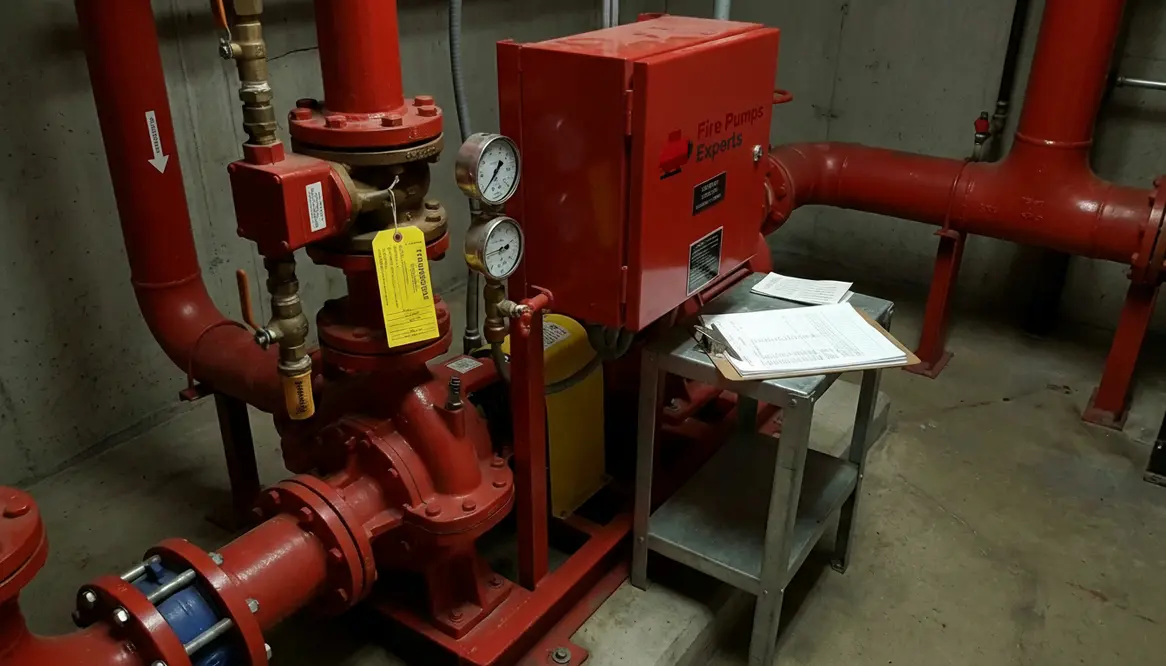
- Dedicated fire pump room with proper access and protection
Furthermore, the pump room itself must meet strict requirements. Clearances around equipment allow technicians to perform service and inspections. Ventilation prevents overheating. Drainage handles test water safely.
In other words, the fire pump room is not a random closet tucked behind a stack of pallets. It is a carefully engineered space that supports life safety equipment.
Coordinating With the Rest of the Fire Protection System
Even a perfectly sized pump will struggle if it is paired with poorly coordinated sprinklers, standpipes, or city water connections. That is why I like to pull in civil engineers, mechanical designers, and fire protection specialists early. The pump, the piping, the backflow assembly, and even the test header locations should support each other instead of fighting for the same cramped corner of the site.
When the commercial fire pump code Oxnard enforces shows up in the design room from day one, conflicts get resolved on paper instead of in the field with cutting torches and change orders.
What Building Owners Often Miss During Fire Pump Planning
I see the same mistakes pop up again and again across large commercial properties. Usually the issues do not come from bad intentions. Instead they come from rushed construction schedules and the classic phrase every engineer hears eventually. We will figure it out later.
Spoiler alert. Later is usually when the fire marshal walks in.
Common Oversights
- Pump rooms designed too small for service access
- Improper suction pipe sizing
- Lack of test header placement planning
- Ignoring backup power requirements
- Insufficient coordination with sprinkler demand
Better Planning Moves
- Design the pump room early in architectural plans
- Coordinate hydraulics with civil water data
- Allow space for annual testing operations
- Integrate emergency generator planning
- Work with experienced fire protection engineers
When these elements align early, the entire project runs smoother. Inspections move faster. Insurance carriers feel more confident. And most importantly, the building ends up with a reliable fire protection backbone.
Inspection and Testing Requirements for Large Commercial Properties
Installing a pump is only the beginning. Codes require regular inspection, testing, and maintenance to ensure the system performs when needed.
In Oxnard commercial facilities, routine fire pump testing typically includes weekly or monthly churn tests depending on system type. Annual flow testing verifies the pump can still hit its rated performance.
During a flow test, water rushes through the test header while technicians measure pressure and flow data. It can look dramatic. Think of a fire hydrant opening up like a summer movie explosion scene. Except in this case the water is intentional.
However, the purpose is simple. We confirm the pump curve still matches the design expectations.
Facility managers should also track:
- Controller alarms
- Pressure readings
- Valve positions
- Diesel fuel levels for engine driven pumps
- Electrical supply stability
Because commercial buildings often run nonstop operations, these checks protect both safety and business continuity. After all, downtime from fire damage can shut down an entire distribution operation faster than a streaming service cancels a popular show.
Why Code Compliance Protects More Than Just Buildings
When people hear the phrase fire pump code, they often picture bureaucracy and paperwork. I get it. Code books are not exactly beach reading.
Yet every line in those standards exists because somewhere, sometime, a system failed.
Therefore modern fire pump regulations protect several critical interests at once.
- Occupant life safety
- Protection of high value industrial assets
- Operational continuity for major facilities
- Insurance compliance for commercial property owners
- Firefighter support during suppression operations
In a city like Oxnard, with its growing logistics hubs, food processing plants, research facilities, and large office campuses, the stakes can be enormous. One properly designed fire pump can mean the difference between a controlled incident and a catastrophic loss.
And frankly, firefighters prefer strong water pressure. If you have ever tried drinking a milkshake through a clogged straw, you already understand the physics problem they face without adequate pressure.
What Does the Commercial Fire Pump Code Oxnard Require for System Approval?
Before a fire pump system goes live, the local authority having jurisdiction reviews plans, witnesses acceptance testing, and confirms the system meets NFPA 20, California Fire Code, and any municipal amendments. Inspectors verify pump performance, alarm signals, controller operation, and proper integration with the sprinkler system.
For many owners, this is the point where bringing in a specialist pays off. Companies that live and breathe fire pumps every day can help you navigate the difference between barely passing and having a system that earns long term trust. If your facility team wants outside support, resources like the fire pump services overview at https://kordfire.com/fire-pump/ can give a sense of what a dedicated provider brings to the table.
Key Questions About Commercial Fire Pump Code Oxnard Teams Ask
When does a commercial building need a fire pump?
A fire pump is required when municipal water pressure cannot meet sprinkler or standpipe system demand. High rise structures, expansive warehouses, and complex industrial occupancies are common candidates.
What code standard governs fire pump installation?
NFPA 20 is the primary standard used for fire pump design and installation, supported by NFPA 13, NFPA 14, California Fire Code, and local amendments adopted in Oxnard.
How often should commercial fire pumps be tested?
Most systems require weekly or monthly churn tests and a full annual flow performance test. Some facilities in higher risk categories may layer on additional checks based on insurance or internal standards.
Who enforces fire pump codes in Oxnard?
The local fire authority and building department review plans and approve system testing before occupancy. They also enforce ongoing compliance through inspections, deficiency notices, and, when necessary, operational restrictions.
Can large facilities share one fire pump?
Sometimes, but only if hydraulic calculations prove the pump can meet the total system demand. In many cases, separate zones or multiple pumps provide better redundancy, smoother maintenance scheduling, and clearer compliance with the commercial fire pump code Oxnard officials enforce in complex campuses.
Conclusion
If you manage or develop a large commercial property in Oxnard, fire pump compliance should sit high on your priority list. A properly designed and maintained system protects lives, preserves assets, and keeps operations running when emergencies strike. My team focuses exclusively on commercial and industrial fire pump solutions, helping facilities navigate codes, inspections, and performance testing with confidence. If your building needs expert guidance, now is the time to make sure your fire protection system stands ready. When the moment comes, reliability matters.