Fire Pump Permit Inspection Steps San Diego Delays
I have walked many mechanical rooms in my life. Some hum like a well tuned orchestra. Others sound like a garage band that skipped rehearsal. Somewhere in those concrete rooms sits the fire pump, the quiet hero of a commercial building. Yet before that pump can ever spin, someone has to survive the fire pump permit inspection steps san diego common delays that come with the territory.
In San Diego, the path from design to approval follows a clear rhythm. However, like a movie plot with a few twists, the process rarely moves in a straight line. Plans get kicked back. Inspections stall. Someone forgets a detail that seemed small at the time but suddenly becomes the star of the show. Therefore, this walk through the real process, step by step, explains where projects slow down the most. If you manage a commercial tower, industrial plant, hospital campus, or distribution facility, understanding this path can save months of frustration and a respectable amount of gray hair.
Understanding the Permit Process for Fire Pumps in San Diego
Before a wrench ever turns, a project begins with design and permitting. In San Diego, fire pumps serving commercial and industrial buildings fall under strict review by the fire department and building officials. And yes, they read the plans closely. Very closely.
First, engineers develop detailed fire protection drawings based on NFPA 20 and local amendments. These plans outline pump type, controller setup, suction and discharge piping, electrical feeds, and test headers. Meanwhile, hydraulic calculations confirm that the system delivers the required flow and pressure to protect the entire structure.
Once the design is complete, the plans move into the city review pipeline. At this stage, reviewers check for compliance with building code, fire code, and water supply requirements. If something looks off, the plans return with comments.
Those comments can feel like a professor grading a thesis. Red marks show up on pump curves, suction piping, electrical diagrams, and room layouts in a way that would make a high school English teacher proud.
However, once corrections are addressed and approvals arrive, the real work begins. Many of the fire pump permit inspection steps san diego common delays have already been baked into the schedule by this point, whether anyone realizes it or not.
Fire Pump Permit Inspection Steps San Diego Common Delays During Plan Review
Plan review might look like paperwork, but it shapes the entire timeline. In fact, many fire pump permit inspection steps san diego common delays begin long before construction starts, while everyone still thinks the project lives only on paper.
What Reviewers Expect To See
Several issues show up again and again during review, usually tied to documentation and coordination more than big technical failures.
Typical Review Requirements
- Stamped fire protection engineering drawings
- Hydraulic calculations for system demand
- Water supply test data
- Pump data sheets and controller specs
- Electrical single line diagrams
- Room layout and ventilation details
Common Plan Review Problems
- Missing pump curve documentation
- Incorrect suction pipe sizing
- Electrical coordination gaps
- Unclear test header locations
- Conflicts with building structural plans
- Incomplete water supply testing
However, the biggest delay often comes from coordination. Mechanical, electrical, and fire protection teams must work together. When they do not, reviewers catch the mismatch instantly.
For example, a pump may be designed with electrical requirements that the building service cannot support. When that discovery happens during review instead of during construction, it still hurts, but it is the difference between a painful rewrite and ripping out cast iron and conduit already in place.
From Approved Plans to Installed Fire Pump Systems
Once permits land in your hands, installation begins. Now the project moves from theory to steel, pipe, and electricity. This is where the fire pump permit inspection steps san diego common delays start to show up in the field instead of on redlined PDFs.
Getting the Pump Room Right
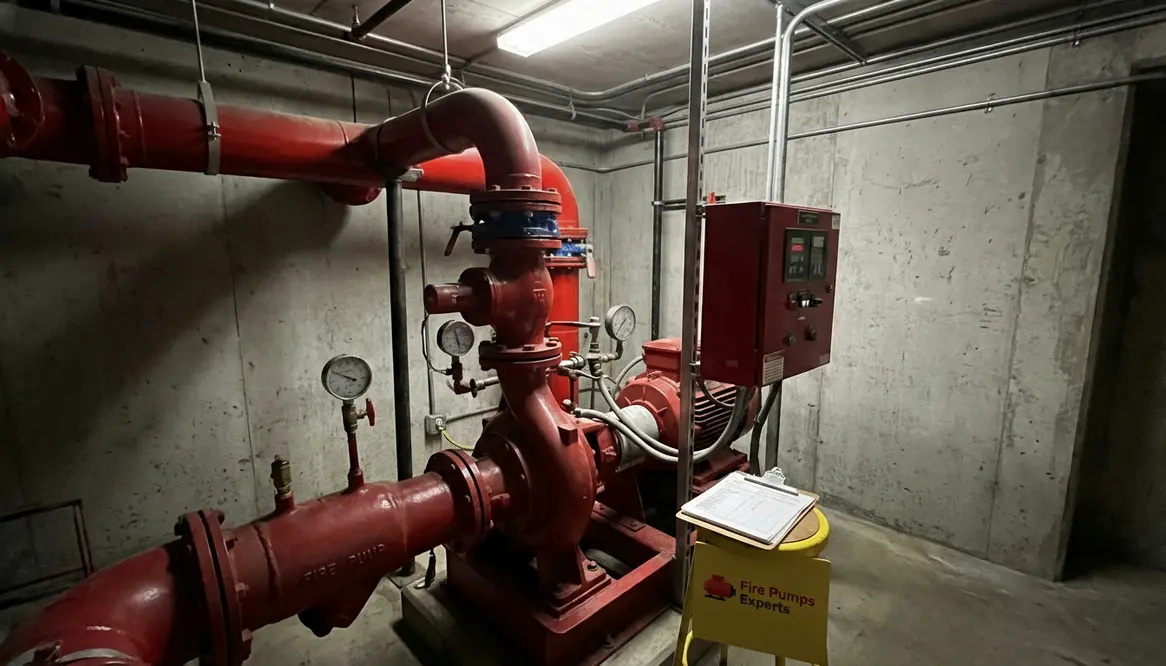
The pump room itself must meet strict conditions. Clearances matter. Drainage matters. Even ventilation matters. After all, these machines generate heat, and no one wants a pump room that feels like a sauna in July.
Key Components Installed
Contractors install several key components that inspectors will later study in uncomfortable detail.
- Fire pump and driver assembly
- Controller and automatic transfer switch if required
- Suction and discharge piping
- Backflow prevention and isolation valves
- Pressure sensing lines and gauges
- Test header or flow test system
Meanwhile, electrical crews connect dedicated power feeds and control wiring. In larger commercial facilities, this work often ties into emergency power systems. That coordination requires careful scheduling, particularly in hospitals, high rise buildings, and industrial plants where downtime is not an option.
Installation quality matters more than speed. A poorly aligned pump or incorrect valve orientation can stop the project cold when inspectors arrive, turning a carefully planned date on the calendar into a very expensive missed opportunity.
Inspection Day: What San Diego Fire Inspectors Actually Look For
Inspection day carries a certain tension. Contractors tidy the pump room. Engineers double check gauges. Someone inevitably wipes dust off the controller like it is a showroom car. Beneath the cleanup, everyone knows the fire pump permit inspection steps san diego common delays can show up right here if anything is out of place.
What Inspectors Verify in the Room
- Correct installation of pump and controller
- Proper pipe sizing and valve placement
- Electrical connections and labeling
- Pressure sensing lines installed correctly
- Alarm and monitoring integration
- Accessibility and clearance around equipment
The Performance Test Moment
Next comes the performance test. This moment is the big reveal.
Technicians flow water through the test header while measuring pressure and flow at multiple points along the pump curve. If the system performs exactly as designed, everyone breathes easier. If not, adjustments begin immediately.
Watching a pump test feels like watching a pit crew during a Formula One race. Everyone moves quickly. Gauges get checked. Valves open and close. And somewhere in the background, a clipboard appears like the final judge.
Why Fire Pump Permit Inspection Steps San Diego Common Delays Still Happen
Even with good planning, delays still creep into projects. And when they do, they often come from surprisingly small issues that hide in the margins until test day.
Documentation And Setup Problems
First, incomplete documentation causes many inspection setbacks. Inspectors expect pump certification data, factory test curves, and controller programming information ready for review, not sitting half finished in someone’s inbox.
Second, installation errors remain a frequent problem. Something as simple as a reversed check valve can stop a test instantly, and it is remarkable how fast the room goes quiet when that happens.
Coordination, Water Supply, And Scheduling
Third, coordination gaps between contractors slow progress. Electrical teams might finish after mechanical inspections are scheduled. Suddenly the inspector arrives, looks around, and says the one phrase every contractor dreads.
We will need to reschedule.
Additionally, water supply verification can cause unexpected delays. San Diego requires confirmation that the available municipal supply supports the fire pump design. If updated hydrant flow tests reveal lower pressure than expected, engineers must revise calculations and possibly equipment selections.
Finally, scheduling itself becomes a bottleneck. Large commercial developments often compete for inspection slots, particularly during busy construction cycles. In other words, the system works well. But it does not rush for anyone, and that alone explains many fire pump permit inspection steps san diego common delays across different projects.
If You Run a Large Facility, How Can You Avoid Permit and Inspection Problems?
If there is one piece of advice to facility owners and developers, it is this: start coordination earlier than you think necessary.
Large commercial buildings depend on reliable fire pumps. Distribution centers, manufacturing plants, office towers, and medical campuses cannot afford delays that stall occupancy approvals.
Best Practices That Keep Projects Moving
Therefore, experienced teams typically follow several best practices to stay ahead of the fire pump permit inspection steps san diego common delays that have slowed other projects:
- Conduct early water supply testing before final design
- Coordinate electrical and fire protection drawings together
- Confirm pump room layout during architectural planning
- Schedule pre inspection walkthroughs with contractors
- Prepare all documentation before the official test
These steps may sound simple. However, they often separate smooth projects from ones that drag on like the final season of a TV show that should have ended two years earlier.
FAQ About Fire Pump Permits and Inspections in San Diego
Facility managers in San Diego ask similar questions when they first face the fire pump permit inspection steps san diego common delays that show up on complex projects. These answers help set expectations before the first plan submittal or test date.
Moving Your Project Forward Without Delays
The path through permits and inspections does not have to feel like a maze. When engineers, contractors, and facility managers understand the process, the journey becomes predictable instead of dramatic. That awareness shortens many of the fire pump permit inspection steps san diego common delays that so often turn into schedule headaches.
If your commercial or industrial property needs expert support navigating fire pump design, permitting, or acceptance testing in California, connect with specialists who live in this world every day. For a deeper technical overview of how NFPA 20 shapes compliant installations, you can review resources like the NFPA 20 overview at Kord Fire Protection’s NFPA 20 guide, then bring those insights to your next project meeting.
The right guidance today keeps your building protected tomorrow and keeps those inspections pleasantly uneventful, with the fire pump quietly ready in the background where it belongs.