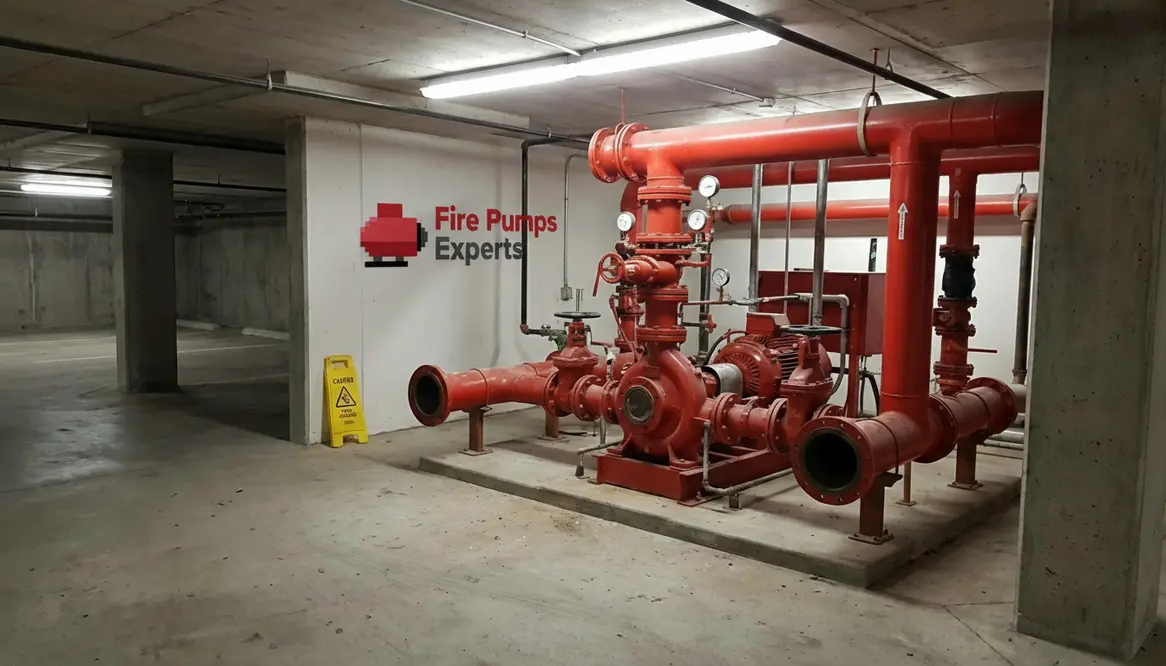
Parking Deck Fire Pump Requirements Guide
I have spent years walking through commercial properties where one overlooked detail could turn a routine day into a headline. Fire protection for open and enclosed decks sits high on that list. And yes, parking deck fire pump requirements often lead the conversation. Not because they are glamorous, but because they quietly decide whether a system performs when everything else fails. In large facilities, that reliability is not optional. It is survival dressed in steel and water pressure.
What fire protection does an open deck actually need?
At first glance, an open deck feels forgiving. Air moves freely. Smoke has somewhere to go. It almost feels like nature lends a helping hand. However, I have learned that fire does not care about good ventilation. It thrives on fuel and opportunity.
Open parking decks require well planned sprinkler coverage, even when codes allow reductions. I always recommend dry or pre action systems in colder regions. Additionally, standpipes must be easy to access, because firefighters should not need a treasure map during an emergency.
Furthermore, drainage matters more than people expect. Water from suppression systems must not pool and freeze. That turns a fire response into an ice skating routine, and nobody wants a first responder reenacting a slapstick comedy.
Most importantly, I ensure that water supply aligns with parking garage fire pump standards. Without sufficient pressure, even the best layout becomes decoration.
Enclosed decks demand more than just walls
Once a deck becomes enclosed, the stakes rise quickly. Heat builds. Smoke lingers. Visibility drops. In other words, the environment becomes less forgiving and far more dangerous.
Because of this, I prioritize automatic sprinkler systems with higher density coverage. Mechanical ventilation systems also step into the spotlight. They control smoke, assist evacuation, and support firefighting efforts.
Moreover, fire detection systems must be fast and reliable. Carbon monoxide detection often overlaps with fire safety systems, creating a layered approach. Think of it like having both Batman and Superman on duty. One handles stealth, the other brute force.
Water supply again becomes critical. Meeting parking deck fire pump requirements ensures that pressure remains consistent across multiple levels. In enclosed spaces, there is no margin for weak flow.
Balancing design, compliance, and real world performance
I often see designs that look perfect on paper but struggle in reality. Codes provide a baseline, not a finish line. Therefore, I approach every system with a simple question: will this work on the worst day?
For commercial and industrial properties, scale changes everything. A small miscalculation in pipe sizing or pump capacity multiplies across levels. Consequently, I coordinate closely with engineers, fire marshals, and facility managers.
Additionally, redundancy plays a quiet but powerful role. Backup power for fire pumps, secondary water supplies, and clear maintenance access all contribute to long term reliability.
And yes, maintenance is where many systems quietly fail. A neglected valve or an untested pump can undo years of careful planning. I like to say that a fire pump without testing is like a gym membership you never use. Technically present, practically useless.
Where parking deck fire pump requirements truly matter
In large parking structures, vertical distance and layout complexity challenge water delivery. Fire pumps bridge that gap. They ensure that upper levels receive adequate pressure and flow during peak demand.
However, not all pumps are created equal. Choosing the right type, whether electric or diesel driven, depends on the facility’s risk profile and infrastructure. I also pay close attention to flow testing and system curves, because guessing here is not an option.
Below is a simple breakdown I often share with property stakeholders:
Key Considerations
- Building height and deck levels
- Water supply reliability
- System demand calculations
- Emergency power availability
Common Mistakes
- Undersized fire pumps
- Ignoring future expansion
- Poor maintenance planning
- Inadequate testing schedules
When these elements align, the system performs as intended. When they do not, well, that is when problems show up uninvited.
Smart integration with modern building systems
Today’s commercial facilities demand more than isolated fire protection systems. Integration is the name of the game. Fire alarms, ventilation, and suppression systems must communicate seamlessly.
For instance, when a fire triggers detection, ventilation systems should respond immediately. At the same time, fire pumps must activate without delay. This coordination reduces response time and limits damage.
Additionally, remote monitoring has become a game changer. Facility teams can track pump performance, receive alerts, and schedule maintenance proactively. It is like having a watchful eye that never sleeps, minus the creepy science fiction vibe.
All of this ties back to meeting fire pump standards for parking structures. Compliance ensures a solid foundation, while integration builds a smarter, more resilient system. For more technical guidance on parking deck fire pump requirements and system reliability, I often point teams to resources like https://firepumps.org, then adapt those principles to the specific risks of each facility.
When the layout, controls, and hardware align with parking deck fire pump requirements, the result is a system that does not just pass inspection but stands ready for real-world emergencies.
FAQ: Fire protection for commercial parking decks
Final thoughts that move you to act
Fire protection is not a box to check. It is a system that must perform under pressure, literally and figuratively. If your facility includes open or enclosed decks, now is the time to evaluate your design, verify your capacity, and confirm your compliance. Work with experts who understand the nuances of large scale systems and who treat parking structure fire pump criteria as a priority, not an afterthought. Because when the moment comes, preparation is everything.