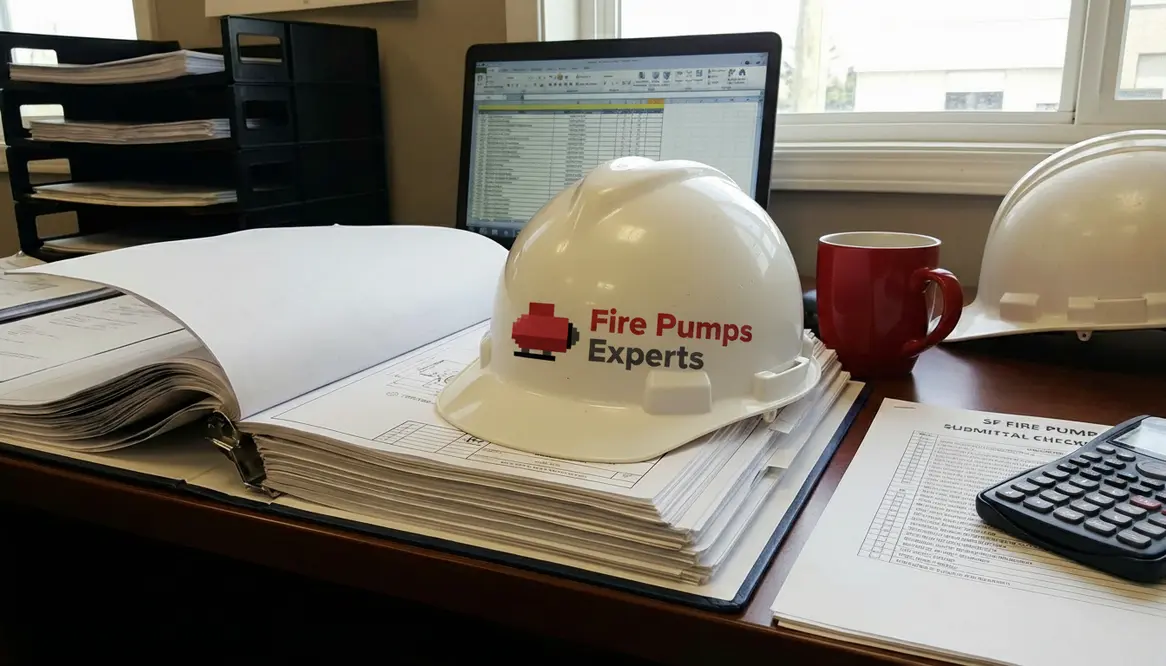
Fire Pump Plan Review Submittal Checklist San Francisco
I have spent enough time around fire protection plans to know one simple truth. Paperwork can stop a building project faster than a broken elevator during rush hour. In San Francisco, the approval process for fire pumps is particularly exacting. Therefore, when engineers and property owners begin a project, they need a clear roadmap. That is where the fire pump plan review submittal checklist san francisco becomes essential.
At first glance, a checklist might seem like just another document sitting in a stack on your desk. However, in the world of commercial and industrial fire protection, that list becomes your compass. It guides engineers, building owners, and project managers through the city’s strict requirements. More importantly, it keeps projects moving forward instead of circling the permitting office like a confused Uber driver downtown.
So today, I will walk you through how to approach a fire pump plan review submission in San Francisco. Along the way, I will explain what reviewers expect, how to avoid common delays, and how a well prepared submission can save time, money, and a few gray hairs.
Understanding Fire Pump Plan Review in San Francisco
San Francisco treats fire protection seriously. Given the city’s density and its concentration of high value commercial and industrial buildings, that caution makes sense. A properly designed fire pump system can mean the difference between minor damage and a catastrophic loss.
Because of this, the San Francisco Fire Department requires a detailed plan review before installation. Engineers must submit technical drawings, hydraulic calculations, equipment data, and site specific information. Meanwhile, property owners must ensure the project aligns with building codes, fire codes, and operational safety standards.
However, the plan review is not just about checking boxes. Reviewers evaluate how the fire pump system supports the building’s sprinkler network, water supply reliability, and emergency performance. In large commercial structures such as data centers, distribution facilities, or high rise offices, the fire pump becomes the backbone of the suppression system.
Consequently, every detail matters. Pipe sizing, pump capacity, controller configuration, and power supply redundancy must all be documented clearly. If something appears vague, the reviewer will likely request revisions. And revisions, as any project manager will tell you, move about as fast as San Francisco traffic on a rainy Friday afternoon.
What Engineers Should Include Before Submitting Plans
Engineers often ask me what reviewers expect to see the moment they open a submission. The answer is simple. Clarity, completeness, and code compliance.
Fire pump room layout and drawings
First, construction drawings must show the entire fire pump room layout. This includes the pump assembly, controller location, valves, suction piping, discharge piping, and test header arrangement. Reviewers want to understand exactly how the equipment will sit within the building.
Hydraulic calculations
Next, hydraulic calculations must demonstrate that the pump supports the required sprinkler demand. This calculation must consider friction loss, elevation changes, and water supply conditions. In large commercial properties, these calculations often determine whether the selected pump can deliver enough pressure during peak system demand.
Equipment documentation
Then comes the equipment documentation. Every major component must include manufacturer data sheets. Pumps, controllers, motors, pressure relief valves, and backflow assemblies all require verification. Reviewers compare these documents against the system design to confirm compatibility.
Power supply arrangements
Finally, engineers must clearly identify power supply arrangements. Electric fire pumps require dedicated service connections. Diesel pumps require fuel storage details and ventilation requirements. Without these elements clearly shown, the review process slows down considerably.
In short, a complete submission speaks the reviewer’s language. It answers questions before they even need to be asked, especially when you follow a structured fire pump plan review submittal checklist san francisco that keeps every piece of documentation aligned with the code requirements.
The Fire Pump Plan Review Submittal Checklist San Francisco Engineers Rely On
When I walk teams through a submission, I often say the checklist is like a pre flight inspection for a jet. You do not skip steps unless you enjoy dramatic landings.
The fire pump plan review submittal checklist san francisco typically includes several critical components that reviewers expect immediately.
Project Information
- Building address and occupancy classification
- Project contact details for engineers and contractors
- Scope of fire protection work
Technical Documentation
- Complete fire pump room layout drawings
- Hydraulic calculations verifying system demand
- Water supply test information
- Sprinkler system demand curves
Equipment Information
- Pump performance curves
- Controller specifications
- Motor or diesel engine data sheets
- Relief valve sizing documentation
Operational Safety Details
- Test header configuration
- Drainage provisions
- Alarm and monitoring connections
- Power supply details
Think of this checklist as a translator between your design team and the city’s reviewers. When the information arrives organized and complete, approval tends to move faster.
Common Mistakes That Slow Approvals
Over the years, I have seen the same problems appear again and again in submissions. Surprisingly, most delays come from small oversights rather than major design flaws.
For example, missing pump curves can stop a review cold. Without them, the reviewer cannot confirm whether the selected pump meets the required pressure and flow. Similarly, incomplete hydraulic calculations create confusion about the actual system demand.
Another common issue involves electrical coordination. Electric fire pumps must have a dedicated and reliable power source. If drawings fail to show that connection clearly, reviewers will request clarification.
And then there is the classic coordination error. The mechanical plans say one thing, the fire protection plans say another, and somewhere in the middle the reviewer sighs heavily and sends everything back for revision.
Trust me, nobody enjoys that email.
How Owners Can Support a Smooth Plan Review
While engineers handle the technical design, building owners play an important role as well. In large commercial properties, early coordination often determines how smoothly the approval process unfolds.
First, owners should confirm that adequate space exists for the fire pump room. San Francisco codes require specific clearances for equipment access and maintenance. If the architectural design squeezes the pump into a corner, revisions may follow.
Second, owners should coordinate utility requirements early. Electrical service capacity, fuel storage areas for diesel pumps, and drainage infrastructure all influence system design.
Finally, owners should work with experienced fire protection professionals who understand local review expectations. A knowledgeable team can anticipate questions before they appear.
In other words, a little preparation today can save months tomorrow, especially when everyone is aligned around the same fire pump plan review submittal checklist san francisco projects require to stay on schedule.
How I Prepare Submittals That Move Through Review Faster
Over time, I developed a simple approach that helps engineers and property teams avoid unnecessary delays. The strategy focuses on preparation, clarity, and documentation.
First, I verify the water supply data before any equipment is selected. Many problems originate from outdated or incomplete flow tests. Accurate water supply information allows engineers to size pumps correctly from the start.
Next, I review hydraulic calculations carefully before submission. Even small inconsistencies can raise questions during plan review. A clean and organized calculation package builds reviewer confidence immediately.
Then I confirm that all equipment documentation matches the drawings exactly. If the plans specify a particular pump model, the submitted data sheet must match that model. Reviewers notice mismatches quickly.
Finally, I organize the entire submission package logically. Drawings, calculations, equipment data, and supporting documents should follow a clear order. Think of it like telling a story. The reviewer should be able to follow the system design from water supply to sprinkler discharge without confusion. When the narrative is clear, the fire pump plan review submittal checklist san francisco reviewers use internally tends to line up nicely with what you provide.
And yes, occasionally I imagine the reviewer reading it with the calm patience of a seasoned narrator guiding a documentary. That mental image keeps the pacing nice and smooth.
FAQ About Fire Pump Plan Reviews in San Francisco
Below are some of the most common questions that come up when teams start working through a fire pump plan review submittal checklist san francisco projects depend on for compliance and approval.
Moving Your Fire Pump Project Forward
Submitting fire pump plans in San Francisco does not have to feel like navigating a maze in the fog. With a clear strategy, strong documentation, and attention to detail, engineers and property owners can move through the process confidently. If your commercial or industrial project requires expert guidance, our team at firepumps.org helps prepare complete submittal packages, coordinate technical documentation, and support smoother approvals. Reach out today and let us help your fire protection system move from paperwork to performance.