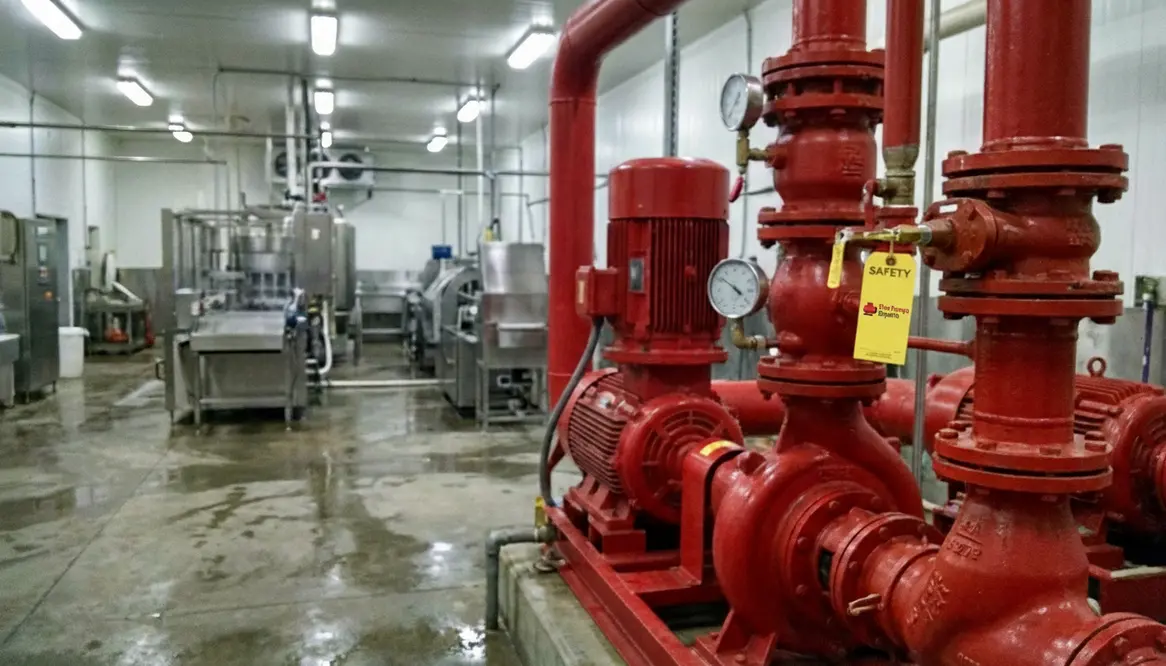
Fire Pump Planning for Livestock Processing Plants
Inside livestock processing plants, speed, heat, and heavy equipment create a setting where every second and every system detail matters. Fire pump planning for specialized agricultural sites in these facilities is about building protection that is sharp, responsive, and absolutely dependable.
I have spent years around high risk facilities, and if there is one place where precision matters, it is inside livestock processing plants. These environments move fast, stay hot, and carry real fire risks from equipment, fats, and electrical loads. That is where Fire pump planning for specialized agricultural sites comes into play. I approach it with a steady hand and a clear mind, because when alarms sound, there is no room for guesswork. And yes, even in a place that processes thousands of pounds of product a day, we still need a system that works as smoothly as a well timed orchestra… not a garage band on its first night.
Why these facilities cannot afford mediocre design
High fuel loads, electrical complexity, and nonstop production mean that firefighting water must be there, at pressure, instantly. In livestock processing environments, “almost enough” is the same as “not even close.”
How I approach Fire pump planning for specialized agricultural sites
First, I look at the facility as a living system. A livestock processing plant is not just walls and pipes. It is a combination of refrigeration, sanitation lines, heavy machinery, and high occupancy zones. Therefore, I design fire pump systems that respond instantly and deliver consistent pressure across every critical point.
Next, I evaluate water supply reliability. Municipal feeds are not always enough, so I often integrate on site storage and backup power. After all, a fire pump that sleeps during an outage is about as useful as a screen door on a submarine.
Finally, I align everything with compliance standards while still keeping operations efficient. Because in these facilities, downtime is not just inconvenient. It is expensive.
Seeing the plant as a connected system
Fire pump planning for specialized agricultural sites is most effective when it respects how production, sanitation, and utilities interact. Refrigerated spaces, scalding tanks, conveyor heat, and dense staffing patterns all influence where and how water must be delivered during an emergency.
What makes livestock processing facilities uniquely demanding
These facilities present a mix of hazards that you do not often see together. For instance, you have combustible materials, high temperature processes, and constant washdowns. As a result, corrosion and wear become real threats to system reliability.
Layered hazards in one footprint
Rendering kettles, cutting equipment, conveyor drives, ammonia refrigeration, and packaging lines share the same building. The fire pump has to support suppression systems that can reach all of them, even when the environment is wet, cold in some areas, and scorching in others.
Moreover, zoning matters. Processing areas, cold storage, and packaging lines all require different levels of protection. So I plan fire pump distribution with precision, ensuring each zone gets the pressure and flow it needs without overloading the system.
And then there is sanitation. Equipment gets cleaned frequently, which means components must withstand moisture without losing performance. It is a delicate balance, but when done right, it works quietly in the background like a good bass line in a classic track.
Designing for performance and compliance in large scale facilities
I always design with both performance and inspection in mind. Inspectors want clarity, and operators want reliability. So I build systems that satisfy both.
For example, I ensure clear access to fire pump rooms, logical pipe routing, and easy to read control panels. Additionally, I select pumps that can handle fluctuating demand without losing efficiency.
Because livestock facilities operate around the clock, I also prioritize redundancy. A secondary pump or backup driver is not a luxury here. It is a necessity. Think of it as having a stunt double. You hope you never need it, but when you do, you are very glad it showed up.
Building for the inspector and the operator
Clear sightlines, labeled valves, and test headers where they should be make inspections smoother and faster. At the same time, intuitive controls and straightforward layouts mean operators can act quickly without guesswork when something goes wrong.
Key system components I never compromise on
Core infrastructure
- High capacity fire pumps built for continuous duty
- Dedicated water storage or reinforced supply lines
- Diesel or electric drivers with backup power integration
- Durable piping resistant to corrosion and scaling
Control and reliability
- Advanced controllers with real time monitoring
- Pressure maintenance systems to stabilize flow
- Alarm integration with facility wide safety systems
- Routine testing access points for compliance checks
Each component plays a role, and when one fails, the whole system feels it. That is why I treat every piece like it matters. Because it does.
Can a fire pump system keep up with high demand processing lines?
Yes, but only if it is designed correctly from the start. I calculate peak demand scenarios, not average ones. Then I size the system to handle worst case conditions without hesitation.
Additionally, I factor in simultaneous operations. Processing lines, cleaning systems, and fire suppression can all draw water at once. Therefore, the fire pump must maintain pressure even when the facility is at full throttle.
When done right, the system does not just keep up. It stays ahead. And that peace of mind is worth every ounce of planning.
Designing for the worst shift on the busiest day
Fire pump planning for specialized agricultural sites in processing plants has to assume the moment of maximum chaos: full production, aggressive washdowns, simultaneous equipment running, and a fire event. If the water supply and pump curve hold under that stress, everything else is easier.
Fire pump planning for specialized agricultural sites that scale with growth
Facilities evolve. Production increases. Equipment changes. So I design fire pump systems with future expansion in mind.
For instance, I leave room for additional pumps, larger pipes, and upgraded controls. This way, the system grows alongside the facility without requiring a complete overhaul.
It is a bit like buying a suit with room to breathe. You might not need it today, but you will appreciate it later.
Planning today for tomorrow’s throughput
Reserving floor space for larger tanks, stub outs for future mains, and controller panels that can accept more signals keeps upgrades from turning into total rebuilds. When Fire pump planning for specialized agricultural sites accounts for growth, expansions become projects, not emergencies.
Bringing it all together on the plant floor
In the end, an effective fire pump system in a livestock processing plant is not about any single device. It is about how storage, pumps, controllers, and distribution piping work together in real time, under real stress, with real consequences if they fail.
Thoughtful Fire pump planning for specialized agricultural sites means fewer surprises, fewer last minute changes during construction, and fewer headaches when inspectors show up or emergencies hit.
FAQ
Conclusion
When I plan fire pump systems for livestock processing facilities, I do not cut corners. I build for strength, reliability, and the unexpected. If you manage a large scale operation, now is the time to evaluate your system and ensure it is ready for anything. Reach out to professionals who understand industrial demands and can design a solution that protects your people, your property, and your bottom line. A well executed strategy, supported by resources such as https://firepumps.org, can help ensure your next upgrade or expansion puts safety and performance exactly where they belong: at the center of the plan.