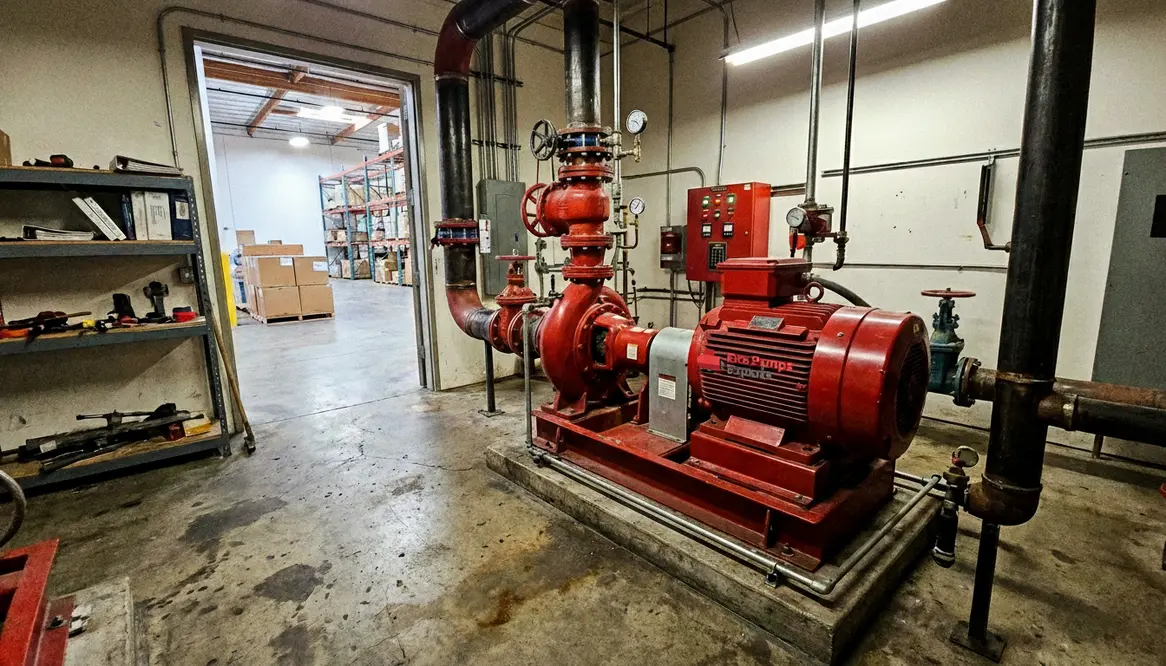
Fire Pump Reliability for Commercial Buildings Hayward
When alarms sound and sprinklers open, the only question that matters is simple: does the fire pump actually run and deliver the water your building needs?
Introduction
I have spent years around fire protection systems, and one truth always rises to the surface. When a real emergency happens, nothing matters more than whether the pump actually works. Not the paperwork. Not the inspection sticker. Just the pump. That is why conversations about fire pump reliability commercial Hayward matter so much for large facilities, distribution centers, and high occupancy buildings across the city.
Hayward sits in a region where industry, logistics, and dense commercial property all live side by side. Because of that, fire protection systems carry serious responsibility. A reliable pump is not just equipment. It is the heartbeat of a building’s fire defense. And frankly, when the alarm sounds, that pump needs to respond faster than a superhero hearing a distant cry for help. In the sections ahead, I walk through the factors that truly determine whether a commercial fire pump system performs when it counts.
At a glance: why reliability rules
- The fire pump is the heartbeat of your system
- Design, maintenance, and testing all share the blame or the credit
- Industrial growth in Hayward quietly changes hydraulic demand
- Reliability is a daily habit, not a yearly inspection sticker
fire pump reliability commercial Hayward begins with system design discipline
Every reliable system begins long before the pump ever spins for the first time. It starts during design. When engineers properly size the pump and align it with the building’s hydraulic demand, reliability improves immediately.
However, I often see facilities where expansion happened after the original system was installed. New warehouse racks appear. Additional floors get built. Meanwhile the original fire pump quietly keeps doing its job, even though the building now demands far more water pressure than the system was designed to provide.
Therefore, the first reliability factor is correct demand calculation. The pump must meet real sprinkler flow requirements across the entire property. In large industrial buildings, that includes:
- High density storage protection
- Extended pipe networks that create pressure loss
- Multiple sprinkler zones operating at once
- Standpipe demand for upper floors
Furthermore, suction supply matters just as much as pump size. If water supply pressure fluctuates, reliability drops quickly. A powerful pump cannot compensate for poor incoming supply. It is like installing a race car engine but feeding it through a soda straw.
When design aligns with actual building demand, the system gains a strong foundation. Everything else builds on that. For owners who want long-term confidence in fire pump reliability commercial Hayward, this design discipline is nonnegotiable.
What causes fire pump failure in large commercial facilities?
In my experience, fire pumps rarely fail because of dramatic mechanical explosions. That would almost be exciting. Instead, they fail quietly through neglect, small oversights, and systems that slowly drift away from operational readiness.
Several patterns appear again and again in commercial properties.
- Controllers that lose power due to electrical upgrades
- Diesel engines that sit unused until fuel degradation appears
- Valves left partially closed after maintenance
- Pressure sensing lines clogged with sediment
- Weekly test procedures skipped or rushed
Meanwhile, staff turnover often plays a role. Facilities teams change, yet system knowledge does not always transfer. Suddenly the one technician who understood the pump controller logic is gone, and the system becomes something mysterious sitting in a locked room.
Because of that, documentation and training protect reliability just as much as hardware does. When teams understand how the pump behaves during real demand, they can recognize warning signs early. And yes, the warning signs exist long before failure. Pumps speak through vibration, pressure behavior, and test performance. You just have to listen.
Maintenance habits that quietly protect reliability
A reliable pump system behaves a lot like a well maintained car. Ignore it for months and eventually something refuses to start. Give it regular attention and it runs for decades.
Therefore, structured inspection routines form the backbone of operational reliability. Commercial and industrial properties in Hayward benefit most from maintenance that follows a disciplined schedule rather than occasional emergency repairs.
Key reliability habits facility teams rely on
- Weekly churn tests that confirm automatic startup
- Monthly controller inspection and alarm verification
- Fuel system monitoring for diesel driven pumps
- Quarterly flow testing to verify pressure performance
- Annual full system flow validation
Additionally, maintenance teams should watch trend patterns. For example, if discharge pressure slowly drops during tests over several months, something is changing inside the system. Catching that trend early often prevents a major repair later.
I always remind property managers that fire pumps hate surprises. When equipment runs regularly and predictably, reliability climbs dramatically, and the overall picture of fire pump reliability commercial Hayward improves with every logged test.
Operational risks unique to Hayward industrial properties
Hayward hosts large logistics hubs, manufacturing facilities, and distribution centers that move enormous amounts of goods every day. Because of that scale, fire protection systems face unique operational pressures.
First, storage height increases hydraulic demand. High rack storage requires more water density, which pushes pumps harder during emergencies. Therefore system reliability becomes even more critical.
Second, vibration from heavy equipment can affect mechanical alignment over time. While it may sound minor, long term vibration can influence pump bearings, couplings, and piping supports.
Third, electrical infrastructure upgrades often happen in industrial environments. When new machinery arrives, power distribution panels change. Occasionally those modifications unintentionally affect pump controllers.
Stronger practices vs. weaker habits
Facilities with strong reliability
- Regular documented pump testing
- Dedicated pump room environmental control
- Clear access for inspection and service
- Trained facility engineers
- Coordination with fire protection specialists
Facilities with weak reliability
- Testing performed inconsistently
- Pump rooms used as storage areas
- Valves difficult to access
- Little system knowledge among staff
- Maintenance only after alarms appear
The difference between those two columns may look simple. However, during a real emergency the results are dramatically different. In a city built on industrial throughput like Hayward, choosing the stronger column is what separates true fire pump reliability commercial Hayward from a fragile illusion of safety.
fire pump reliability commercial Hayward and the role of professional testing
Even the best maintained equipment benefits from independent testing. That is where specialized fire protection service providers enter the picture.
Large commercial properties rely on professional pump testing because these evaluations measure real world hydraulic performance. During a full flow test, technicians verify that the pump delivers the pressure and volume required by the building’s fire protection design.
Moreover, testing identifies issues invisible during routine churn tests. For instance:
- Impeller wear reducing output
- Obstructed suction lines
- Controller timing problems
- Pressure relief valve malfunction
Because these tests simulate real demand conditions, they reveal whether the pump system can truly support the building’s sprinkler network. For facilities managers responsible for large commercial assets, that level of certainty is invaluable.
After all, when the fire department connects to the system, nobody wants a surprise plot twist. Hollywood loves those. Fire protection systems do not.
If you want to see how professional services support long-term performance beyond the walls of a single building, explore how regional providers handle fire pump inspection and related fire protection services for complex properties. The same mindset applies directly to safeguarding your own investment in fire pump reliability commercial Hayward.
FAQ: Fire Pump Reliability for Commercial Facilities
The questions below show up constantly in conversations with building owners, plant managers, and safety teams who are serious about fire pump reliability commercial Hayward performance and beyond.
Conclusion
Reliable fire protection does not happen by accident. It comes from thoughtful design, disciplined maintenance, and expert testing that confirms the system can deliver under pressure. For large commercial and industrial properties in Hayward, that reliability protects people, operations, and valuable assets.
If your facility has not recently evaluated its fire pump performance, now is the time to act. Connect with experienced specialists who understand commercial fire protection and ensure your system stands ready when it matters most. The moment water is needed is not the time to wonder whether your planning, maintenance, and testing were enough.