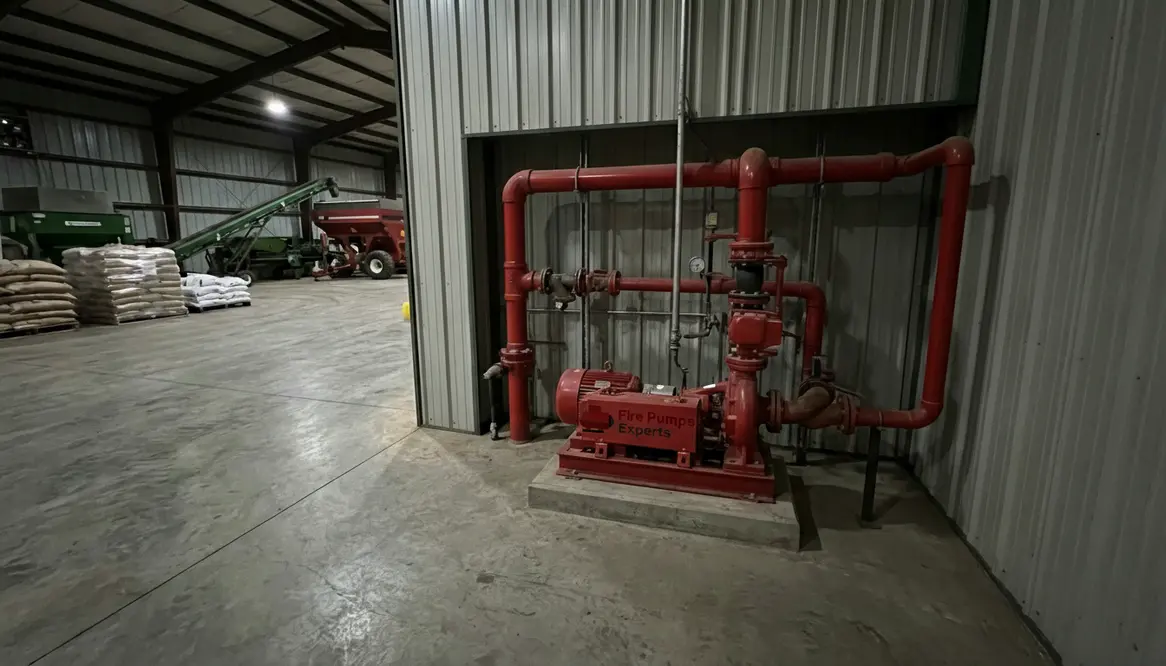
Fire Pump Requirements for Agricultural Facilities
I have spent years walking through processing floors that hum like a well tuned orchestra, where grain, produce, and raw goods move steadily toward market. Yet behind that rhythm sits a quieter system that rarely gets applause. Fire protection for farm-to-market operations is that system. It stands ready, patient and powerful, like the bass line in a great soundtrack. You may not notice it until it disappears. And trust me, you do not want that silence.
So today, I am going to walk you through fire pump requirements for agricultural processing facilities. I will keep it grounded, practical, and just lively enough that you do not feel like you are stuck reading a manual from 1997.
What fire pump capacity do agricultural processing facilities really need?
Let me answer this straight away. It depends on your hazard level, building size, and water supply. However, most large scale agricultural processing facilities fall into Ordinary Hazard Group 2 or higher, sometimes even Extra Hazard depending on dust, oils, or combustible storage.
Because of that, I usually see fire pumps ranging from 750 to 2000 gallons per minute. Now, that is not a number you guess after your second cup of coffee. Instead, it comes from hydraulic calculations tied to your sprinkler system design.
Furthermore, facilities handling grain, sugar, or ethanol production often require higher densities due to dust explosion risks. And yes, dust can be more dramatic than a Hollywood explosion scene, minus the slow motion walk away.
Therefore, selecting the right pump is not just about size. It is about matching real risk with reliable flow and pressure.
Typical capacity ranges
In many processing plants, hydraulic calculations lead to fire pump selections such as:
- 750 GPM for smaller, compartmentalized facilities with good municipal supply
- 1000–1500 GPM for moderate size plants with mixed production and storage
- 2000 GPM and above for large integrated processing, packaging, and bulk storage operations
Each step up is driven by calculated demand at the hydraulically most remote area, not guesswork or convenience.
Key capacity drivers
- Hazard classification of production and storage areas
- Required sprinkler density and design area
- Available pressure from municipal or on-site water sources
- Vertical distance to the highest or most remote sprinkler
- Simultaneous demands from hose streams or foam systems
Fire protection for farm-to-market operations works best when these drivers are examined together, not in isolation.
Core fire pump components that keep operations moving
Every fire pump system has a few essential parts. When they work together, they create a dependable backbone for your fire protection strategy.
Driver type
Electric motors dominate in facilities with stable power. However, diesel engines step in when reliability must survive power outages.
Controller
This is the brain. It starts the pump automatically when pressure drops. No hesitation. No debate.
Jockey pump
Think of this as the system’s maintenance crew. It keeps pressure steady so the main pump does not cycle unnecessarily.
Water supply
Municipal supply, storage tanks, or reservoirs must meet demand. Without this, even the best pump becomes a very expensive paperweight.
Discharge piping and valves
These direct water exactly where it needs to go, fast and without restriction.
Testing connections
Because if you cannot test it, you cannot trust it. And in fire protection, trust is everything.
How these pieces support continuity
For Fire protection for farm-to-market operations, reliability is measured in minutes: the minutes it takes for the system to sense pressure loss, start the pump, and deliver full design flow to the most remote hazard. Each component above plays a part in shrinking that timeline and keeping the facility running again after the smoke clears.
Design standards that shape Fire protection for farm-to-market operations
Now we step into the world of codes and standards. I know, it sounds thrilling already. But these rules exist for a reason.
NFPA 20 governs fire pump installation. Meanwhile, NFPA 13 dictates sprinkler system design. Together, they form the backbone of fire protection for farm-to-market operations in large processing environments.
Additionally, local codes and insurance requirements often add another layer. And yes, they will absolutely notice if something is missing. Inspectors have a talent for spotting issues the way chefs spot overcooked pasta.
Because agricultural processing facilities often operate continuously, redundancy becomes critical. That means backup power, dual pumps, or alternative water supplies. Downtime is expensive. Fire risk during downtime is even worse.
Key documents to know
- NFPA 20 for fire pump installation requirements
- NFPA 13 for sprinkler system criteria and hydraulic calculations
- NFPA 25 for ongoing inspection, testing, and maintenance
- Local building and fire codes adopted by your jurisdiction
- Insurance carrier guidelines and recommendations
Redundancy and resilience
Redundancy is not about showing off extra equipment. It is about recognizing that Fire protection for farm-to-market operations has to work on the worst day of the year, during the worst storm, at the worst possible time.
- Diesel backup when electrical reliability is questionable
- Dual pumps for particularly critical facilities or when required by code
- Separate water supplies where a single source could be compromised
Installation challenges inside large scale processing facilities
Installing a fire pump in these environments is not always straightforward. Space is tight. Equipment is everywhere. And operations rarely stop.
Therefore, I always plan for accessibility. Pumps need room for maintenance, testing, and eventual replacement. Squeezing a pump into a corner might save space today, but it creates headaches tomorrow.
Moreover, environmental conditions matter. Facilities with high humidity, corrosive materials, or extreme temperatures require protective measures. Otherwise, components wear out faster than a cheap pair of boots on a muddy farm.
Another key factor is vibration and noise control. While a fire pump is not running daily, when it does run, it should not disrupt operations or damage nearby equipment.
Planning around real-world constraints
- Locate the pump room where equipment can be moved in and out without major demolition
- Provide drainage and ventilation suitable for the pump type and driver
- Account for flood risk, dust accumulation, and corrosive vapors
- Coordinate routing of suction and discharge piping with production expansions
Inspection and testing that actually keeps systems ready
A fire pump is only as good as its last test. That is not just a saying. It is reality.
Weekly churn tests, monthly inspections, and annual flow tests ensure everything performs as expected. And yes, skipping these steps is like owning a parachute and never checking if it opens.
Additionally, data logging during tests helps identify trends. Pressure drops, delayed starts, or unusual vibrations can signal problems early. Fixing those early saves money and prevents failure when it matters most.
In large commercial and industrial facilities, maintenance programs should be structured and documented. Not optional. Not occasional. Structured.
A practical testing rhythm
- Weekly: automatic or manual churn test without flowing water
- Monthly: visual inspection of pump room, controllers, and valves
- Annual: full flow test to confirm performance against the pump curve
- After changes: additional testing whenever major system modifications occur
Using data to stay ahead
For Fire protection for farm-to-market operations, test data is more than a box to check. It is an early warning system.
- Track suction and discharge pressures at each test
- Note time to start, transfer to alternate power, and reach steady state
- Log unusual noises, leaks, or overheating
- Compare current results to baseline performance annually
Integrating fire pumps into broader facility protection strategies
A fire pump does not work alone. It supports sprinklers, standpipes, foam systems, and sometimes specialized suppression systems.
Because agricultural processing facilities often handle combustible dust or flammable liquids, integration becomes essential. Detection systems must trigger quickly. Pumps must respond instantly. And suppression must reach the hazard without delay.
Furthermore, coordination with facility operations is key. Shutdown procedures, emergency response plans, and employee training all tie into the effectiveness of the system.
When everything aligns, the result is not just compliance. It is resilience.
Connecting systems, people, and process
- Align fire pump capacity with worst-case combined demands from sprinklers, hose stations, and foam monitors
- Integrate pump status signals into the facility’s monitoring systems
- Train operators on how production shutdown steps interact with suppression systems
- Review emergency procedures at least annually with maintenance and operations teams
When Fire protection for farm-to-market operations is woven into day-to-day decisions, not parked in a forgotten mechanical room, it becomes part of the facility’s competitive strength, not just a cost of doing business.
FAQ: Fire Pump Requirements for Agricultural Processing Facilities
Closing thoughts that move you toward action
If you are managing or designing a processing facility, do not treat your fire pump as an afterthought. Instead, treat it like the quiet hero it is. The right system protects your people, your assets, and your ability to keep moving product to market. So take a closer look, ask the hard questions, and invest wisely. Because when fire protection works, nothing happens. And in this case, nothing is exactly what you want.