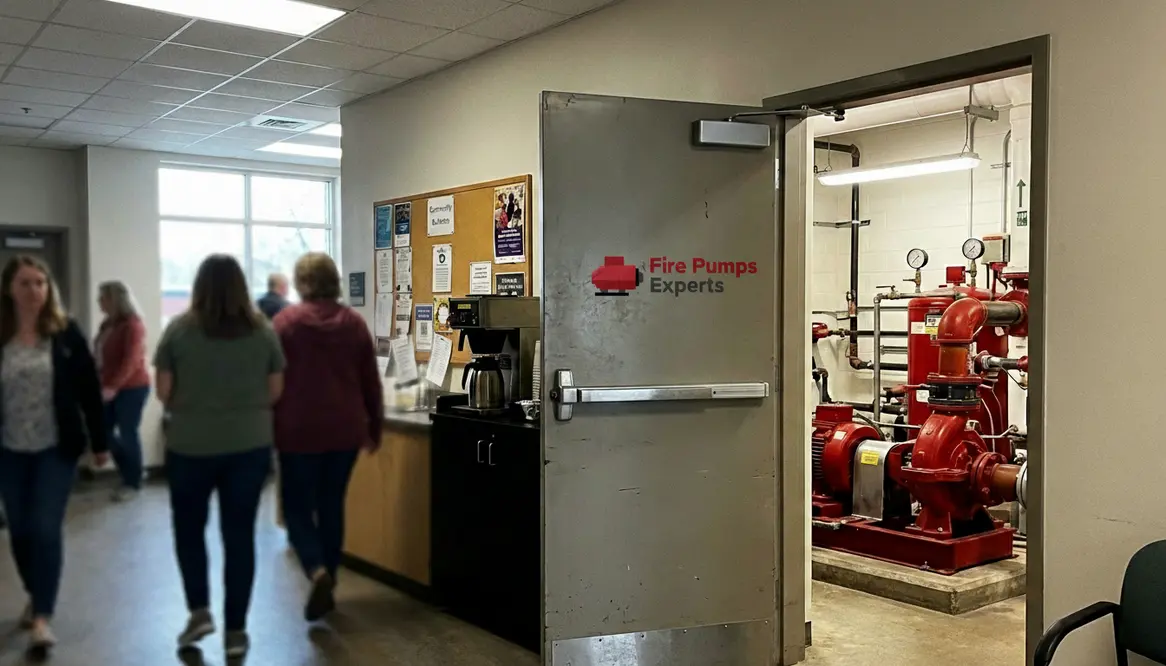

Fire Pump Requirements for Community Centers Guide
A practical walkthrough of how Fire Pump Requirements for Community Centers quietly shape real fire safety in busy multi use public buildings.
I have walked through enough multi use public buildings to know one thing for certain. When everything works, nobody notices. But when fire safety fails, everyone remembers. That is why I always start with the backbone of any serious protection strategy, the Fire Pump Requirements for Community Centers. Whether I am reviewing a sports complex, a municipal hub, or a mixed use commercial property, those requirements quietly set the tone for everything else. And yes, they matter more than most people realize, even more than the coffee machine in the lobby, and that is saying something.
Why this guide exists
Community centers, sports complexes, and civic hubs are never truly “empty.” This guide unpacks how Fire Pump Requirements for Community Centers influence water supply, evacuation, detection, and day to day operations so these spaces stay safe without feeling like a maze of equipment.
What makes fire safety different in multi use public buildings?
I look at these buildings as controlled chaos. You have gyms, offices, event halls, and sometimes even retail spaces under one roof. Because of this mix, fire risks do not behave in a predictable way. One minute you have a packed auditorium, and the next, a quiet office floor. Therefore, I design systems that adapt, not just react.
Additionally, occupant load shifts constantly. That means exits, alarms, and suppression systems must perform under both calm and crowded conditions. I always account for worst case scenarios because fire does not wait for a convenient moment. And while movies make fire look dramatic, real life fires are faster, quieter, and far less forgiving.
How Fire Pump Requirements for Community Centers fit into the chaos
This shifting occupancy and mixed use is exactly why Fire Pump Requirements for Community Centers are not a paperwork detail. They shape how much water is available, how fast it gets where it needs to go, and whether sprinklers and standpipes perform under the absolute worst timing imaginable.
Fire Pump Requirements for Community Centers and large facilities
When I assess a building, I start with water supply. Without pressure, even the best sprinkler system becomes decorative. The Fire Pump Requirements for Community Centers guide how I approach pump selection, redundancy, and placement in large scale facilities.
First, I ensure the pump can meet peak demand across all zones. A multi use building often requires simultaneous coverage in different areas. Next, I consider backup power. Because if the lights go out and the pump stops, we have a problem that no amount of optimism can fix.
Moreover, I always think about accessibility for maintenance. A fire pump hidden behind five locked doors and a storage closet full of folding chairs is not a plan. It is a future headache. And trust me, fire inspectors are not known for their sense of humor when they find that.
Key Design Priorities
- Reliable water pressure across all zones
- Backup power integration
- Easy maintenance access
- System redundancy
Common Oversights
- Undersized pumps for peak demand
- Poor placement of equipment
- Lack of testing protocols
- Ignoring future building expansion
Translating standards into real decisions
In practice, Fire Pump Requirements for Community Centers show up in mundane but critical choices: how you size the pump for that future second gym, how you route piping to reach a distant community hall, and how you plan around utility failures on the one day the building is packed for a local event.
How do I design evacuation that actually works?
I design for people, not blueprints. That means I assume confusion, hesitation, and the occasional person who thinks they can finish their workout before leaving. Because of that, I prioritize clear signage, wide egress paths, and intuitive layouts.
Furthermore, I layer communication systems. Audible alarms alone are not enough in a noisy environment like a gym or event hall. Visual cues and voice systems add clarity. And while it may sound excessive, redundancy in communication saves time, and time saves lives.
Linking evacuation to water supply performance
A good evacuation plan assumes the fire pump will perform exactly as designed, supporting sprinklers and hose outlets while people move. That is another reason Fire Pump Requirements for Community Centers are central: they make sure that when occupants follow the signs, the building’s suppression systems are buying them time instead of struggling for pressure.
Integrating detection and suppression without overcomplicating things
I have seen systems that look impressive on paper but fail in practice because they are too complex. So I keep things smart but manageable. Smoke detectors, heat sensors, and sprinkler systems must work together without requiring a PhD to operate.
In addition, I align these systems with the broader fire pump standards for large public facilities. Because detection is only half the story. Suppression must follow instantly and effectively. Think of it like a good band. Detection sets the rhythm, and suppression delivers the punch. And nobody wants a drummer without a guitarist.
Keeping the interface human friendly
Panels, indicators, and test procedures should be simple enough that staff can understand what is happening under pressure. Fire Pump Requirements for Community Centers set the technical backbone, but the real art is turning that backbone into controls and layouts that a tired evening supervisor can navigate without guessing.
Maintaining compliance without losing your mind
Regulations can feel endless, I get it. However, I treat compliance as a living process, not a one time task. Regular inspections, testing schedules, and system updates keep everything in line.
Moreover, I document everything. Not because I enjoy paperwork, but because clear records prevent confusion during audits and emergencies. And when inspectors walk in, I prefer confidence over improvisation.
Turning requirements into routine habits
The easiest way to handle Fire Pump Requirements for Community Centers is to embed them into maintenance calendars, staff training, and vendor contracts. Weekly checks, monthly tests, and annual full flow tests stop being interruptions and start becoming the normal rhythm of running a safe community building.
Technology and real time monitoring in modern facilities
Today, I lean heavily on smart monitoring systems. These tools track pressure levels, system performance, and potential faults in real time. As a result, I can address issues before they escalate.
Additionally, remote alerts allow facility managers to act quickly. Whether it is a pressure drop or a system fault, early detection changes the outcome. It is like having a watchful guard who never sleeps, and thankfully does not ask for coffee breaks.
Using data to validate fire pump performance
Modern dashboards make it easier to prove that Fire Pump Requirements for Community Centers are being met in reality, not just on the drawings. Logged test data, trend lines for pressure, and fault histories all give you a story you can show to insurers, regulators, or anyone else who wants to know if the system is more than decoration.
For more technical background and examples of performance criteria, references such as https://firepumps.org can provide useful context when you are aligning local design choices with broader industry expectations.
FAQ
Final thoughts and next steps
Fire safety is not just a checklist. It is a commitment to people who trust these spaces every day. If you manage or design a large facility, take a closer look at your systems, especially your fire pump setup. Align with proven standards, test regularly, and invest in reliability. When everything works as it should, nobody notices. And honestly, that is the best outcome you can hope for. Let’s keep it that way.