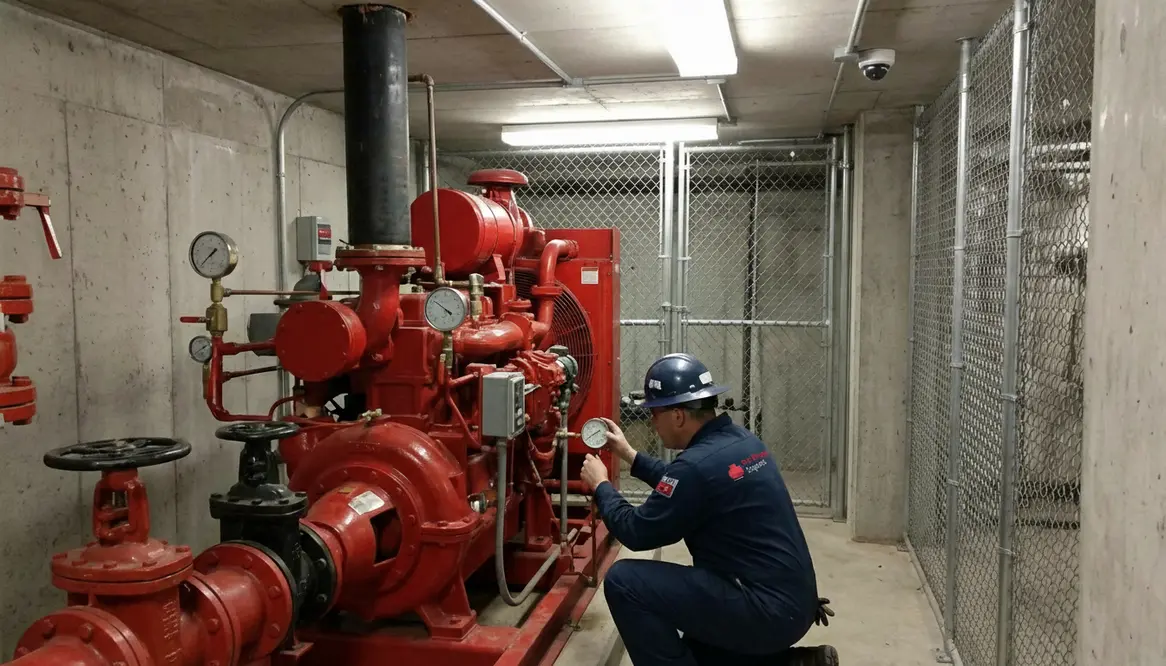
Fire Pump Requirements for Detention Annexes
I have spent years around commercial and industrial facilities where safety is not just a box to check but a daily responsibility. When we talk about Fire Pump Requirements for Detention Annexes, we are not discussing some abstract code buried in a dusty manual. We are talking about systems that must perform under pressure, in environments where lives depend on structure, control, and reliability. Auxiliary correctional structures, those annexes and support buildings tied to larger detention complexes, bring unique challenges. And yes, they demand more attention than your average office building that just hopes the sprinkler system remembers its job.
Understanding Fire Safety in Auxiliary Correctional Structures
Auxiliary correctional structures often include intake buildings, medical wings, maintenance areas, and temporary housing units. While they may sit outside the main facility, they are far from secondary in risk. In fact, these spaces often deal with higher movement, varied occupancy, and more complex layouts.
Because of this, I always stress that fire protection must be intentional. You cannot simply extend the main system and hope for the best. Instead, you need dedicated planning that accounts for restricted movement, controlled access, and the reality that evacuation is not always straightforward. Moreover, fire suppression must work immediately, because delays in these environments can escalate fast.
Fire Pump Requirements for Detention Annexes and Why They Matter
Let me be clear. Fire pumps are not optional decorations in these facilities. They are the backbone of the entire suppression system. When municipal pressure drops or demand spikes, the pump steps in without hesitation.
However, detention annex fire pump standards go beyond typical commercial setups. These systems must maintain consistent pressure across secured zones, sometimes over long distances or through reinforced construction. Additionally, redundancy becomes critical. If one component fails, another must take over instantly.
I have seen facilities underestimate this. It usually ends with expensive retrofits and a few uncomfortable meetings. So, it pays to get it right from the start.
Key Design Priorities
- Reliable water supply with backup options
- Strategic pump placement for coverage
- Integration with alarm and control systems
- Secure access for maintenance teams
Operational Considerations
- Routine testing without disrupting operations
- Clear zoning for pressure consistency
- Compatibility with existing infrastructure
- Emergency override capabilities
How Do I Design Fire Protection for a Detention Annex?
Good question. And one I hear often from facility managers and project leads.
I start with risk mapping. Every annex has different functions, so I identify high risk zones first. Mechanical rooms, storage areas, and intake processing spaces often top the list. Then, I align suppression strategies with those risks.
Next, I ensure the fire pump system can handle peak demand. This includes worst case scenarios, not just average use. Because let us be honest, fires do not schedule themselves during low traffic hours.
Finally, I coordinate with security protocols. Fire systems must operate without compromising containment. That balance is tricky, but absolutely necessary.
Compliance, Codes, and Real World Application
Codes provide the framework, but real world application brings it to life. NFPA standards, local regulations, and insurance requirements all play a role. Still, compliance alone does not guarantee effectiveness.
I have walked into facilities that technically met code but struggled with performance. Why? Because systems were not designed with actual use in mind. For example, delayed pump activation or poor pressure distribution can render a compliant system ineffective.
Therefore, I always recommend performance testing under realistic conditions. Simulate demand. Push the system. See how it responds when things get uncomfortable. That is where you find the truth.
Fire Pump Requirements for Detention Annexes in Complex Facilities
In large commercial and industrial properties, detention annexes rarely operate in isolation. They are part of a broader network that includes multiple buildings and systems. This adds another layer of complexity.
Here, detention annex fire pump requirements must align with the overall fire protection strategy. Coordination between systems ensures consistent pressure and avoids conflicts. Additionally, centralized monitoring becomes essential. You want visibility across the entire property, not just one building.
And yes, this is where things can feel like juggling chainsaws. But with proper planning and experienced design, it becomes manageable. Even elegant, if you are into that sort of thing.
Common Pitfalls I See and How to Avoid Them
Over the years, I have noticed patterns. Some mistakes show up again and again, like that one movie sequel nobody asked for.
- Undersized fire pumps that cannot meet peak demand
- Poor integration with existing systems
- Lack of routine testing and maintenance
- Ignoring future expansion needs
To avoid these, I always recommend working with specialists who understand large scale commercial and industrial environments. This is not the place for guesswork or shortcuts. If you want to explore more technical context around Fire Pump Requirements for Detention Annexes, resources such as https://firepumps.org can offer useful background alongside your design team’s expertise.
FAQ: Fire Safety for Auxiliary Correctional Structures
When people start unpacking Fire Pump Requirements for Detention Annexes, the same questions tend to surface. Here are concise answers to some of the most common ones.
Final Thoughts and Next Steps
If you manage or design commercial detention annexes, do not treat fire safety as an afterthought. The right fire pump strategy protects lives, property, and operations. I encourage you to evaluate your current systems, consult experienced professionals, and invest in solutions built for real world demands. When the pressure rises, your system should not blink. It should perform exactly as designed, every single time. In that context, understanding Fire Pump Requirements for Detention Annexes is not a paperwork exercise; it is a core part of keeping people safe in some of the most demanding environments you will ever design or operate.