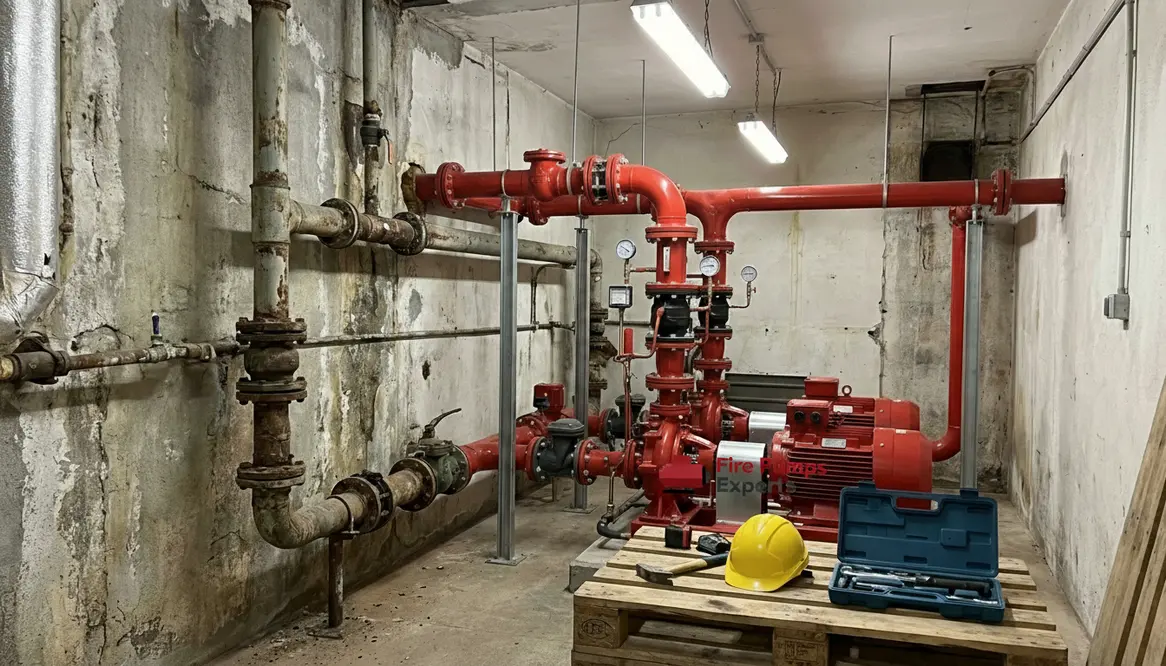
Fire Pump Systems for Civic Redevelopment Projects
I have spent enough time around aging public buildings to know this truth: when you open a wall, you are opening a story. And in that story, fire protection often plays the quiet character that suddenly becomes the hero. That is where Fire Pump Systems for Civic Redevelopment Projects step in. Early in any renovation, I treat fire pump planning not as a checkbox, but as the backbone of life safety. After all, no one applauds a fire pump until the day they really need it. And trust me, that is not a day you want improvisation.
Why Fire Pump Planning Matters in Public Sector Renovation
Public sector buildings carry history, but they also carry outdated infrastructure. Therefore, when I approach a renovation, I focus on how the fire protection system will meet current codes while supporting future use. A fire pump is not just equipment. It is pressure, reliability, and compliance wrapped into one humming machine.
Moreover, many civic buildings expand in function over time. A courthouse becomes a multi use complex. A municipal facility adds data centers. Consequently, water demand increases. If the fire pump system cannot keep up, the entire safety plan weakens.
And here is the part people underestimate. Retrofitting space for a pump room is often harder than installing the pump itself. Old basements, tight mechanical rooms, and structural limits all come into play. I have seen projects stall because someone assumed a pump would just “fit somewhere.” It rarely does.
Fire Pump Systems for Civic Redevelopment Projects: What Should I Plan First?
I always start with water supply analysis. Without that, everything else is guesswork. Is the municipal supply strong enough? Does it fluctuate? If the answer is uncertain, then the fire pump becomes essential, not optional.
Next, I evaluate building demand. Sprinkler systems, standpipes, and special hazards all contribute to required flow and pressure. Then, I align those needs with pump selection. Electric or diesel? Horizontal split case or vertical turbine? Each choice depends on site conditions.
However, planning does not stop at equipment. I also map out access. Can maintenance teams reach the pump easily? Can components be replaced without tearing down walls? Because nothing says “budget overrun” like removing a freshly renovated corridor just to swap a motor.
Finally, I coordinate with structural and electrical teams early. Fire pumps draw serious power and create vibration. Ignoring that is like inviting the Hulk into a glass shop and hoping he stays calm.
Integrating Modern Fire Protection into Historic Structures
This is where things get interesting. Historic buildings were not designed for modern fire codes. Yet, they must comply today. So, I approach integration with a balance of respect and practicality.
For example, I often use compact pump configurations when space is tight. Additionally, I route piping in ways that preserve architectural features. It is a bit like threading a needle while wearing gloves, but it can be done.
At the same time, I never compromise performance for aesthetics. A concealed system that fails is worse than an exposed one that works. Therefore, I prioritize function first, then refine the visual impact.
And yes, there are moments when stakeholders ask if we can “hide everything.” I usually respond with a smile and remind them that fire does not care about design intent.
Common Pitfalls I See and How I Avoid Them
Over the years, I have noticed patterns. Mistakes repeat themselves, especially in public sector renovation.
Here is what I actively avoid:
Late stage planning: If the fire pump enters the conversation after design is complete, expect redesign costs.
Underestimating demand: ভব Adding new building functions without recalculating fire flow leads to undersized systems.
Ignoring long term maintenance: A pump that is hard to service will eventually be neglected.
Power supply gaps: Fire pumps need reliable power. Backup systems are not optional in critical facilities.
Because of these risks, I keep communication constant across teams. Mechanical, electrical, and fire protection must move in sync. Otherwise, the project turns into a game of catch up, and no one enjoys that game.
Design Coordination That Actually Works
Now, let me show you how I structure coordination in a way that keeps projects moving.
Planning Focus
Water supply validation
Space allocation
Electrical integration
Code compliance
Execution Approach
Conduct flow tests early and confirm seasonal variation
Reserve pump room footprint before final layout approval
Coordinate dedicated feeders and backup power
Align with NFPA standards and local amendments from day one
This structured approach saves time, reduces redesign, and keeps stakeholders aligned. It also makes me look a lot smarter than I actually am, which I will happily accept.
Fire Pump Systems for Civic Redevelopment Projects in Large Facilities
When working on large commercial and industrial style public properties, complexity increases. These buildings often include multiple zones, high rise sections, or critical infrastructure areas. Therefore, I design systems that can handle variable demand without losing stability.
For instance, I may specify multiple pumps or pressure zones to ensure consistent coverage. Additionally, I consider redundancy. If one pump fails, another must take over without hesitation.
Furthermore, I factor in future expansion. Public buildings rarely stay static. So, I build flexibility into the system. It is like leaving room at the dinner table for unexpected guests. Except in this case, the guests are additional sprinkler zones and higher water demand.
For owners and municipalities planning Fire Pump Systems for Civic Redevelopment Projects, this scalability becomes a strategic asset, not just a code requirement.
FAQ: Fire Pump Planning in Public Sector Renovation
These are the questions I hear most often when teams start planning Fire Pump Systems for Civic Redevelopment Projects, especially on tight schedules and tighter budgets.
Closing Thoughts and Next Steps
In my experience, successful renovation hinges on early, thoughtful fire pump planning. It protects lives, preserves property, and keeps projects on track. If you are tackling a civic redevelopment, now is the time to get it right.
Fire Pump Systems for Civic Redevelopment Projects work best when they are treated as critical infrastructure from day one, not as an afterthought squeezed into leftover space. That means validating water supply, coordinating structure, power, and vibration, and giving maintenance teams clear access for the long haul.
If you want a deeper technical reference, resources at https://firepumps.org can support your design conversations and help align your team. Let us bring clarity, precision, and reliability to your fire protection strategy so your building is ready for whatever comes next.