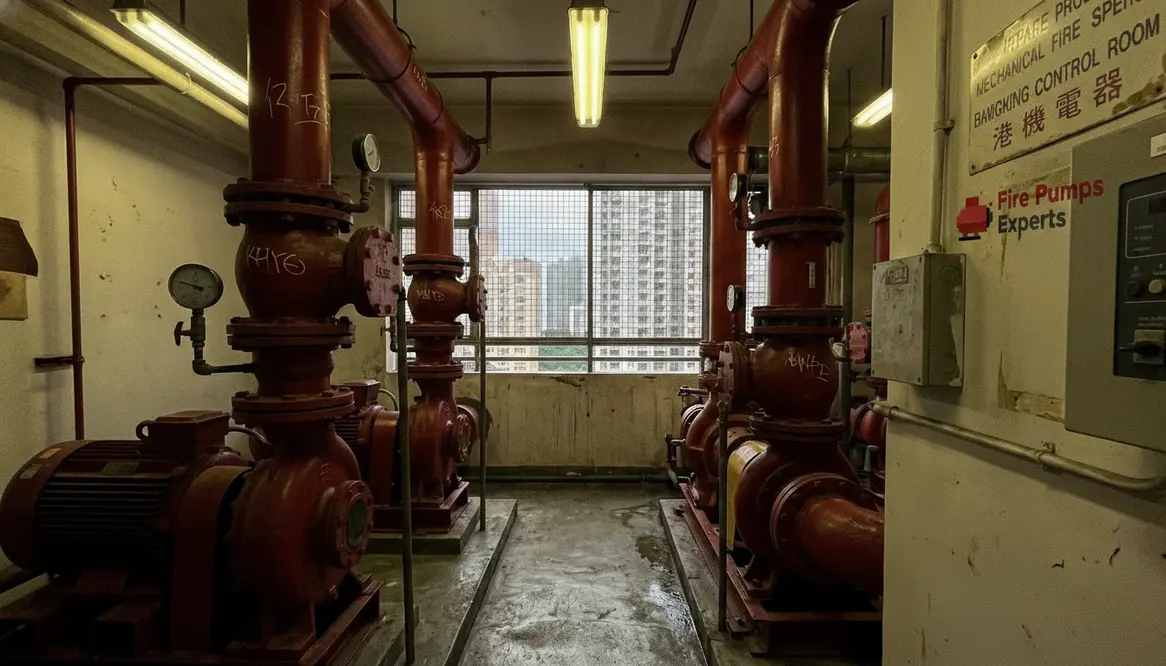
Hong Kong High Rise Fire Pump Requirements Guide
Hong Kong Fire Pump Requirements for High Rise Buildings
When I look at our Hong Kong high rise skyline, I see more than glass, steel, and a few brave window cleaners with excellent balance. I see a living system that must stay ready when fire strikes. In a tall building, water pressure does not behave like a polite guest. It needs help. That is where fire pumps step in. They keep water moving to the top floors, protect people, and support fast emergency response. For commercial and industrial properties, this is not a nice extra. It is part of serious life safety planning, and it deserves real attention.
In this article, I will explain the main fire pump requirements, how they support tall building safety, and what owners and facility teams should check. I will keep it practical, clear, and just technical enough to matter without turning this into a sleepy code lecture. Nobody needs that. Not even on a Tuesday.
What fire pumps do in a tall building
Fire pumps boost water pressure so sprinklers, hose reels, and hydrants can work as designed. In a tall building, gravity and distance can weaken water flow. So, a pump helps push water where it must go. That matters even more in a dense city like Hong Kong, where many major buildings rise high and serve many people every day.
In simple terms, the pump acts like the building’s backup muscle. If the fire system asks for strong pressure, the pump answers fast. If it fails, the whole system can lose power right when it matters most. That is why selection, installation, and testing all matter.
Hong Kong high rise fire pump rules you should know
For commercial towers and industrial sites, the fire pump setup must match the building’s fire protection design and local safety rules. I always focus on these core points:
- The pump must supply enough pressure and flow for the full protected area.
- It must support the sprinkler and hydrant systems under peak demand.
- It should connect to a reliable power source, with backup where required.
- The pump room must allow safe access, ventilation, and maintenance.
- The system must include alarms, controls, and pressure monitoring.
- Regular testing must confirm performance under real working conditions.
Also, a fire pump cannot sit in a cramped corner like forgotten gym gear. It needs a proper room, clear access, and protection from damage. If the room floods, overheats, or becomes hard to reach, the system loses value fast.
How I check fire pump design for commercial towers
I start with demand. The pump must match the building height, pipe layout, and fire load. Next, I check the water source. A pump only works well if it can draw from a reliable supply. After that, I review the controls. The pump should start automatically when pressure drops, and manual control should still be available for trained staff.
Then I look at redundancy. Many major properties use more than one pump, often with a duty pump and a standby pump. That way, if one unit has trouble, the system still has backup. In a city full of busy buildings, this kind of planning is not luxury. It is common sense with bolts on it.
High rise fire pump installation and testing checklist
Here is the dual view I use when reviewing a new or existing system:
Design and installation
- Match pump capacity to building demand
- Install in a clear, protected room
- Use proper valves, gauges, and controls
- Provide power backup where needed
- Fit the system to the fire plan
Operation and maintenance
- Test pressure and flow on a set schedule
- Keep access paths open and easy to reach
- Watch for leaks, noise, heat, and vibration
- Record faults and fix them without delay
- Train staff so they know what each alarm means
This is where many buildings slip. The design may look fine on paper, but the real test comes later. If the pump does not start as expected, or if pressure falls too fast, I know the building has a problem that needs attention now, not “after lunch” or “next quarter.”
Why maintenance matters for a Hong Kong high rise
A fire pump is not a set and forget device. It lives in a tough environment and must stay ready all year. I check for worn parts, weak power supply, blocked strainers, and damaged controls. I also make sure the team logs inspections and test results. That paper trail matters, because it shows the system did not just exist. It worked.
For owners of a Hong Kong high rise, strong maintenance also protects people, property, and business continuity. A failed pump can turn a controllable fire into a major loss. That is not drama. That is risk management with a very serious face.
Connecting Hong Kong high rise practice with standards
Behind every well-performing fire pump in a Hong Kong high rise is a set of standards, codes, and design assumptions. These shape the required flow rate, pressure at the topmost hydrant, and how pumps integrate with sprinklers, fire alarm panels, and emergency power. When all those threads line up, the system behaves in a predictable and reliable way during an incident.
That is why design teams, installers, and owners should treat documentation as part of the hardware. Clear pump data sheets, as-built schematics, and commissioning reports give future facility managers a roadmap. Without them, every repair or upgrade becomes detective work carried out under time pressure and fluorescent lighting.
Practical tips for owners and facility teams
If you manage or support a tall commercial property, you do not need to be a pump specialist to spot warning signs. You only need a simple routine, a clear set of questions, and the willingness to walk into the pump room more than once a year.
- Walk the pump room regularly and listen: unusual rattling, grinding, or humming is a request for attention.
- Check that indicator lights, gauges, and labels are clean and readable, not hidden under dust or taped-over notes.
- Confirm that the path to the pump room is clear of storage, locked doors, or surprise obstacles.
- Review the test logs and ask when the last full flow test was done, not just a quick start-and-stop.
- Make sure key vendors’ details and emergency contacts are posted where people can see them in the pump room.
For deeper design guidance and case studies, specialist resources such as https://firepumps.org can help support better decisions on upgrades and long-term reliability planning.
FAQ
Conclusion
If you manage a tall commercial or industrial property, I urge you to treat fire pump planning as a core safety job, not a box to tick. Review your system, test it well, and keep the maintenance strict. If you want a clearer path, speak with a team that focuses on major properties and fire protection systems. Your building deserves reliable pressure, strong protection, and no surprise plot twists.