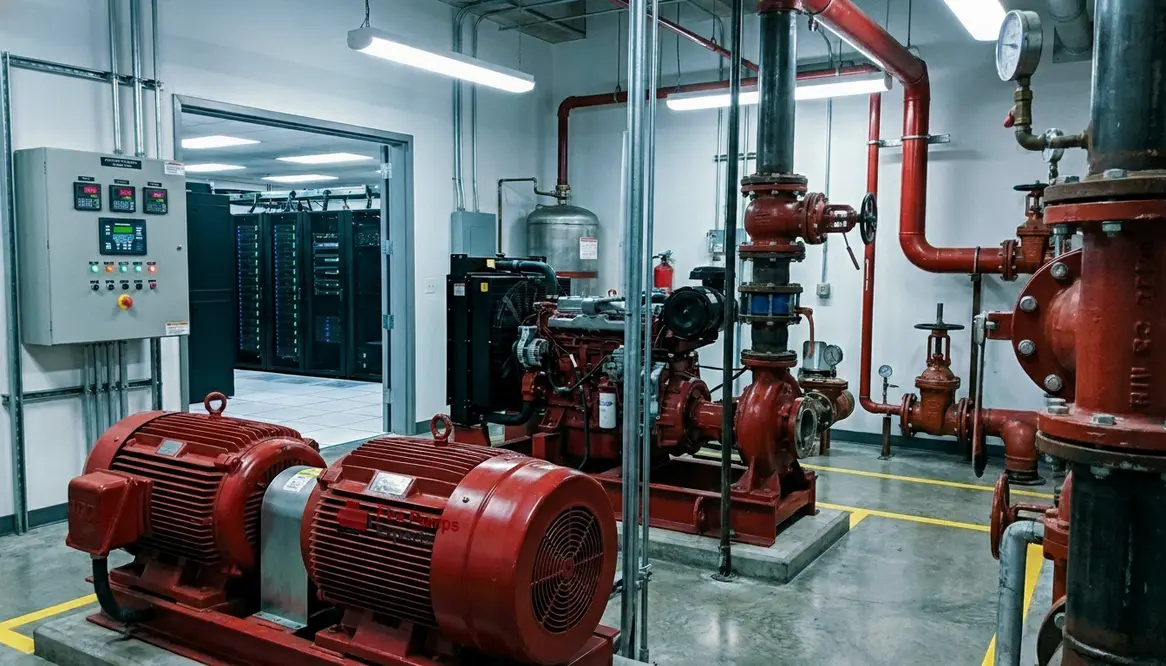
Global Data Center Fire Pump Standards Guide
A practical tour through the quiet machinery that keeps high‑stakes data centers protected, stable, and ready when conditions stop playing nice.
Fire Pump Standards for Global Data Centers
When I talk about fire pump standards for global data centers, I am talking about the quiet backbone of a building that cannot afford chaos. These sites hold business data, cloud workloads, and critical systems, so fire protection has to perform with the calm confidence of a veteran lead actor. In plain terms, the pump must deliver the right water, at the right pressure, every time. And yes, that matters whether the facility sits in Dallas, Dublin, or Dubai. The rules may shift by country, but the goal stays steady: protect the building, protect uptime, and keep the drama on the screen, not in the server room.
What I look for in global fire pump standards
I start with the codes that shape the design, installation, and testing of fire pumps in commercial and industrial facilities. In most projects, I review local law, insurer demands, and recognized standards such as NFPA 20, plus regional rules that may add their own twists. Because data centers run with tight risk control, I pay close attention to pump type, water supply, power source, and test flow. If one of those pieces misses the mark, the whole system can feel like a superhero with the wrong cape.
Here is the short version of what matters most:
- Water supply must support the pump demand under real fire conditions.
- Pump sizing must match the hazard and the system layout.
- Driver choice must fit the site, whether electric, diesel, or both.
- Controller setup must support fast, reliable start and alarm response.
- Test access must allow clear inspection and regular verification.
Because data centers often span large footprints, I also check how the fire pump connects to sprinklers, standpipes, and backup systems. A smart design does not just meet the code. Instead, it works with the whole building strategy, like a good band where the drums never try to steal the show from the bass.
Why fire pump standards matter this much
In a typical office, a clumsy fire system means inconvenience and paperwork. In a global data center, the same failure can knock critical platforms offline, upset customers on three continents, and generate headlines nobody wants to read twice. That is why I treat every project as if a future audit team is already sharpening their pencils.
Good planning keeps the fire pump from becoming the weakest link in an otherwise robust protection chain, so the system behaves like a calm professional on the worst day the site ever sees.
How I match codes to data center risk
Data centers do not behave like standard office towers. They pack dense electrical loads, sensitive gear, raised floors, backup power, and strict uptime targets. So I do not use a one size fits all view. I look at the fire area, the water demand, the room layout, and the local climate. For example, cold regions can affect piping and pump rooms, while hot or dusty climates can stress equipment and maintenance intervals.
Then I compare those conditions with the local authority and the insurer. In some regions, the rules may ask for seismic restraint, special power protection, or added testing. In others, the fire water source may need stronger redundancy. Therefore, the design has to reflect both the code and the building reality. I have found that the best projects treat compliance as a floor, not a finish line. That keeps surprises low, which is always nice because surprise is great in movies, not in fire protection reviews.
Translating standards into site reality
Fire pump standards give a shared language, but every data hall, annex, and auxiliary building adds its own accent. I spend time turning the paper rules into physical details: suction piping that actually works on a cold morning, controllers that stay stable on generator power, and test headers that teams can reach without a climbing harness.
That translation work is where risk control lives. Ignore it, and you end up with beautiful drawings that reality quietly refuses to follow.
Fire pump standards in design, testing, and upkeep
Once the system gets designed, I shift focus to install quality and long term care. A fire pump can only do its job if the piping, valves, suction source, and controller all work together. So I want clear access, correct alignment, proper room ventilation, and clean power or fuel support. I also want documentation that proves the pump was installed as approved, because future teams should not need a detective show just to find the basics.
Dual view: what I verify before handover
- I verify pump capacity and pressure at test conditions.
- I confirm controller alarms, transfer logic, and start sequence.
- I review suction conditions, pipe sizing, and valve positions.
- I check emergency lighting, room access, and signs.
Dual view: what I check during operations
- I review weekly or monthly inspection logs.
- I watch for leaks, vibration, heat, or unusual noise.
- I confirm fuel quality and battery health where needed.
- I schedule flow tests and service before small issues grow teeth.
Because data centers often run under tight service windows, I plan maintenance with care. Good upkeep should protect uptime, not challenge it. That means I coordinate with operations teams so testing feels smooth, not like a plot twist from a late season finale.
How fire pump standards support compliance across regions
Global owners face a real puzzle. A facility may follow one code path in North America, another in Europe, and yet another in Asia or the Middle East. However, the core aim stays the same: the pump must deliver dependable fire water under the conditions the site may face. I use that shared goal as my anchor, then I layer in local rules.
That is also where external guidance can help. For deeper code and installation support, I recommend reviewing commercial and industrial fire pump guidance for major properties as a practical reference point for teams that manage large facilities. It helps keep the focus on the right audience: commercial and industrial buildings, data centers, and other major properties that cannot afford weak protection.
Making fire pump standards a repeatable playbook
For global portfolios, I like to build a reference playbook that defines preferred fire pump standards, design options, and testing expectations. Local teams still follow their authority having jurisdiction, but the playbook keeps the philosophy consistent: conservative water supplies, robust drivers, accessible test points, and documentation that stands up in any boardroom that asks, “Are we covered?”
Why I treat fire pump standards as a business decision
I never see fire protection as a box to tick and forget. In a data center, it directly affects risk, insurance, continuity, and trust. If the pump system fails, the damage can hit far beyond the fire itself. It can slow recovery, trigger outages, and raise costs that make a CFO frown like they just watched the wrong sequel.
So I treat the pump as part of the business model. When the system meets the right standards, the owner gains more than compliance. The owner gains confidence. And in this market, confidence is not fluff. It is value.
That is why, in my own checklist, fire pump standards sit alongside cyber programs, power redundancy, and cooling resilience. All of them defend uptime. All of them protect reputation. All of them deserve board‑level attention, budget, and regular scrutiny.
FAQ: Data center fire pump standards
Conclusion
If you manage a global data center, I urge you to treat fire pump planning as a core part of your protection strategy. Start with the right standards, then match them to local law, site risk, and long term maintenance. That approach protects uptime, supports compliance, and reduces costly surprises. If you want your commercial or industrial facility to stay ready, now is the time to review your system, verify your documentation, and tighten every weak point before trouble ever shows up.