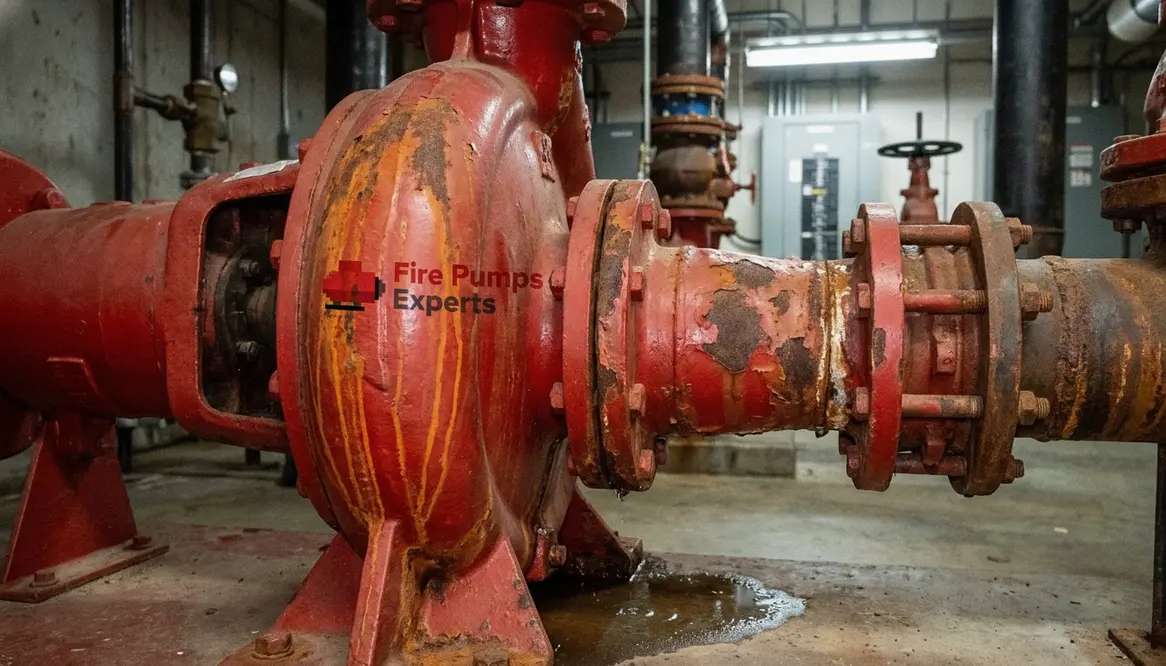
Fire Pump Corrosion Causes and Prevention
I have seen many building systems age gracefully, and I have seen a few that age like they spent a decade in a damp basement with no sunlight and bad decisions. Fire pump corrosion sits in that second group. For commercial and industrial facilities, and for major property buildings, it can quietly weaken a fire protection system before anyone notices. That is the real problem. The pump still looks fine, the room still feels “operational,” and meanwhile corrosion is doing its slow little villain routine. So, if you manage a large property, this is not a side issue. It is a safety issue, an uptime issue, and yes, a budget issue.
Quick reality check
- Corrosion grows quietly, often before a visible failure.
- Small issues start in places no one checks often.
- Prevention is cheaper than “fixing after it breaks.”
Why corrosion starts in fire pump systems
Corrosion begins when metal meets moisture, oxygen, and time. That sounds simple, because it is. However, in fire pump rooms, the conditions often speed up the process. Humid air, water leaks, poor drainage, and trapped condensation all give rust a welcome mat. In addition, the water quality inside the system can make things worse. If water carries minerals, sediment, or old residue, it can attack pipe walls, pump housings, fittings, and valves. Sometimes dissimilar metals also react with each other, and then the system starts its own little civil war.
Here is the part people miss. Corrosion does not need a dramatic event. It grows slowly, and it often begins in places no one checks often, such as flanges, joints, and the inside of piping. As a result, a pump can lose efficiency long before it fails in a visible way. That is fire pump corrosion behaving like it pays rent: consistently, quietly, and without asking permission.
Common causes I look for during inspections
When I review a large facility, I usually start with the usual suspects. First, I check for excess moisture in the pump room. Second, I look for pipe sweating, poor insulation, and water pooling near the base. Then I inspect for paint damage, because once the coating breaks, corrosion gets a front row seat.
Other common causes include
- High humidity with weak ventilation
- Leaks from seals, joints, or nearby equipment
- Stagnant water inside pipes or test lines
- Wrong material choice for fittings or pipe sections
- Skipped maintenance after the system looks “good enough”
Also, salt air can speed up corrosion in coastal areas, and harsh industrial settings can do the same. So, the building type matters. A data center, warehouse, hospital, or high rise all face different risks, but the threat still comes from the same place: unchecked exposure. That is how fire pump corrosion turns “small chemistry” into “big operational headaches.”
How fire pump corrosion affects performance
Performance impact
- Lower water flow
- Reduced pressure output
- Valve sticking or slow response
- More wear on moving parts
Business impact
- Higher repair costs
- Risk of failed inspections
- Unplanned downtime
- Greater safety exposure
Corrosion does not always cause a sudden breakdown. Instead, it chips away at system strength. For example, rust buildup can narrow water passages and reduce flow. Likewise, rough internal surfaces create drag, which hurts performance and efficiency. Over time, that can force the pump to work harder just to do its job. And nobody wants a fire pump acting like it just ran a marathon in dress shoes.
How I prevent corrosion before it spreads
Prevention works best when I treat the system like a living asset, not a forgotten box in the mechanical room. I begin with regular inspections, because early signs are easier to fix than a major failure. I also check for leaks and remove standing water fast. Then I focus on ventilation and room temperature, since steady air movement lowers moisture buildup.
Protective coatings matter too. A good coating can slow corrosion on exposed metal parts. However, coatings only help when the surface stays clean and intact. That means touch ups matter. In addition, I make sure materials match the system environment. Stainless steel, for example, may help in some settings, but not every part needs the same solution. The goal is fit, not flash. When you combine smart materials with good housekeeping, fire pump corrosion has a harder time setting up shop.
For trusted guidance on long term system care, I also review the fire pump maintenance guide from Kord Fire. It offers a practical view that fits the needs of large commercial sites and industrial properties.
What a maintenance plan should include
A strong maintenance plan should do more than check a box. It should track the system over time. I recommend a routine that includes visual inspections, pump testing, water condition checks, and record keeping. That way, small changes show up before they turn into real trouble. With fire pump corrosion, the trend matters more than the moment.
Room-focused checklist
- Clean drains
- Check humidity
- Replace damaged insulation
- Inspect the base and nearby piping
Paper trail that pays off
- Review past repair notes
- Watch for repeated corrosion locations
- Confirm water condition results
- Update records after every fix
In addition, a plan should cover the pump room itself. Clean drains. Check humidity. Replace damaged insulation. Inspect the base and nearby piping. Also, review past repair notes, because patterns often tell the truth faster than guesswork does. If corrosion keeps showing up in the same spot, then the root cause still lives there. That is the whole game with fire pump corrosion: remove the reasons it keeps returning.
For local service support, I also suggest reviewing los angeles fire pump service for commercial and industrial property needs. It can help support large buildings that need a steady, code ready approach.
FAQ
Conclusion
I treat fire pump corrosion as a problem that rewards fast action and punishes delay. For commercial and industrial facilities, and for major property buildings, the smartest move is simple: inspect early, fix moisture issues, protect exposed metal, and keep records that show what changed. If you want better reliability, fewer surprises, and a system that stays ready when it matters, start now. Your fire pump should stand guard, not slowly rust into a cautionary tale.