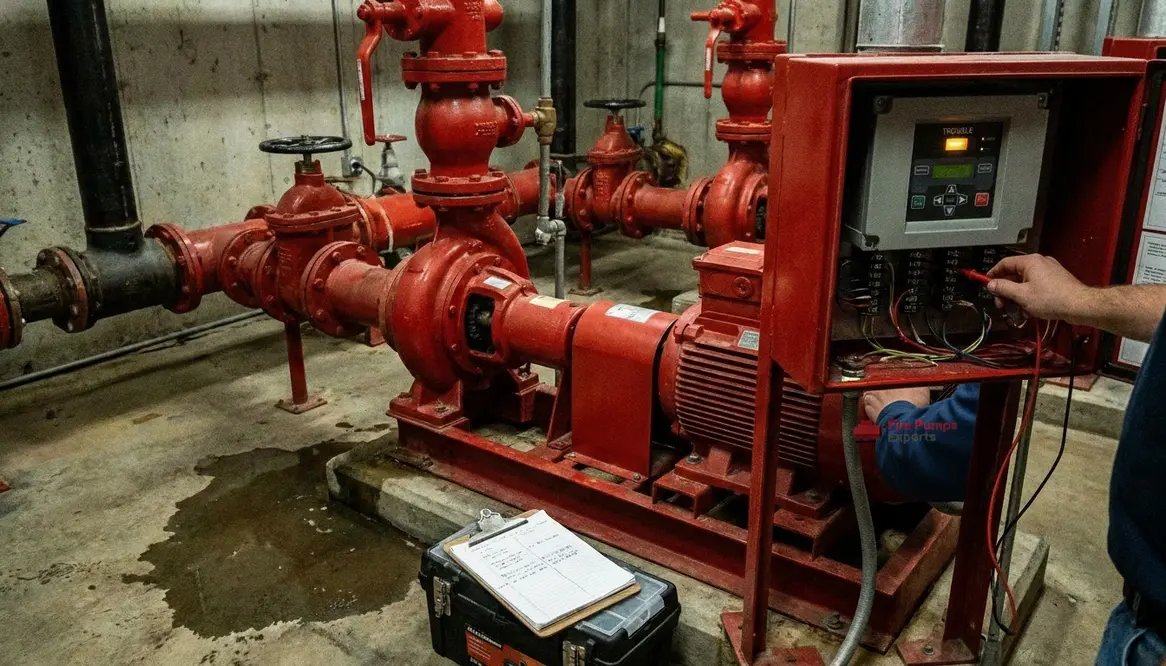
Fire Pump Emergency Repairs Quick Steps for Safety
Fire Pump Emergency Repairs: What to Do
When a fire pump fails, I do not treat it like a small maintenance hiccup. I treat it like the building is quietly asking for help. In a commercial or industrial facility, every minute matters, and fire pump emergency repair can decide whether a system stays ready or becomes a very expensive paperweight. I have seen how fast things can go sideways, and yes, the fire alarm never picks a convenient moment. So, when trouble starts, I move fast, stay calm, and follow a clear plan.
In this guide, I walk through what I do first, how I narrow down the problem, and how I keep a major property protected while repairs get moving. I also keep the focus where it belongs: on commercial and industrial buildings, plus large properties that depend on steady fire protection.
Check the system right away
My first step is simple. I look at the fire pump controls, gauges, alarms, and power supply. If the pump will not start, I check whether the issue comes from the controller, the motor, the diesel engine, or the transfer system. Then I inspect for leaks, low suction pressure, strange vibration, and blocked flow. A pump rarely fails out of nowhere. Usually, it leaves clues, like a villain in a movie who thinks no one is paying attention.
I also confirm whether the problem affects the whole fire protection setup or only one part of it. That matters, because a weak signal in one area can point to a bigger fault somewhere else. If the unit shows heat, smoke, loss of prime, or power failure, I treat it as urgent and move to shutdown safety steps if needed.
Fire pump emergency repair plan for commercial sites
Once I confirm a real issue, I build a repair plan that protects the building first. For commercial and industrial sites, I do not guess. I identify the failure point, notify the right team, and arrange service fast. If the pump is still partly working, I make sure the property stays monitored while I wait for repair support. This is where fire pump emergency repair stays focused: the building comes first, and the troubleshooting comes next.
Here is the quick process I follow:
Fast response checklist
- Confirm the alarm and trouble signal
- Check controller status and power
- Inspect suction, discharge, and valves
- Look for leaks, noise, heat, or vibration
- Record the fault before touching settings
- Call qualified fire pump repair support
Dual view: what I do versus what I avoid
What I do
I keep the building team informed. I document every reading. I isolate only the damaged part when safe. I use trained technicians for the repair. I also test the system again after service, because “it looks fine” is not a testing method. That one has the same energy as saying a spaceship is safe because the lights are on.
What I avoid
I do not reset alarms without finding the cause. I do not force a pump to run if it shows bad signs. I do not ignore a small leak or odd sound. And I do not let untrained staff improvise with fire protection equipment. That road leads straight to trouble, and trouble never comes alone.
Find the cause before the next failure
Emergency repair does not end when the pump starts again. I always look for the root cause, because the same problem often returns if I stop too soon. Common issues include worn seals, motor faults, clogged strainers, battery problems, low suction, bad alignment, or controller failure. Diesel units can also struggle with fuel issues, starter trouble, or poor cooling. This is the heart of fire pump emergency repair: fixing what broke, not just what stopped the alarm.
I also review how the system has been used. If the pump has run under strain, I want to know why. If the building changed use, added load, or had water supply shifts, I want that on the table too. Fire pumps serve major properties for a reason: they need strength, repeat use, and steady pressure. So, I treat every warning as a message, not background noise. When you do fire pump emergency repair this way, the next call is less likely to show up on schedule.
Get the right help and keep records
At this stage, I look for a team that knows fire systems inside and out. For building owners and facility managers, that means support built for commercial sites, industrial plants, and large properties. I also want a repair partner that understands compliance, testing, and long term reliability. Done correctly, fire pump emergency repair is not just a fix, it is a process that returns the system to dependable service.
If you want more background on system care, I suggest checking the fire pump service overview for related information. In the U.S. market, you can also review the Los Angeles fire pump repair resource to support local search and service research.
After the repair, I store the service notes, test results, and any part replacements. That record helps me spot trends, plan future maintenance, and prove the system got the attention it needed. It also saves time later, which is nice, because nobody enjoys solving the same mystery twice.
FAQ
Conclusion
When I face a fire pump failure, I act fast, stay methodical, and protect the building first. A strong response limits damage, shortens downtime, and keeps a major property prepared for the next emergency. If your facility needs help now, do not wait for a small fault to become a larger one. Reach out to a qualified fire pump team, get the system checked, and restore confidence in your protection today.