Fire Pump Replacement Cost Factors What I Look At
When I talk about fire pump replacement cost, I am not talking about a neat little number that drops from the sky like a movie sequel nobody asked for. I am talking about a set of moving parts, each one with its own price tag, risk, and timing. For commercial and industrial facilities, and for major property buildings, the final number depends on much more than the pump itself. In my experience, the real cost starts with the system condition, then spreads into labor, code needs, access, testing, and downtime. So, if you want a clear budget, I would start by looking at the whole picture, not just the shiny new pump.
What drives the total price?
The biggest driver is the type of fire pump system already in place. Some sites use electric pumps, while others run diesel. Each one changes the price in a different way. Electric units can be simpler to install, yet they may need electrical upgrades. Diesel pumps often need fuel system work, ventilation checks, and extra testing. Then there is the pump size, the required flow rate, and the pressure rating. Bigger systems usually mean bigger costs. No surprise there. In a high rise or large plant, the equipment must match the hazard level, so the replacement job can get serious fast.
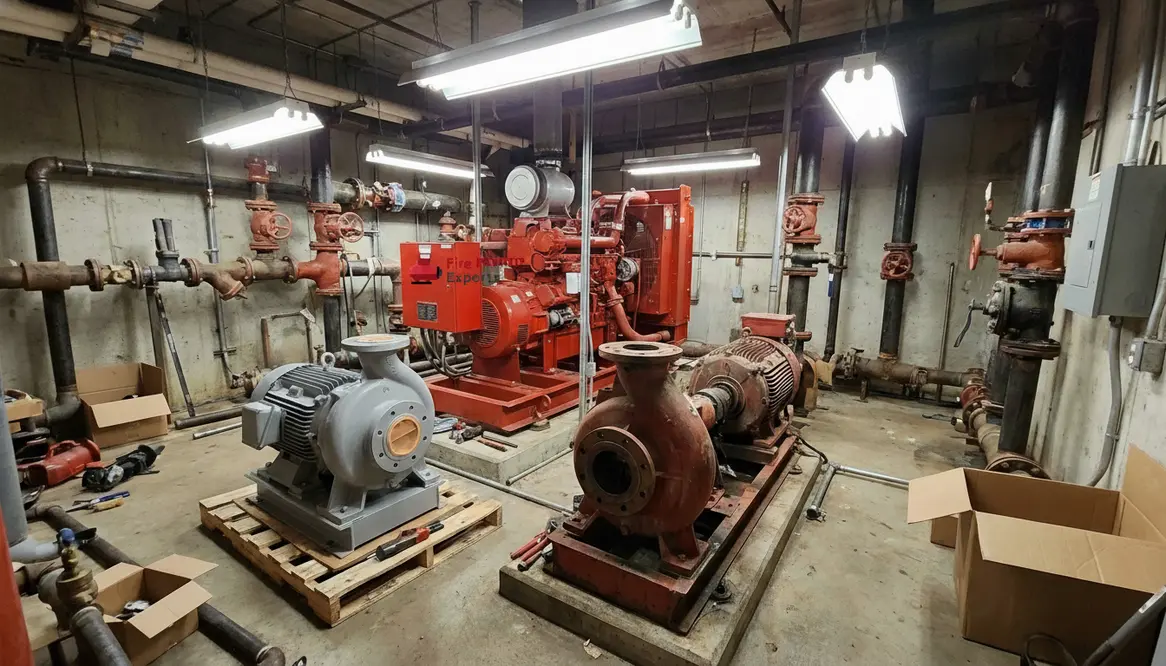
Another major factor is how much of the old system I can reuse. If the base, controller, piping, or suction setup stays in good shape, that helps control the budget. However, if corrosion or age has done its thing, I may need more than a pump swap. That is where the bill starts to stretch. Also, some facilities need parts sourced from specific manufacturers, and that can raise the price. Brand specific gear often acts like the VIP section at a concert. It looks nice, but it costs extra.
How site conditions change fire pump replacement cost
Site access matters more than people think. If I can move equipment in easily, the job goes faster. If I have to work through tight mechanical rooms, crowded service paths, or active operations, the labor climbs. And when a facility cannot shut down fully, the team may need night work or staged installation. That adds hours, planning, and coordination.
Older buildings can also hide problems. For example, the existing pad may not support the new pump, or the room may not meet current clearance rules. In that case, I may need concrete work, pipe changes, or even structural updates. This is where careful review saves money. I like to inspect the full space before anyone assumes the replacement will be a quick win. It is rarely that simple. This is not a Marvel reboot. The old system usually has secrets.
Which code and test needs affect the budget?
Code compliance can change the whole job. Fire pump replacements for commercial and industrial sites must follow local rules and fire protection standards. If the new pump needs a different controller, pressure relief setup, or alarm tie in, those parts add cost. So does any work needed to pass inspection and acceptance testing.
Testing is not just paperwork with a hard hat. I need to make sure the pump performs under real conditions. That can mean flow testing, electrical checks, diesel engine checks, and alarm verification. If the system serves a major property building, the testing process often gets even more detailed because the risk level is higher. Also, if the site has a fire alarm monitoring link or a building management system, I may need to reconnect and verify those signals too. Every extra point of integration adds time, and time, as we all know, has a way of becoming money.
Need a practical way to compare project options?
Here is the simple truth: I compare replacement jobs by looking at scope, risk, and long term reliability. A low quote can look friendly at first. However, if it leaves out electrical upgrades, demo work, or testing, the real cost will show up later wearing a fake mustache. I would rather see a full scope than a low headline number.
Project factor
Pump size, pump type, and required pressure
Reuse of existing piping, base, and controls
Electrical or diesel support work
Code changes and inspection needs
Access, labor, and shutdown limits
Cost impact
Higher capacity often means higher equipment cost
More reuse usually lowers the total
Support work can raise material and labor cost
Compliance work adds time and testing expense
Hard access increases labor and staging cost
That kind of view helps me stay honest about the true fire pump replacement cost. It also helps owners plan around operations instead of reacting to surprises like they just found out the season finale got delayed.
Where I would start if I needed a quote
If I were budgeting a replacement today, I would start with a site assessment. I would want pump details, system age, current condition, and room layout. Then I would review the control setup, power supply, and any diesel support gear. After that, I would ask what the site can tolerate in terms of downtime, because that often shapes the labor plan as much as the equipment itself.
For a deeper look at system planning, I also like to review a trusted fire pump service overview from Kord Fire. It helps me line up the replacement scope with real site needs. For local buyers, I also keep an eye on los angeles fire pump solutions when comparing service options and regional requirements. The point is simple: the more precise the scope, the better the budget.
FAQ
Quick answers for the questions that always show up
Conclusion
If I want a smart replacement plan, I do not chase the cheapest line item. I look at the full system, the building demands, and the rules that govern the job. That is how I keep the fire pump replacement cost under control without cutting corners. If your facility needs a clear, honest path forward, now is the time to review the system, ask for a full scope, and move before a small problem grows into a very expensive one.