Hong Kong Fire Pump Testing and Maintenance Guide
When I talk about Hong Kong testing for fire pumps, I am talking about more than a box to tick. I am talking about a system that has to work when the pressure rises, the alarms start singing, and everyone wants the hero to show up on time. For commercial towers, industrial plants, and major properties in Hong Kong, fire pump care is not optional. It is the quiet force that keeps water moving when it matters most. And yes, it is far less glamorous than a rooftop view, but it can save the whole building from becoming a very expensive campfire.
In this guide, I will walk through how I approach testing, maintenance, warning signs, and planning for fire pump reliability in large buildings. I will keep it practical, because nobody needs a lecture that sounds like it was written by a bored robot in a suit.
Why fire pump testing matters for commercial buildings
I always start with the same point: a fire pump is only useful if it performs under real demand. In a high rise, factory, or other major property, water supply needs to stay strong enough to reach upper floors and critical zones. Therefore, regular fire pump testing checks whether the pump starts fast, builds pressure correctly, and holds steady when the system needs it.
In Hong Kong testing, I pay close attention to local building demand, space limits, and system load. Commercial and industrial sites often run long hours, so wear builds up faster than people expect. Also, salt air, heat, humidity, and dust can add stress. That is the part nobody puts on the brochure, but the pump feels it every day.
What I check during a fire pump inspection
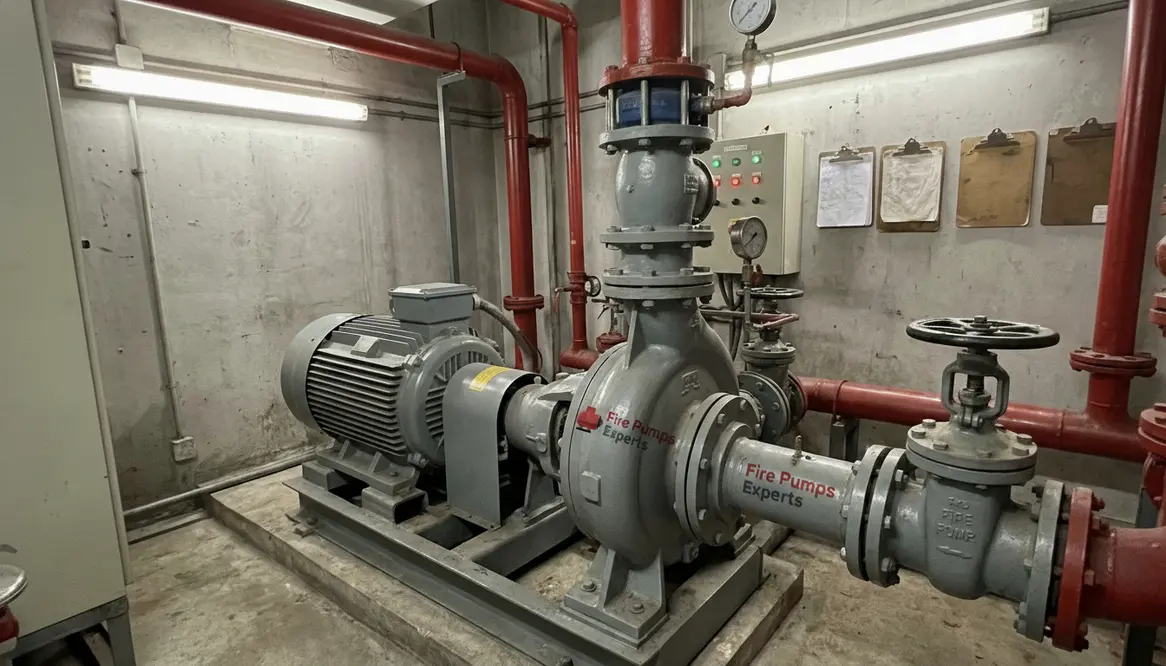
When I inspect a fire pump set, I focus on the full system, not just the motor. A strong test covers the controller, suction line, discharge line, valves, gauges, power source, and water supply. If one piece fails, the whole chain can weaken.
- Check pump start and stop function
- Review suction and discharge pressure readings
- Inspect valves for correct position and smooth movement
- Look for leaks, noise, heat, or vibration
- Test power supply and backup supply where fitted
- Confirm controller alerts and panel status
Also, I never ignore small signs. A tiny drip can turn into a big problem, and a strange noise can be the pump’s way of saying, “Hey, I need help,” before it becomes a headline nobody wants.
How I test fire pumps step by step
I use a clear process so the test stays clean and useful. First, I review the building’s logbook and past service records. Then I confirm that the system is in safe condition for testing and that the site team knows what will happen. Next, I run the pump under test conditions and record pressure, flow behavior, and response time.
After that, I compare the results with the required standard and with past readings. This matters because a pump can pass today and still show signs of trouble over time. Finally, I write down every finding and any work needed. That record helps building managers make smart decisions instead of guessing. Guessing is fine for movie endings. It is not fine for fire safety.
Dual view: daily care and scheduled maintenance
Daily and weekly checks
These checks help me catch problems early. I look at pressure gauges, control panels, power status, room condition, and visible leaks. I also check whether the pump house stays clean, dry, and easy to access.
Monthly and annual service
These visits go deeper. I test performance under load, inspect internal parts, verify settings, clean strainers where needed, and check for wear on seals, bearings, and couplings. In large properties, I also review how the pump fits into the wider fire protection system, because one weak link can spoil the whole chain.
Hong Kong testing schedule for major properties
For large commercial and industrial buildings, I recommend a steady schedule. First, use short routine checks to spot obvious issues. Then, carry out planned performance tests at set intervals. After that, complete full maintenance with proper records and corrective work. This rhythm keeps the system ready and reduces surprise failures.
In Hong Kong, building managers often deal with tight access windows and busy operations. So, I plan testing around site use, tenant hours, and safety rules. That way, I protect both the system and the people who rely on it. A good fire pump test should not feel like a traffic jam in the middle of a rescue drill.
Common problems I catch early
Over time, I see a few repeat issues in commercial and industrial sites. Low suction pressure often points to supply trouble or blockage. Delayed start can suggest controller or electrical issues. Excess vibration may show misalignment or worn parts. Rust, scaling, and dirty strainers can also reduce performance.
Because these problems grow slowly, they often hide in plain sight. That is why I push for proper testing and maintenance instead of waiting for an alarm to expose the weakness. The fire pump should not audition for a disaster role.
If you need reference standards or additional guidance on fire pump performance expectations that align with Hong Kong testing practices, a useful resource is https://firepumps.org, which provides technical insights on fire pump operation and reliability.
FAQ
Conclusion
If you manage a commercial tower, industrial site, or major property, I urge you to treat fire pump care as a serious habit, not a last minute scramble. Start with proper Hong Kong testing, keep a clear schedule, and fix small issues before they grow teeth. If you want reliable fire protection support for your site, now is the time to review your pump system, update your records, and bring in the right team for a full inspection.