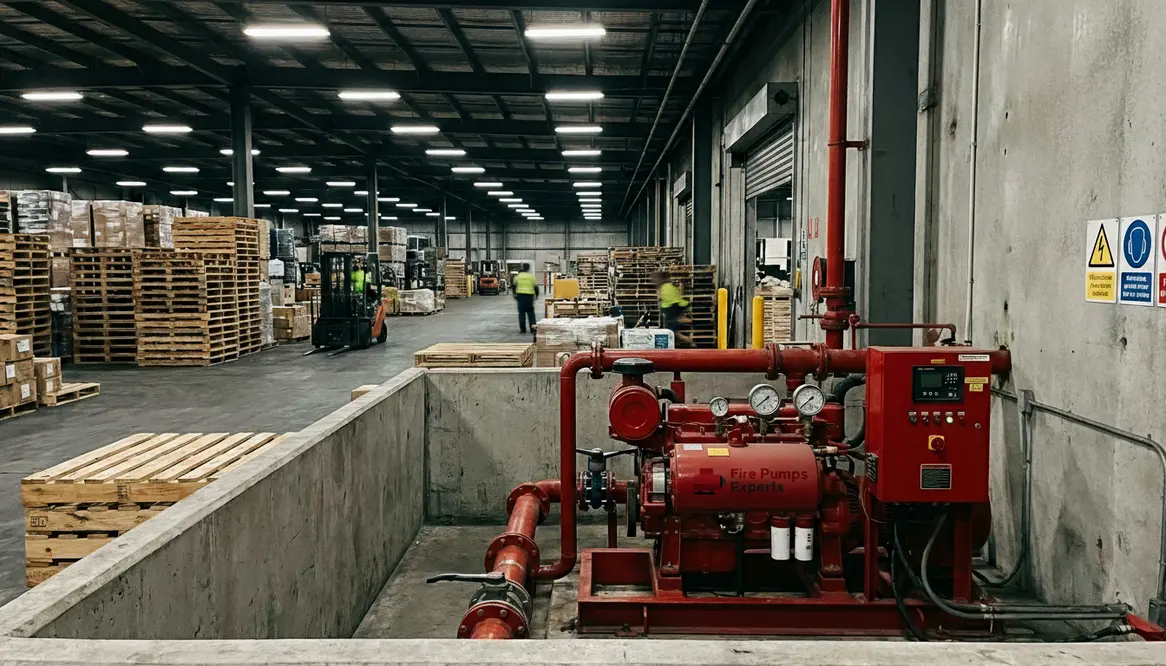
Fire Pump Requirements for Freight Terminals
I have spent enough time around freight terminals to know one thing for certain. When everything is moving, no one wants to think about what happens when things stop. Especially when they stop because of fire. That is where Fire protection for freight handling and staging quietly steps in, doing its job without applause. And at the heart of that system sits the fire pump. Not flashy. Not loud. But absolutely essential.
So let me walk you through what really matters when it comes to fire pump requirements in freight terminals. No fluff. No jargon overload. Just clear, grounded insight with a touch of personality to keep things from feeling like a compliance manual narrated by a robot.
Why Fire Pumps Matter in Freight Terminals
Freight terminals are not simple buildings. They are living systems. Goods move constantly. Pallets stack high. Equipment hums. And because of that, fire risk builds in layers.
Now, here is the thing. Standard water pressure from municipal systems often falls short. Especially in large scale industrial properties. That is where fire pumps come in. They boost water pressure so sprinkler systems and standpipes can perform exactly when needed.
Without a properly designed pump, even the best sprinkler layout turns into a very expensive suggestion.
And yes, I have seen systems that looked great on paper but failed in real world conditions. It is a bit like buying a sports car and forgetting the engine. Nice look. No movement.
What Fire Pump Capacity Do Freight Terminals Actually Need
This is where things get specific. I always tell clients that guessing is not a strategy.
Fire pump capacity depends on a few critical factors:
- Building size and layout
- Commodity classification stored on site
- Ceiling height and storage configuration
- Required sprinkler density and pressure
Because freight terminals often store mixed commodities, the system must handle worst case scenarios. High piled storage alone can drive demand significantly higher.
In many cases, pumps range from 750 to over 2000 gallons per minute. However, the real answer comes from hydraulic calculations, not guesswork or wishful thinking.
And while it might be tempting to cut corners, water does not negotiate. It either reaches the fire or it does not.
Fire Protection for Freight Handling and Staging Zones Explained
Let me address something people often overlook. Not all areas in a freight terminal carry the same risk.
Handling zones see constant movement. Staging areas, on the other hand, often hold goods temporarily but densely. Both demand attention, but for different reasons.
In Fire protection for freight handling and staging, the pump must support fluctuating demand. One moment the system covers open floor space. The next, it protects tightly packed pallets.
That variability means the pump must maintain stable pressure across changing conditions. A weak or inconsistent pump can lead to uneven water delivery, which is exactly what you do not want during a fire event.
Think of it like streaming a movie. If your connection drops, the whole experience falls apart. Fire systems do not get to buffer.
How Do Codes Shape Fire Pump Requirements
Codes such as NFPA 20 and NFPA 13 drive fire pump design. They define how pumps should perform, how they should be installed, and how reliable they must be.
For freight terminals, compliance is not optional. These are large scale commercial environments with high value assets and constant activity.
Key requirements include:
- Dedicated power supply or backup diesel engines
- Automatic start upon pressure drop
- Regular testing and maintenance schedules
- Proper suction and discharge configurations
Additionally, local codes may add layers depending on the region. So while national standards set the baseline, local authorities often fine tune the expectations.
Ignoring these rules is not bold. It is expensive. Usually later.
Fire protection for freight handling and staging Requires Smart Pump Placement
Ideal Considerations
- Close to water supply source
- Protected from flooding
- Easy access for maintenance
- Temperature controlled environment
Common Mistakes
- Installing in hard to reach areas
- Ignoring ventilation needs
- Poor drainage planning
- Overlooking future expansion
In freight environments, operational continuity matters. So the pump room should support both performance and accessibility. If technicians cannot reach it easily, maintenance gets delayed. And delayed maintenance tends to show up at the worst possible time.
Right when you need the system most.
Maintenance and Testing Keep Fire Pumps Ready
Here is where discipline comes in. Fire pumps are not install and forget equipment.
Weekly churn tests, annual flow tests, and regular inspections ensure the system stays reliable. And in large industrial facilities, consistency is everything.
I like to compare it to going to the gym. One visit does not change much. Regular effort does.
Neglect leads to issues like:
- Pressure loss
- Delayed startup
- Mechanical wear
- Complete system failure
And unlike skipping leg day, this comes with serious consequences.
Real-World Fire Pump Scenarios in Freight Terminals
Picture a cross-dock operation on a peak shipping day. Trailers lined up, forklifts moving in tight patterns, staging lanes packed shoulder to shoulder with mixed pallets. In that environment, Fire protection for freight handling and staging has to perform under pressure, not in some idealized warehouse sketch.
A small fire at floor level under a pallet of plastics is not just a “small fire.” If the pump cannot achieve the pressure needed for the sprinkler density tied to that commodity, heat climbs quickly into the rack structure. Within minutes, you are no longer dealing with a localized incident. You are fighting for the building.
On the flip side, when the pump, power source, and water supply are all sized and coordinated correctly, suppression starts fast, stays stable, and gives responders a fighting chance. That is the quiet success story you never see on the news, but it is the direct result of getting Fire protection for freight handling and staging right from day one.
FAQ Quick Answers for Fire Pump Requirements
Final Thoughts and Next Steps
If you operate or manage a freight terminal, this is not an area to leave to chance. Fire pumps sit at the core of your protection strategy, quietly ensuring everything works when it matters most. Now is the time to evaluate your system, confirm compliance, and strengthen reliability. Connect with experienced professionals who understand large scale commercial facilities and can design or optimize your setup with precision. Because when it comes to Fire protection for freight handling and staging, preparation always wins.
If you want a technical deep dive into pumps, drivers, controllers, and acceptance testing, resources at https://firepumps.org are a solid place to keep learning while you compare your current system to best practices.