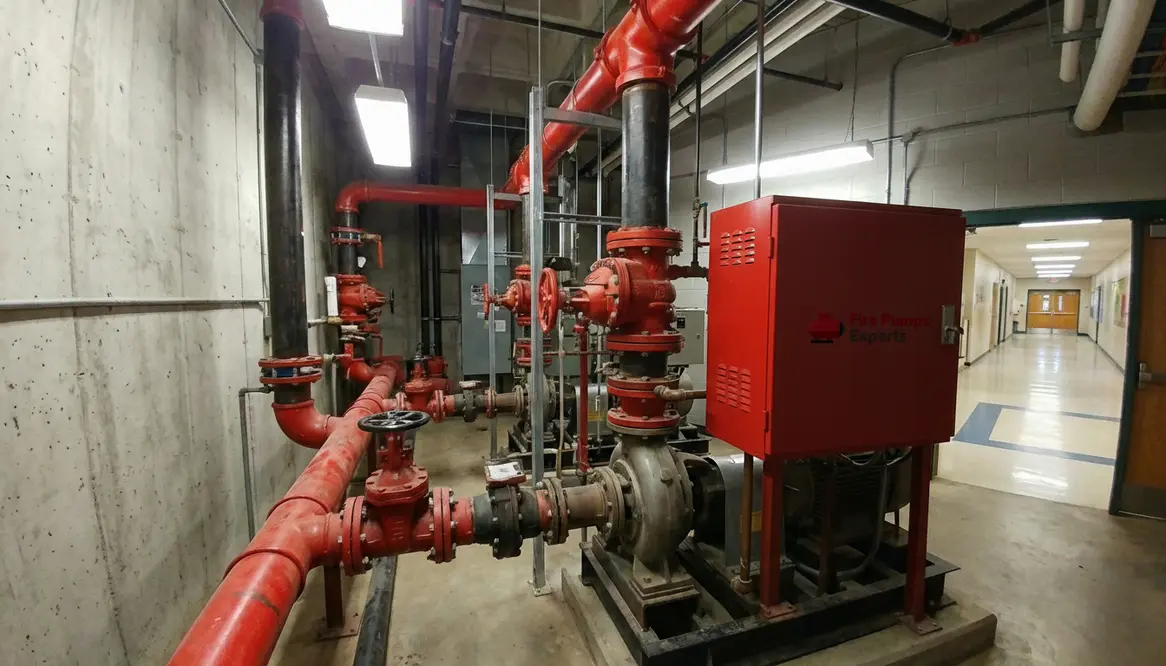
Fire Pump Requirements for High Schools Guide
I have walked through enough large school buildings to know one thing for certain: when safety systems are done right, you barely notice them. And that is exactly the point. Fire protection in these massive spaces is not just about alarms and sprinklers. It begins with understanding Fire Pump Requirements for High Schools, which quietly power the entire system behind the walls. Within the first few minutes of an emergency, those systems either perform flawlessly or expose every shortcut ever taken. So yes, it may not be glamorous. But like a good referee in a championship game, when it works well, nobody talks about it. And that is a win.
Understanding Fire Pump Requirements for High Schools in Large Buildings
Large school campuses behave more like small cities than simple buildings. Multiple floors, long corridors, auditoriums, labs, and gyms all demand consistent water pressure. Therefore, Fire Pump Requirements for High Schools exist to ensure that water reaches every corner without hesitation.
In my experience, the biggest challenge is not installing a fire pump. It is matching capacity to real world demand. For example, a two story elementary school might get by with a modest system. However, a sprawling high school with science labs and stadium seating needs a far more robust setup.
Additionally, local codes often require redundancy. That means backup power, secondary pumps, and regular testing. It sounds excessive until you realize that a single failure could impact hundreds or even thousands of occupants. Suddenly, that redundancy feels less like overkill and more like common sense.
How Do Fire Pumps Actually Protect Large School Facilities?
Great question. And thankfully, the answer is not buried in a 500 page manual.
Fire pumps boost water pressure when municipal supply falls short. In large buildings, that shortfall happens more often than people think. Long pipe runs and elevation changes can weaken water flow. As a result, sprinklers might not perform as designed without assistance.
Once activated, the pump delivers water at a steady and reliable rate. Consequently, sprinkler systems and standpipes operate exactly as intended. It is a bit like turning a garden hose into a firehose. Same water, very different outcome.
And yes, if you are picturing a dramatic Hollywood moment with alarms blaring and valves opening, you are not entirely wrong. It is just less cinematic and more precise. Think less action movie and more well rehearsed orchestra.
Designing Fire Protection Systems That Scale with School Size
As schools grow, their fire protection systems must grow with them. This is where many facilities run into trouble. They expand buildings but forget to upgrade infrastructure.
Therefore, I always emphasize scalability during design. A system that works today should still perform five or ten years from now. That includes selecting pumps with future demand in mind and ensuring space for additional components.
Moreover, zoning plays a key role. Dividing a building into fire protection zones allows better control and faster response. For instance, a fire in a chemistry lab should not compromise water pressure in a distant gymnasium.
And let’s be honest, schools evolve constantly. One year it is a computer lab. The next, it is a robotics center that looks like Tony Stark might drop by. The fire protection system needs to keep up.
Common Mistakes I See in Large School Fire Protection
Undersized Pumps
Too many facilities underestimate demand. As a result, systems struggle during peak use.
Poor Maintenance Plans
Even the best equipment fails without regular testing. Skipping inspections is like ignoring a check engine light.
Inconsistent Pressure Zones
Uneven distribution leads to weak coverage in critical areas.
Ignoring Code Updates
Codes evolve. Systems should too. Otherwise, compliance gaps appear quickly.
However, these issues are avoidable. With proper planning and professional oversight, schools can maintain systems that perform reliably year after year.
Integrating Fire Pumps with Broader Safety Systems
Fire pumps do not operate in isolation. Instead, they form part of a larger ecosystem that includes alarms, suppression systems, and emergency controls.
For example, when a fire alarm triggers, it signals the pump to activate if pressure drops. Meanwhile, control panels monitor performance in real time. Consequently, facility managers can respond quickly if something goes wrong.
Additionally, backup power systems ensure pumps remain operational during outages. Because let’s face it, emergencies rarely happen at convenient times. A storm knocking out power during a fire event is not just bad luck. It is a scenario that must be planned for.
In large school buildings, coordination is everything. Each component must communicate effectively, much like a well run team. No freelancing allowed.
Why Professional Fire Pump Planning Matters for Commercial Scale Schools
When dealing with major educational facilities, the margin for error shrinks dramatically. These are not small properties. They are complex, high occupancy environments that demand precision.
That is why working with specialists in commercial and industrial fire protection is essential. They understand the nuances of Fire Pump Requirements for High Schools and how those requirements scale across large properties.
Furthermore, they ensure compliance with national and local standards while optimizing system performance. It is not just about passing inspection. It is about creating a system that performs under pressure, literally and figuratively.
And if you think cutting corners saves money, think again. Fixing a poorly designed system later is far more expensive than doing it right the first time. It is the classic case of paying now or paying much more later.
For deeper technical perspectives and guidance on Fire Pump Requirements for High Schools across different jurisdictions, resources such as https://firepumps.org can complement local engineering expertise and help align school projects with best practices.
FAQ: Fire Protection for Larger School Buildings
Conclusion
Fire protection in large school buildings is not something to leave to chance. It requires thoughtful planning, reliable equipment, and a clear understanding of system demands. If you manage or develop large educational facilities, now is the time to evaluate your setup. Partner with experts who understand commercial scale fire systems and can guide you through every step. Because when safety is on the line, doing it right is the only option that truly makes sense.