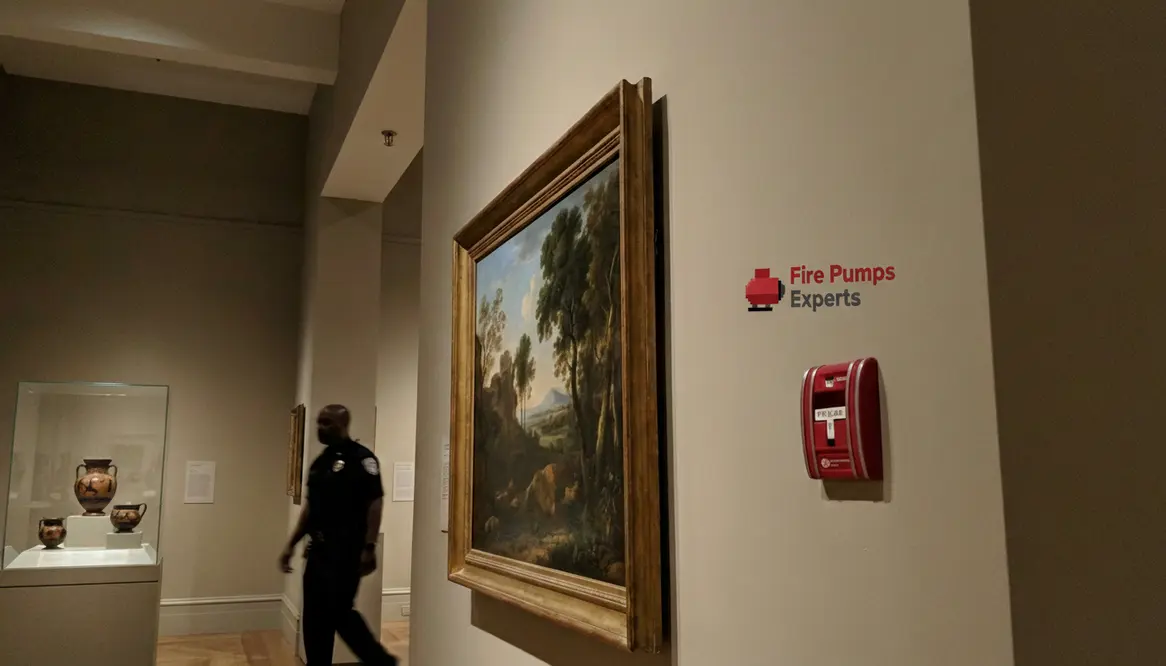
Fire Pump Requirements for Museums Guide
I have spent years walking through grand halls, quiet galleries, and sprawling public spaces, and one thing always hums quietly behind the scenes: protection. When we talk about Fire Pump Requirements for Museums, we are really talking about preserving history, culture, and human expression. These buildings hold more than objects. They hold stories. So right from the start, I treat fire pump planning not as a checkbox, but as a responsibility that demands precision and respect.
And yes, while it may not sound as thrilling as a summer blockbuster, a well designed fire pump system can be the hero of the story. No cape required.
Why fire pump systems matter in public and cultural buildings
Public and cultural buildings operate at a different scale. Museums, libraries, and performance halls often feature large open spaces, high ceilings, and complex layouts. Because of this, standard water pressure rarely cuts it. Fire pumps step in to ensure that sprinkler systems and standpipes deliver consistent and adequate flow, even in the most demanding scenarios.
Moreover, these properties often host thousands of visitors daily. That means evacuation time, fire control, and system reliability must work together seamlessly. I have seen facilities where a poorly sized pump created dead zones. And trust me, dead zones are not where you want to test your luck.
In addition, many exhibits are irreplaceable. While insurance can cover costs, it cannot recreate a centuries old artifact. That alone raises the stakes significantly.
What are the Fire Pump Requirements for Museums in large facilities
When I approach Fire Pump Requirements for Museums, I focus on performance, redundancy, and compliance. These systems must meet strict fire codes, but they also need to adapt to unique building conditions.
First, capacity matters. Museums often require pumps that can handle high flow rates due to expansive sprinkler networks. Next, reliability becomes non negotiable. Electric and diesel driven pumps are commonly paired to ensure backup during power loss.
Then, I consider placement. Pumps must sit in accessible yet protected environments. Flooding, freezing, and vibration all pose risks. A poorly placed pump is like putting your best player on the bench during the final quarter.
Finally, integration with alarm and monitoring systems ensures rapid response. Because when seconds count, delays are unacceptable.
How do I size and select the right fire pump
I start with hydraulic calculations. These determine how much water the system needs at peak demand. Then, I evaluate building height, pipe layout, and hazard classification. All of these factors shape pump selection.
After that, I choose between horizontal split case, vertical turbine, or inline pumps depending on space and water source. Each option has strengths. For example, vertical turbines excel when drawing from underground water supplies.
Additionally, I factor in future expansion. Cultural buildings evolve. New exhibits, renovated wings, and added galleries can increase demand. So I plan ahead rather than retrofit later.
And yes, I always double check compliance with NFPA standards. Because guessing here is like improvising a parachute on the way down. Not recommended.
Balancing preservation with modern fire protection
Here is where things get interesting. Museums often resist visible infrastructure changes. Nobody wants a fire pump room stealing attention from a priceless painting. So I work closely with architects and preservation teams.
We design systems that remain discreet yet effective. Sound insulation reduces operational noise. Strategic placement hides equipment without compromising access. In some cases, we even customize enclosures to blend with the building aesthetic.
At the same time, environmental control is critical. Sensitive artifacts require stable humidity and temperature. Fire pump systems must not disrupt these conditions. That balance takes careful engineering and constant coordination.
Key Design Focus
- Reliable water flow under peak demand
- Backup power integration
- Code compliant installation
Operational Priorities
- Minimal disruption to exhibits
- Quiet system performance
- Long term scalability
Fire Pump Requirements for Museums and ongoing maintenance
Designing the system is only half the story. Maintenance keeps it alive. I always emphasize routine testing, inspection, and documentation. Weekly churn tests, monthly inspections, and annual performance evaluations are standard practice.
Furthermore, trained personnel must understand system operation. In an emergency, confusion wastes time. Clear procedures and regular drills eliminate uncertainty.
I have seen facilities treat maintenance like a chore. That approach always backfires. A neglected fire pump is like a car that never gets serviced. It will fail, and it will choose the worst possible moment to do so.
Instead, proactive maintenance protects both assets and people. It also extends system lifespan, which makes financial sense for large commercial properties.
FAQ about fire pump systems in cultural buildings
Final thoughts and next steps
If you manage or design a large scale public or cultural property, now is the time to evaluate your fire protection strategy. I encourage you to take a closer look at your current system, identify gaps, and invest in reliable solutions. Partner with experts who understand commercial and industrial scale needs. Because when it comes to protecting people and priceless assets, cutting corners is never part of the plan.