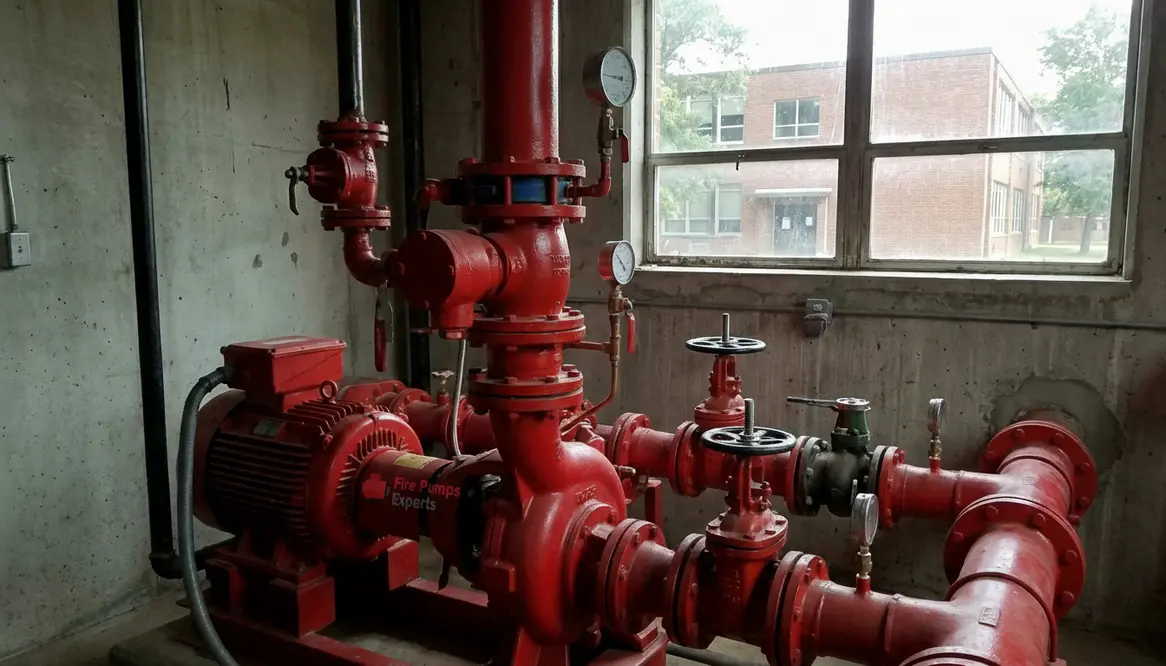
Fire Pump Requirements for Private Schools Guide
I’ve walked through enough campuses to know one thing for certain. Fire does not care about mission statements, tuition costs, or how many banners hang in the gym. It moves fast, and it demands respect. That’s why I always bring up Fire Pump Requirements for Private Schools early in any conversation about safety. Because when the alarms sound and the sprinklers engage, it is the fire pump that decides whether water shows up like a hero… or a no show extra.
Now, I won’t pretend fire protection is thrilling on the surface. It’s not exactly the latest blockbuster. But when you understand what’s at stake, it becomes less “boring compliance” and more “mission critical infrastructure.” And yes, we can still have a little fun along the way.
What does fire protection for independent institutions actually involve
When someone asks me this, I keep it simple. Fire protection is a system of systems. Detection, suppression, and response all working together. However, independent institutions often operate across multiple buildings, sometimes older structures, sometimes modern additions. That mix changes everything.
Because of that, I always emphasize integration. A fire alarm that doesn’t communicate with suppression systems is like Batman without Alfred. Technically capable, but missing the coordination that makes it effective.
Moreover, private campuses must account for varying occupancy levels. Dorms, auditoriums, labs, and administrative offices all carry different risks. Therefore, a one size solution simply doesn’t work.
Fire Pump Requirements for Private Schools explained clearly
Let’s get into the heart of it. Fire pumps exist to maintain water pressure when municipal supply falls short. And yes, that happens more often than people expect, especially during high demand situations.
In private institutions, I’ve seen fire pump requirements shaped by building height, system demand, and available water supply. If the sprinklers need more pressure than the city can provide, the pump steps in. No drama. Just performance.
Additionally, codes and standards require regular testing and maintenance. Not optional. Not “we’ll get to it next quarter.” I’m talking weekly churn tests and annual flow tests. Because when the moment comes, you don’t want surprises.
And here’s a little truth. A fire pump that hasn’t been maintained is about as useful as a Wi Fi signal during a storm in a horror movie. You know something bad is coming.
How do I choose the right fire pump system for a campus
I start with demand calculations. Always. Without knowing how much water and pressure your system needs, you’re guessing. And guessing is not a strategy I recommend when dealing with fire.
Then I look at the property layout. Large campuses may need multiple pumps or zoned systems. Meanwhile, older buildings might require retrofitting, which adds complexity but is entirely manageable with the right design approach.
Also, reliability matters. Electric pumps are common, but diesel backups provide resilience during power outages. Because if the power goes out during an emergency, you don’t want your system shrugging like, “Well, I tried.”
Key Considerations
- Water supply consistency
- Building height and layout
- System demand calculations
- Backup power options
Common Pitfalls
- Undersized pump selection
- Skipping routine testing
- Poor system integration
- Ignoring future expansion needs
Why compliance is not just paperwork
I’ve heard it before. “We passed inspection, so we’re fine.” And while that sounds reassuring, it’s only part of the story. Compliance sets the baseline. It does not guarantee optimal performance.
Because conditions change. Buildings expand. Occupancy shifts. Equipment ages. Therefore, ongoing evaluation becomes essential. I always recommend treating compliance as a living process rather than a one time event.
Also, working with experienced commercial fire protection specialists makes a difference. Not generalists. Not guesswork. But professionals who understand large scale systems and institutional risk.
Fire Pump Requirements for Private Schools in real world scenarios
Let me paint a picture. A private campus adds a new science wing. More sprinklers. More demand. However, the existing fire pump was sized for the original footprint.
Now what happens? The system strains. Pressure drops. Coverage weakens. And suddenly, that expansion becomes a liability.
That’s why I always revisit Fire Pump Requirements for Private Schools during any major change. Expansion, renovation, or system upgrades should trigger a full review. Because fire protection should grow with the campus, not lag behind it.
And yes, I’ve seen institutions get this right. When they do, it’s seamless. No drama. Just quiet confidence. Like a well rehearsed orchestra.
Maintenance and testing keep everything honest
Here’s where discipline comes in. Fire pumps need routine attention. Weekly checks ensure the system starts properly. Annual tests confirm it performs under real demand.
Moreover, documentation matters. Not because someone loves paperwork, but because records tell a story. They reveal trends, catch issues early, and support compliance.
Skipping maintenance might save time today, but it borrows trouble from tomorrow. And trust me, that bill comes due at the worst possible moment.
FAQ
Conclusion
Fire protection is not just another line item. It is the quiet system standing guard when everything else is at risk. If you manage a private institution, now is the time to evaluate your setup, revisit your fire pump requirements, and ensure every component performs when it matters most. Connect with experienced commercial specialists who understand complex properties and can guide you toward a safer, stronger system that does its job without hesitation.