Fire Pump Requirements for Self Storage Facilities
I have spent enough time around fire protection systems to know one thing for sure. They are quiet right up until the moment they absolutely cannot afford to be. That is especially true in self storage facilities, where rows of units sit like a library of people’s lives. And while I often get asked about strip mall fire pumps, the same principles echo here. The stakes are high, the margins for error are thin, and the right system makes all the difference between a bad day and a disaster movie sequel nobody asked for.
What fire pump requirements apply to self storage facilities?
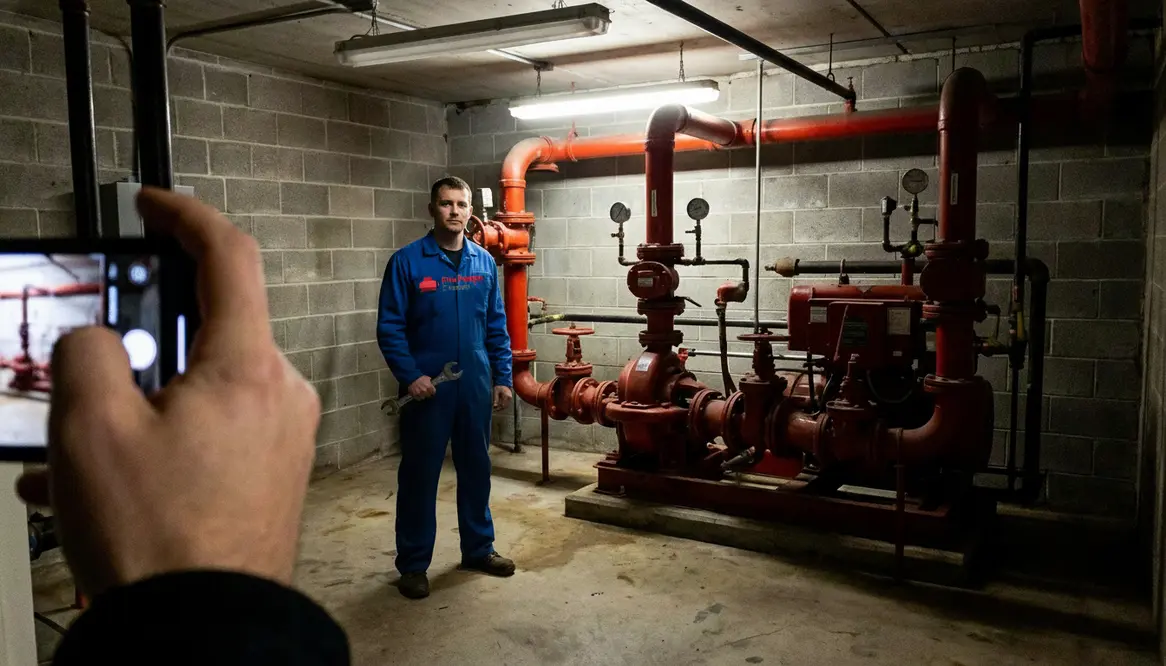
Let me answer this the way I would if we were standing in a mechanical room, staring at a pump that looks more serious than a chess grandmaster. Fire pump requirements in self storage facilities are driven by local fire codes, NFPA standards, and the building’s hazard classification.
First, most facilities fall under NFPA 13 for sprinkler systems. However, the real twist comes from how storage units are used. People store everything from holiday decorations to, occasionally, things that make firefighters raise an eyebrow.
When a fire pump becomes non‑negotiable
- Municipal water pressure is insufficient
- Large facility footprints demand consistent flow
- Multi story storage increases pressure needs
Additionally, I always emphasize that design must account for worst case scenarios. Not average. Not hopeful. Worst case. Because fire, much like a plot twist in a thriller, rarely behaves politely.
Designing for pressure and flow without guesswork
Now, here is where things get interesting. A fire pump is not just about brute force. It is about precision.
In self storage facilities, I calculate demand based on:
- Total sprinkler head count
- Required gallons per minute
- System pressure losses
However, I never stop at the math. I look at layout. Long corridors, narrow units, and varying ceiling heights all influence how water behaves. And yes, water has a personality. It prefers the path of least resistance, much like me avoiding leg day.
Moreover, facilities with climate controlled units often require tighter system integration. That means fire pumps must respond quickly and maintain stable pressure without fluctuation. Because in fire protection, hesitation is not dramatic. It is dangerous.
Key components that keep the system reliable
Let me paint a clear picture. A fire pump system is not a single hero. It is an ensemble cast.
Core equipment
- Fire pump unit
- Driver, electric or diesel
- Controller panel
- Jockey pump
Supporting elements
- Water storage or supply line
- Backflow preventer
- Pressure relief valves
- Test headers
Meanwhile, the jockey pump plays a quiet but vital role. It maintains pressure so the main pump does not kick on every time someone sneezes near a sprinkler head. Think of it as the system’s caffeine. Subtle, but essential.
In addition, I always stress redundancy where possible. Because if one component fails, the system must still perform. Fire does not accept excuses.
How do strip mall fire pumps compare to self storage systems?
It is a fair question, and one I hear often. While strip mall fire pumps and self storage systems share core principles, their demands differ in layout and risk profile.
Retail spaces typically deal with open floor plans and predictable occupancy. On the other hand, self storage facilities are compartmentalized. Each unit can behave like its own little fire event.
Distribution, consistency, and hidden fire loads
Therefore, I approach self storage design with more emphasis on distribution and consistency. Water must reach every corner without delay. Because unlike a retail shop, you cannot rely on visibility or quick access once a fire starts behind a locked door.
Also, storage contents are unpredictable. One unit might hold furniture. The next might look like a prop room from a sci fi movie. That variability pushes me to design systems that can handle a wide range of fire loads.
The logic behind strip mall fire pumps still applies, but self storage systems lean harder on zoning, hydraulic calculations across long corridors, and making sure that even the furthest, dustiest corner unit gets the water it needs in the first minutes of a fire.
Inspection, testing, and staying ahead of failure
If there is one thing I never joke about, it is maintenance. Well, almost never. Even the best system, left unchecked, becomes a very expensive paperweight.
Routine requirements that keep pumps honest
- Weekly or monthly churn tests
- Annual flow testing
- Controller inspections
- Valve verification
However, I always go beyond the checklist. I listen to the pump. Literally. Changes in sound often signal problems before gauges do. It is a bit like knowing your car is in trouble before the dashboard lights up like a holiday display.
Furthermore, documentation matters. Inspectors, insurers, and facility owners all rely on accurate records. And in my experience, good records save more headaches than aspirin ever could.
FAQ: Fire Pump Requirements for Self Storage Facilities
Owners often discover that the same questions asked about strip mall fire pumps apply just as much to self storage projects, with a few twists thanks to those long corridors and locked doors.
Final thoughts and next steps
When I look at a self storage facility, I do not just see rows of doors. I see responsibility. A properly designed fire pump system protects property, people, and peace of mind. If you are planning or upgrading a commercial facility, now is the time to act. Work with specialists who understand complex systems, not guesswork. Reach out today and ensure your fire protection strategy stands ready, calm, steady, and fully prepared when it matters most.
Whether you are comparing self storage systems to strip mall fire pumps or trying to interpret what your local code official just handed you, do not go it alone. Start with current guidance from resources like https://firepumps.org, bring in qualified fire protection engineers, and make sure your design team treats water supply, layout, and maintenance as a single strategy instead of three separate checkboxes.