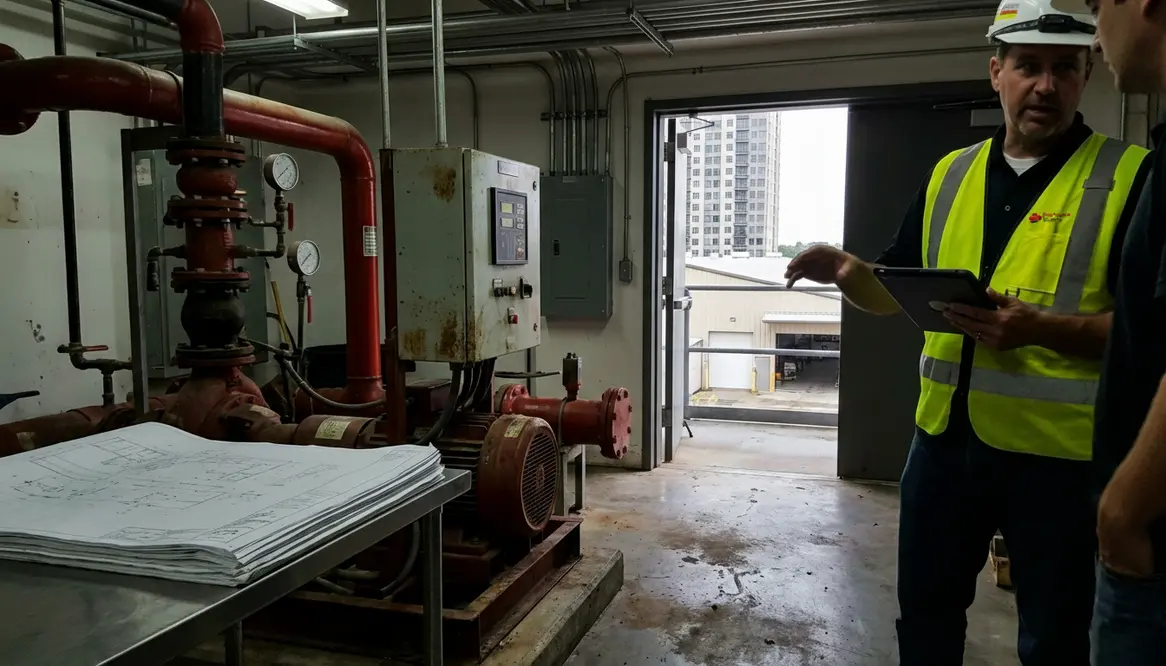
Fire Pump Selection by Building Type Guide
I have spent enough time around commercial and industrial facilities to know one thing for certain. When it comes to safety, nothing should be left to guesswork. That is especially true with fire pump selection by building type. The wrong choice is not just inefficient. It can put lives, assets, and entire operations at risk. So today, I will walk you through how I approach choosing the right fire pump, calmly and carefully, like a man who has seen a few things and prefers not to see them catch fire.
Understanding fire pump selection by building type from the ground up
Let me start simple. Not all buildings behave the same during a fire. A high rise office tower does not burn like a manufacturing plant, and a warehouse certainly does not respond like a data center. Because of that, fire pump selection by building type becomes less about preference and more about physics.
First, I look at water demand. Then I consider pressure requirements. After that, I think about system design. Sprinklers, standpipes, foam systems. Each one tells me what kind of pump is needed. As a result, the building itself starts to “talk,” and I just listen.
And yes, if buildings could actually talk, I suspect warehouses would complain about forklifts and office towers would gossip. But I digress.
What type of fire pump does my building actually need?
This is the question I hear most often, and thankfully, it has a grounded answer. The type of fire pump depends on how the building uses water during a fire event.
For example, high rise buildings typically require vertical turbine or multistage centrifugal pumps because they must push water upward over long distances. Meanwhile, large industrial plants often benefit from split case pumps due to their durability and high flow capacity.
In contrast, warehouses with wide footprints but lower heights often rely on horizontal split case pumps or end suction pumps, depending on system complexity. Therefore, the decision is not random. It is tailored.
Consequently, I always match pump type to both hazard level and layout. If you mismatch them, you might end up with a system that looks impressive on paper but struggles in reality. And trust me, fires are not known for their patience.
Key factors I evaluate before making a decision
Now we get into the good stuff. When I evaluate fire pump selection by building type, I focus on a few critical elements. These are not optional. They are essential.
Water supply reliability
If your water source is inconsistent, your pump must compensate. Otherwise, you are building a system on hope, which is not a strategy I recommend.
Required flow and pressure
Every building has a calculated demand. I always follow those numbers closely because guessing here is like guessing how much fuel a rocket needs. Spoiler alert. It matters.
System compatibility
The pump must integrate smoothly with sprinklers, standpipes, or foam systems. If they do not work together, the system loses efficiency fast.
Power source
Electric or diesel. Each has its place. I typically consider reliability, backup requirements, and local codes before deciding.
As a result, these factors shape the final decision in a way that feels less like trial and error and more like a well conducted orchestra.
Comparing building needs side by side
Sometimes, the clearest way to understand fire pump selection is to place building types next to each other. So let me do just that.
High Rise Buildings
- Require high pressure
- Depend on vertical water movement
- Often need multistage or turbine pumps
Industrial Facilities
- Demand high flow rates
- Operate in hazardous environments
- Benefit from durable split case pumps
Now, here is where it gets interesting. While both require reliability, their priorities differ. One pushes water up. The other pushes water out. It is almost poetic, if you enjoy infrastructure the way some people enjoy art.
Common mistakes I see far too often
Even with the best intentions, mistakes happen. However, some show up so often they deserve their own spotlight.
Oversizing the pump
First, oversizing the pump. Bigger is not always better. In fact, it can lead to inefficiencies and system damage. It is like bringing a fire hose to water a houseplant. Dramatic, yes. Practical, no.
Ignoring long term maintenance
Second, ignoring long term maintenance. A pump that cannot be serviced easily becomes a liability over time. Therefore, I always consider accessibility and service intervals.
Overlooking future expansion
Third, overlooking future expansion. Commercial and industrial facilities evolve. If your system cannot grow with your building, you will face costly upgrades later.
Because of this, I always think ahead. Not just for today’s fire risk, but tomorrow’s as well.
How I ensure compliance and performance every time
Codes and standards are not suggestions. They are the backbone of any fire protection system. So I follow NFPA guidelines closely, along with local regulations.
Additionally, I coordinate with engineers, facility managers, and safety teams. This collaborative approach ensures that the fire pump does not just meet requirements. It performs when it matters most.
And let us be honest. A fire pump is a bit like a superhero. Quiet most of the time, but when needed, it must show up and deliver without hesitation. No excuses. No second chances.
FAQ: Fire Pump Selection for Commercial and Industrial Buildings
Before getting into specific questions, keep in mind that fire pump selection by building type is always tied to how your facility is built, used, and expected to perform during a fire.
Making the right choice with confidence
Choosing the right pump is not about luck. It is about understanding your building, your risks, and your responsibilities. When I approach fire pump selection by building type, I do so with intention, precision, and a healthy respect for what is at stake.
If you are planning or upgrading a system for a commercial or industrial facility, now is the time to get it right. Work with experts, evaluate your needs carefully, and invest in a solution that performs when everything else is on the line. Because when it comes to fire protection, good enough is never good enough.
If you want a deeper technical starting point, resources at https://firepumps.org can complement the on site assessment and engineering work your project deserves.