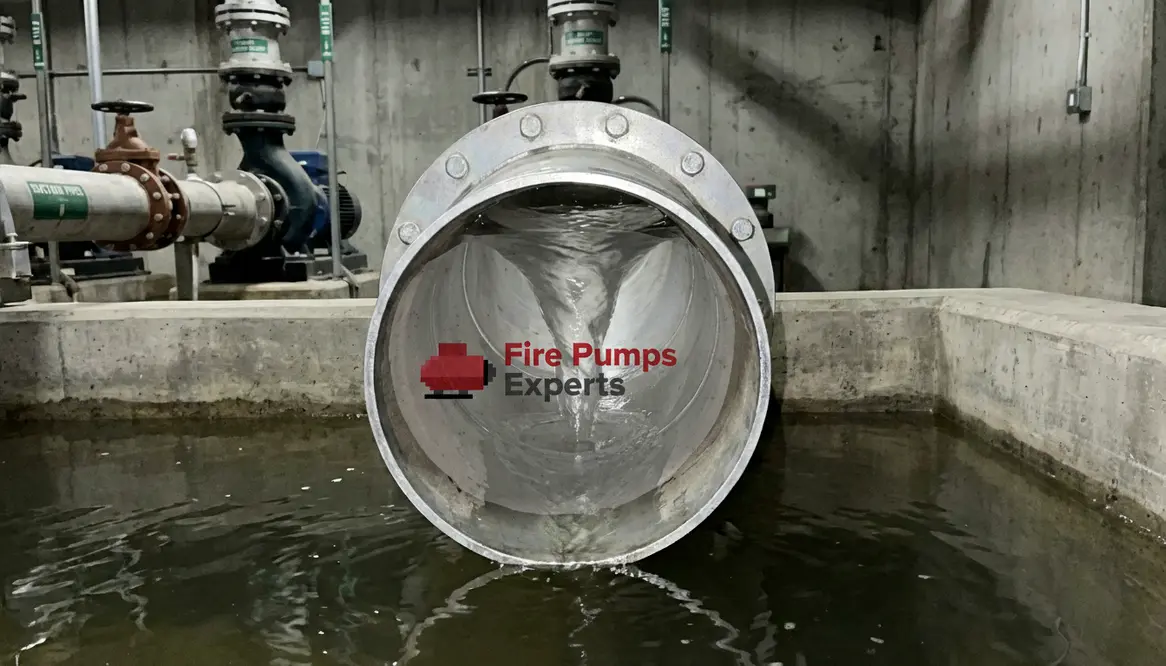
Fire Pump Suction Vortex Bakersfield Fix Guide
I have spent enough time around pump rooms to know that when water starts to spin the wrong way, trouble is not far behind. In Bakersfield, where tank fed fire systems carry serious responsibility, the phrase fire pump suction vortex Bakersfield is not just a mouthful. It is a warning sign. When a vortex forms at the suction inlet, it quietly robs a system of performance right when a building needs it most. And trust me, fire protection is not the place for surprises.
So let me walk you through what really happens, why it matters, and how to keep your system from acting like it just stepped into a whirlpool scene from a disaster movie.
Understanding Suction Vortex Behavior in Tank Systems
At its core, a suction vortex is exactly what it sounds like. Water begins to spiral as it enters the pump intake. However, this is not some elegant ballet. It pulls in air, disrupts flow, and reduces pressure.
In tank fed systems across industrial Bakersfield sites, I often see this happen when water levels drop or when intake design ignores basic hydraulic rules. As a result, the pump starts working harder while delivering less. That is a bad deal.
Moreover, the vortex can introduce cavitation. If you have ever heard a pump sound like it is chewing gravel, you know the noise. That is damage in progress. Over time, it eats away at impellers and shortens the life of expensive equipment.
Why Do Vortices Form in Fire Pump Tanks
Let me answer this the way most facility managers ask it in real life. Why is my fire pump pulling in air when the tank is full enough?
The answer usually comes down to a few predictable culprits.
- Poor suction pipe placement which allows swirling flow to develop
- Insufficient submergence meaning the water level sits too close to the intake
- High flow demand that pulls water faster than the tank can stabilize it
- Lack of anti vortex plates which are simple but often skipped
Additionally, tank geometry plays a role. Flat bottom tanks without proper baffling tend to encourage rotation. It is like stirring coffee and expecting it to stop instantly. Physics has other plans.
fire pump suction vortex Bakersfield Risk Factors in Commercial Facilities
In Bakersfield, I see patterns tied to climate and infrastructure. Large industrial properties and distribution centers often rely on storage tanks that face heavy draw during peak demand. Consequently, the margin for error shrinks.
Heat also plays a role. Warmer water reduces density slightly, which may sound minor, yet it contributes to instability at high flow rates. Combine that with aging tanks or retrofitted systems, and you have a perfect setup for vortex formation.
Furthermore, many facilities expand operations without revisiting fire protection hydraulics. The pump stays the same, but demand increases. That imbalance shows up fast at the suction inlet.
How I Diagnose and Fix Vortex Issues Fast
What I Look For
- Visible swirling at the intake
- Air bubbles in discharge flow
- Unusual vibration or noise
- Pressure fluctuations during testing
What I Change
- Increase submergence depth
- Install anti vortex plates
- Adjust suction pipe orientation
- Add baffles to calm water movement
First, I observe the system during operation. Then, I confirm whether the issue is structural or operational. In many cases, a simple plate above the suction inlet solves the problem. It is not glamorous, but it works.
However, some systems need deeper correction. Repositioning the suction line or modifying the tank layout can make all the difference. And yes, this is where people usually sigh because it sounds expensive. Still, ignoring it costs more over time.
Design Practices That Prevent Problems Before They Start
If I had a dollar for every preventable vortex issue, I would probably retire somewhere quiet. Prevention is not complicated, yet it requires discipline.
I always recommend maintaining proper submergence based on flow rate. Also, I make sure suction inlets sit far enough from walls and tank floors. That spacing reduces rotational flow.
In addition, I push for anti vortex devices during design, not as an afterthought. They are simple, effective, and far cheaper than replacing a damaged fire pump.
And here is a small truth with a big impact. Calm water feeds strong pumps. Turbulent water feeds headaches.
fire pump suction vortex Bakersfield Solutions for Long Term Reliability
Long term reliability in Bakersfield facilities depends on consistency. I focus on regular inspection, flow testing, and visual checks inside tanks whenever possible.
Moreover, I advise facilities to review system performance after any operational change. New equipment, increased occupancy, or process changes can all affect water demand.
Think of your fire pump system like a team. If one player changes pace, the whole group must adjust. Otherwise, things fall apart at the worst possible moment.
If your site team wants deeper design guidance, resources at https://firepumps.org can help frame best practices before changes hit the field.
FAQ
Keep Your System Steady When It Matters Most
In my experience, vortex problems do not announce themselves with flashing lights. They creep in quietly, then show up when the stakes are high. If your facility depends on tank fed fire protection, now is the time to take a closer look.
Let us evaluate your system, correct weak points, and make sure your pump delivers when it counts. A focused review of fire pump suction vortex Bakersfield conditions in your tank, intake, and piping can turn a risky whirlpool into a stable, predictable water supply.
Because when water moves right, everything else follows. Keeping fire pump suction vortex Bakersfield issues off your incident reports is not about luck. It is about clear design, steady maintenance, and the decision to fix quiet problems before they become loud emergencies.