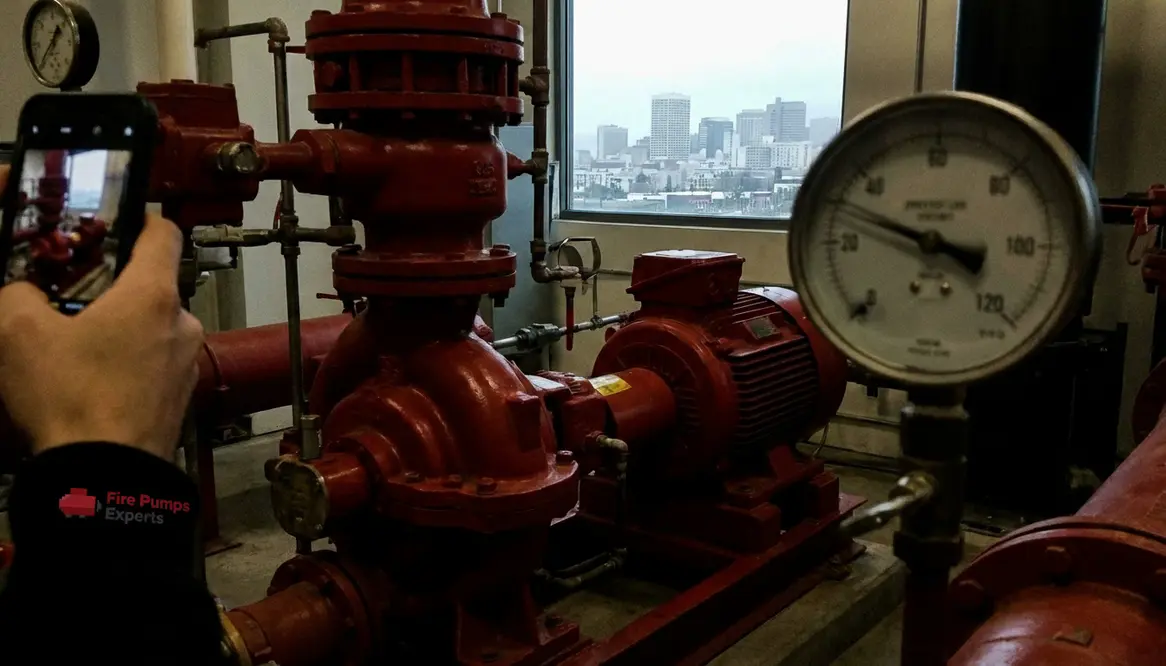
Fire Pump System Oscillation Oakland Causes Fixes
I have spent years walking mechanical rooms in Oakland, listening closely to the rhythm of pumps that keep entire buildings safe. And every so often, that rhythm breaks. Instead of a steady hum, I hear a pulse, a shake, a nervous energy that should not be there. That is where fire pump system oscillation Oakland becomes more than a technical phrase. It becomes a real risk to commercial towers, hospitals, and industrial facilities that depend on stability when it matters most.
Understanding fire pump system oscillation Oakland in complex building networks
When I talk about oscillation, I am not talking about something poetic like ocean waves rolling under the Golden Gate. I mean pressure swinging up and down in ways that stress pipes, valves, and control systems. In complex networks, especially in high rise or multi building campuses, water does not always behave politely.
Because these systems connect long pipe runs, multiple zones, and pressure reducing valves, even a small imbalance can ripple outward. As a result, what begins as a minor fluctuation can evolve into full system instability. I have seen gauges bounce like they are auditioning for a drum solo. And while that might be entertaining in a music studio, it is not what you want in a life safety system.
Why do fire pump systems oscillate in large commercial properties?
In my experience, oscillation rarely comes from a single cause. Instead, it builds from layers of interaction. First, control settings often clash with real world demand. A controller might react too quickly, chasing pressure changes like a dog chasing its own tail. Meanwhile, valves open and close at different rates, which only adds to the confusion.
Additionally, oversized pumps play a quiet but powerful role. When a pump delivers more pressure than the system needs, it forces the network to compensate. Therefore, pressure relief valves and bypass lines begin cycling, creating a loop of overcorrection.
Then there is air. Yes, plain old air trapped in the system. It compresses and expands, acting like a spring. Consequently, it feeds oscillation in a way that feels almost alive. I like to say it is the system breathing when it really should be holding its breath.
Key triggers I see in Oakland facilities
Hydraulic imbalance
When zones demand different pressures, the system struggles to stay steady, and fire pump system oscillation Oakland problems start to show up in subtle but damaging ways.
Improper valve tuning
Fast acting valves create sharp pressure swings instead of smooth transitions, turning normal adjustments into full blown oscillation events.
Controller sensitivity
Overly reactive settings amplify small changes into large oscillations, making the controller part of the problem instead of the solution.
Air entrainment
Air pockets store and release energy, which destabilizes flow and keeps fire pump system oscillation Oakland issues alive long after a test or alarm event ends.
Aging infrastructure
Worn components respond inconsistently under load, turning what should be predictable performance into a shaky, unreliable pattern.
Complex piping layouts
Long runs and multiple branches create delayed feedback in the system, so pressure waves echo through the network and keep the oscillation cycle going.
How I diagnose oscillation without guessing
I do not believe in guesswork, especially when dealing with fire protection in major properties. So I start with data. Pressure readings over time tell a story. If I see repeating spikes, I know the system is stuck in a feedback loop.
Next, I isolate sections. By narrowing down zones, I can identify where instability begins. Then, I observe valve behavior. Are they hunting for position instead of holding steady? If so, that is a clear sign of mismatch between design and operation.
Finally, I listen. That might sound simple, but experienced ears catch what sensors sometimes miss. A vibrating pipe or a chattering valve speaks volumes. And yes, sometimes it sounds like a bad sci fi engine about to warp into another dimension. Sadly, there is no warp drive payoff, just another reminder that fire pump system oscillation Oakland problems need real-world fixes.
Stabilizing performance in fire pump system oscillation Oakland environments
Once I identify the cause, I move quickly to stabilize the system. First, I adjust controller settings to slow reactions. A calm system responds better than a frantic one. Then, I tune valves so they move with purpose instead of panic.
In addition, I address pump sizing issues whenever possible. While replacing a pump is not always practical, modifying operation can reduce excess pressure. Furthermore, removing trapped air makes a noticeable difference. It is one of the simplest fixes, yet it often gets overlooked.
Most importantly, I align the entire network. Each component must work together, not compete. Because when they cooperate, the system settles into a steady, reliable flow. And that is exactly what we want in commercial and industrial buildings where safety cannot be negotiable.
Preventing oscillation before it starts
Prevention is always more efficient than correction. So I recommend regular system reviews, especially for large facilities in Oakland where infrastructure evolves over time. Whenever a building expands or demand changes, the fire pump system should adapt accordingly.
Moreover, commissioning should not be treated as a one time event. Instead, it should be ongoing. Systems drift. Settings change. Equipment ages. Therefore, periodic testing ensures everything remains balanced.
And let me be honest. Ignoring early warning signs is like ignoring a check engine light. It does not fix itself. It just waits until the worst possible moment to make its point. That is exactly why staying ahead of fire pump system oscillation Oakland issues is far cheaper and far less stressful than responding after something fails.
FAQ
Conclusion
If your facility shows signs of instability, now is the time to act. I help commercial and industrial properties in Oakland bring their systems back to calm, controlled performance. Reach out today and let us take that unpredictable rhythm and turn it into something steady, reliable, and ready when it matters most. Because in fire protection, smooth operation is not a luxury. It is the standard you should expect.