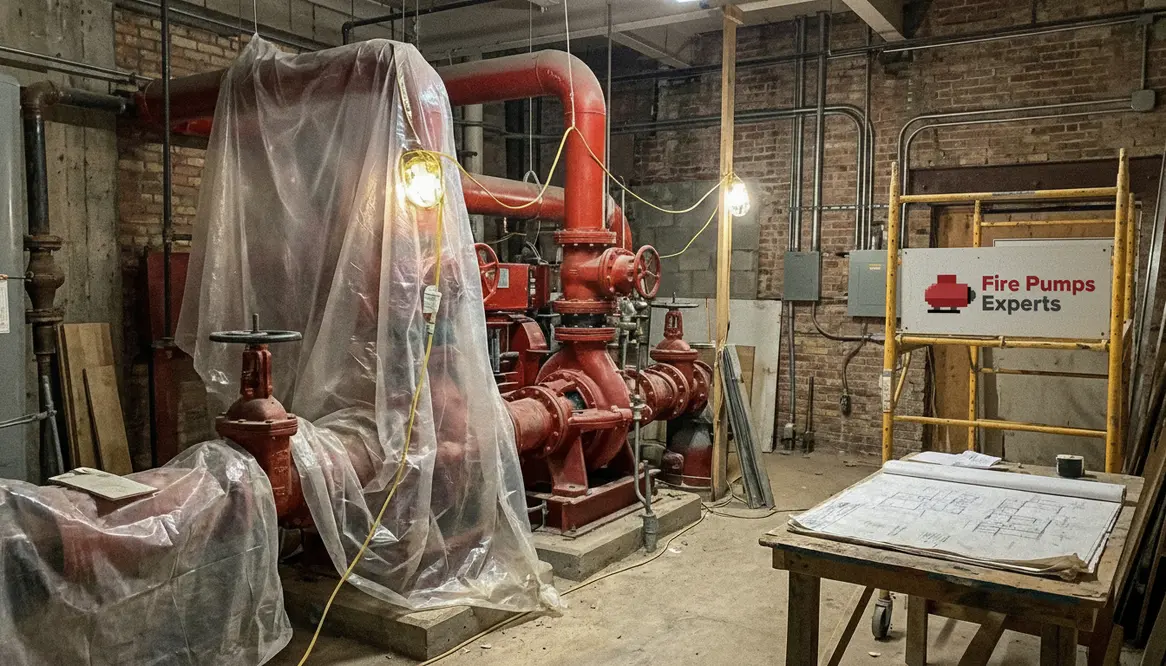
Fire Pump Systems for Civic Redevelopment Projects
I have spent years around public sector renovations, and I can tell you this right away: nothing tests planning discipline quite like fire protection upgrades. Especially when it comes to Fire Pump Systems for Civic Redevelopment Projects, the stakes are high, the timelines are tight, and the margin for error is… well, nonexistent. One missed detail, and suddenly your “routine retrofit” starts acting like a blockbuster disaster scene. Think less “quiet renovation” and more “action movie finale,” minus the popcorn.
So today, I am going to walk you through how I approach fire pump planning in large public facility upgrades. Slowly, clearly, and with just enough humor to keep us both awake.
How I Approach Fire Pump Planning in Public Sector Renovations
First, I ground everything in reality. Public buildings are not blank slates. They are living, breathing structures with aging infrastructure, outdated drawings, and the occasional mystery pipe that nobody claims ownership of.
Because of this, I always begin with a full system audit. I assess existing water supply, pressure levels, and demand requirements. Then, I compare those findings against current fire codes and performance expectations. And yes, those codes have likely changed since the building first opened its doors.
Next, I map out constraints. Space limitations, electrical capacity, and structural load all come into play. After all, squeezing modern fire pump systems into decades old mechanical rooms can feel like trying to park a truck in a compact car spot.
However, careful planning avoids expensive surprises later. And in public sector work, surprises tend to come with meetings. Lots of meetings.
Fire Pump Systems for Civic Redevelopment Projects: What Actually Changes
Now, here is where things get interesting. Renovation projects are not just about replacing old equipment. Instead, they often involve rethinking the entire fire protection strategy.
For example, occupancy loads may increase. A municipal building might expand its function or add new wings. Consequently, the fire pump must support higher flow rates and maintain consistent pressure across a larger footprint.
Additionally, modern systems emphasize reliability and redundancy. I often recommend split systems or backup power integration to ensure continuous operation. Because when a fire pump fails, it is not just inconvenient. It is unacceptable.
And then there is compliance. Codes evolve, and public buildings must meet stricter standards than ever before. So while the old system might have “worked fine,” it likely does not meet today’s expectations.
What Should I Check Before Designing a Fire Pump Upgrade?
Good question. I ask myself this on every project, and the answer never changes, even if the details do.
Here is my go to checklist:
- Water Supply Analysis: I verify flow test data and confirm municipal supply reliability.
- System Demand: I calculate required flow and pressure based on updated building use.
- Power Availability: I confirm electrical capacity or plan for diesel alternatives.
- Space Constraints: I evaluate pump room size, access, and ventilation.
- Code Compliance: I align everything with current NFPA standards.
Moreover, I always consider future expansion. Because if history has taught me anything, it is that buildings love to grow after you think you are done.
Balancing Budget, Performance, and Reality
Let me be honest. Budgets in public sector projects are… spirited. Everyone wants top tier performance, but nobody wants top tier costs. It is a delicate dance.
So I focus on lifecycle value instead of upfront price. A cheaper pump might save money today, but higher maintenance costs and lower efficiency will catch up fast. And when they do, they bring friends. Usually in the form of emergency repairs.
Therefore, I prioritize durable components, energy efficient designs, and systems that simplify maintenance. Because the best fire pump system is the one that quietly does its job for decades without demanding attention.
And yes, I have seen systems that seem to require more care than a houseplant. Those are best avoided.
Dual Perspective: Planning vs Execution
Planning Phase
- Define performance goals clearly
- Coordinate with architects and engineers
- Anticipate code requirements early
- Align system design with long term use
Execution Phase
- Verify installation matches design intent
- Conduct thorough system testing
- Train facility operators properly
- Document everything for future reference
When both sides align, projects move smoothly. When they do not, well… that is when things start to feel like a reality TV show nobody signed up for.
Fire Pump Systems for Civic Redevelopment Projects: Avoiding Common Pitfalls
I have seen patterns over the years. And while every project is unique, mistakes tend to repeat themselves.
First, underestimating system demand is a classic misstep. Designers sometimes rely on outdated data, which leads to undersized pumps. That is a problem you do not want to discover during an inspection.
Second, poor coordination between trades can derail progress. Fire protection systems intersect with electrical, plumbing, and structural elements. If those teams are not aligned, conflicts arise quickly.
Finally, skipping proper commissioning is a gamble. Testing ensures the system performs under real conditions. Without it, you are essentially hoping everything works. Hope is not a strategy. It is a plot device.
FAQ: Fire Pump Planning in Public Sector Renovation
Conclusion: Building Systems That Actually Show Up When Needed
At the end of the day, fire pump planning is about reliability. Not flash. Not shortcuts. Just systems that work every single time they are called upon. If you are navigating a public sector renovation, take the time to plan it right, align your teams, and invest in long term performance. When you are ready to get serious about your fire protection strategy, connect with experts who understand the stakes and deliver systems built to last.