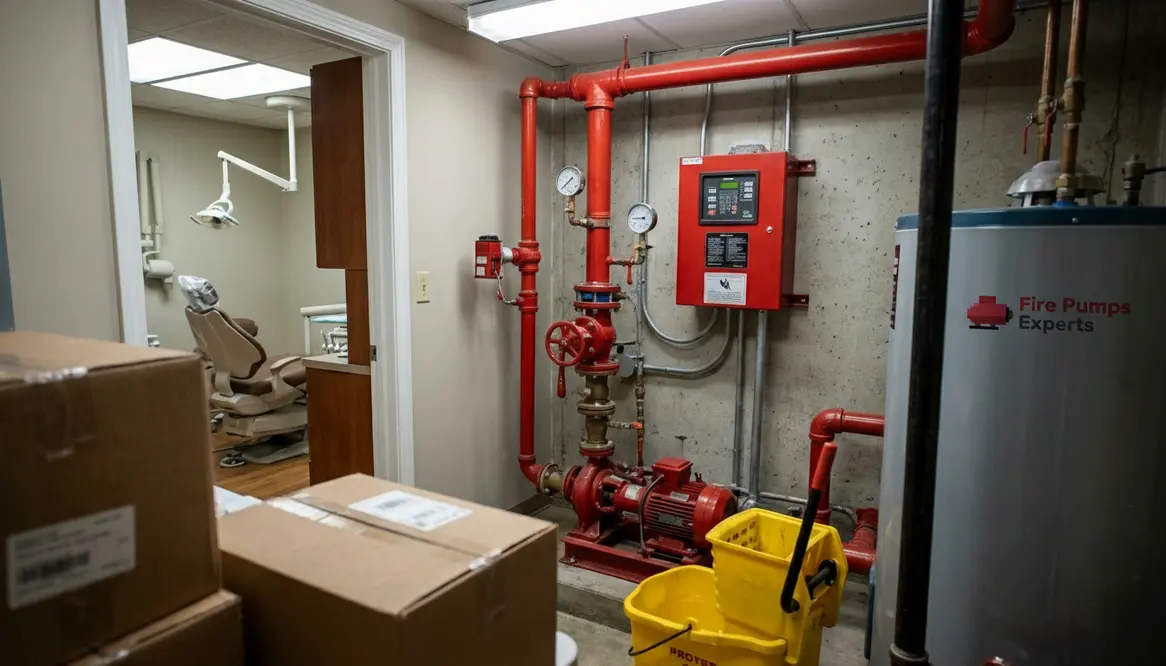
Fire Pump Systems for Dental Offices Safety Guide
I have spent enough time around healthcare facilities to know one truth: safety rarely makes headlines, but when it fails, it writes the whole story. That is exactly where Fire Pump Systems for Dental Offices step into the spotlight. In smaller healthcare spaces, where square footage is modest but responsibility is massive, fire protection cannot be an afterthought. Instead, it must be deliberate, precise, and quietly dependable. And yes, while fire pumps are not exactly the Avengers of building systems, they do assemble when everything else is on the line.
Why smaller healthcare facilities still need serious fire protection
At first glance, a dental office or outpatient clinic may not seem like a high risk environment. However, that assumption fades quickly once you consider oxygen tanks, electrical equipment, sterilization tools, and patient vulnerability. Therefore, even a small spark can escalate faster than most people expect.
I often remind clients that building size does not determine risk level. Instead, occupancy type, equipment load, and response time shape the real picture. Consequently, many smaller healthcare facilities fall under fire codes that require consistent water pressure for suppression systems. That is where compact fire pump solutions come into play.
And let’s be honest, no one wants to explain to a fire marshal why their safety plan relied on “good vibes and a garden hose.”
Fire Pump Systems for Dental Offices explained simply
So what exactly am I talking about when I say Fire Pump Systems for Dental Offices? In simple terms, these systems boost water pressure to ensure sprinklers and standpipes perform effectively during a fire event. Without them, water may not reach critical areas with enough force to control or extinguish flames.
Moreover, smaller healthcare buildings often sit in areas where municipal water pressure fluctuates. Because of this, relying solely on city supply becomes a gamble. A properly designed fire pump system removes that uncertainty and replaces it with reliability.
Think of it like upgrading from a sleepy garden sprinkler to something with a bit more backbone. Not flashy, but absolutely essential when things get serious.
When does a small healthcare space actually require a fire pump
I get this question a lot, and the answer depends on a few key triggers. First, if the building’s sprinkler system cannot meet required pressure levels, a fire pump becomes necessary. Additionally, if the facility includes multiple floors or specialized treatment areas, demand increases quickly.
Another factor involves code compliance. Local regulations often dictate when a fire pump is mandatory, especially in commercial healthcare environments. Therefore, it is not just about preference. It is about meeting enforceable safety standards.
Finally, insurance providers may require enhanced fire protection systems. While that might sound like paperwork drama, it ultimately protects both the facility and its occupants.
Common triggers
- Low municipal water pressure
- Multi level layouts
- High value equipment
- Strict fire code requirements
Key benefits
- Consistent water flow
- Faster fire response
- Improved safety compliance
- Reduced operational risk
How I approach fire pump design for compact medical spaces
Designing for smaller healthcare environments requires balance. On one hand, I need to ensure full compliance and performance. On the other, space and noise constraints are very real. Nobody wants a fire pump that sounds like a jet engine warming up during a routine cleaning.
Therefore, I focus on compact, efficient systems that integrate seamlessly into mechanical rooms. Additionally, I consider future expansion. Because even if a facility starts small, growth tends to follow success.
Another key point involves redundancy. While large hospitals may have layered backup systems, smaller facilities still need dependable operation. As a result, selecting the right pump type and controller becomes critical.
And yes, I always account for maintenance access. Because squeezing a technician into a corner like a game of Tetris is not a long term strategy.
Common misconceptions that deserve a polite reality check
There is a quiet myth floating around that smaller healthcare spaces can cut corners on fire protection. I understand where that idea comes from. Limited space, tighter budgets, and fewer patients at any given time. However, that logic does not hold up under scrutiny.
First, emergencies do not scale down just because a building does. In fact, evacuation in smaller facilities can be more complex due to limited staff. Secondly, modern dental and medical equipment represents a significant investment. Protecting it is not optional.
Finally, compliance is not flexible just because a building feels “small.” Fire codes apply with the same seriousness across commercial and industrial properties.
So while it might be tempting to think a fire pump is overkill, the reality says otherwise. It is more like wearing a seatbelt. You hope you never need it, but you definitely want it there.
FAQ: Fire pump systems in smaller healthcare facilities
Fire Pump Systems for Dental Offices are often surrounded by recurring questions from owners, designers, and inspectors. Below are some of the most common points that come up when planning protection for smaller outpatient and dental environments.
Conclusion: protecting small spaces with big responsibility
When I look at smaller healthcare facilities, I do not see limited risk. I see concentrated responsibility. That is why investing in the right fire protection approach matters, including well designed pump systems. If you are planning, upgrading, or reassessing your facility, now is the time to act. Connect with experts who understand commercial environments and can deliver dependable solutions that keep your space compliant, protected, and ready for whatever comes next.
Fire Pump Systems for Dental Offices may never get applause from patients in the waiting room, but they are a quiet, crucial part of a professional, responsible practice. When codes tighten, insurers ask hard questions, or an alarm sounds in the middle of a workday, that preparation becomes the difference between a close call and a catastrophe.