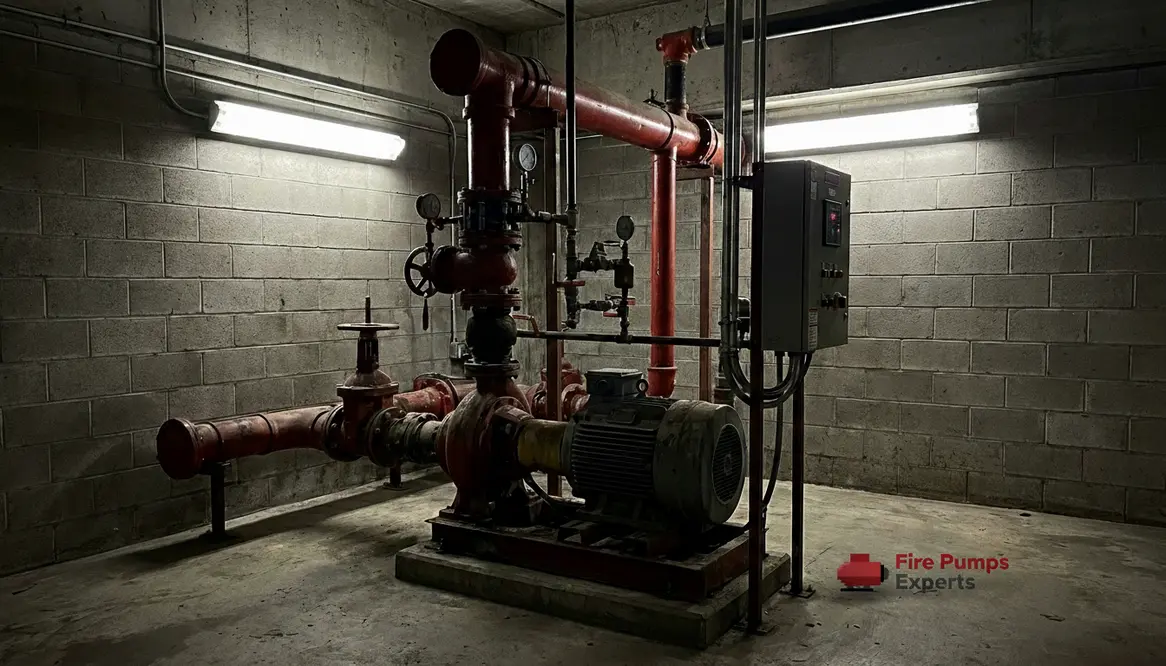
Fire Pump Systems for Parking Garages Guide
I have spent years around critical infrastructure, and one thing becomes clear fast. Fire does not care how expensive your concrete is. Whether I am looking at utility substation fire protection or a multi level parking structure, the principle stays the same. Control the risk before it controls you. Parking garages and decks may seem like simple concrete boxes, yet they carry fuel loads, electrical systems, and constant traffic. That combination quietly raises the stakes. So today, I am walking you through fire pump systems in these structures, calmly and clearly, with just enough wit to keep us both awake.
At a Glance
Parking garages pack fuel loads, batteries, and people into concrete shells. Fire pump systems keep water pressure honest so sprinklers and standpipes actually perform when it counts.
Why Parking Garages Demand Serious Fire Protection
At first glance, a parking garage feels harmless. No plush carpets. No office cubicles. Just cars minding their business. However, each vehicle brings fuel, heat, and electrical complexity. Electric vehicles add battery risks, while traditional cars still carry flammable liquids. Suddenly, that “simple” structure starts acting like a slow burning problem waiting for a bad day.
Because of this, I approach garage fire protection with the same mindset I use in utility substation fire protection. Both environments require reliability, fast response, and systems that do not panic under pressure. Fire pumps sit at the center of that plan. They ensure water moves with force, not hesitation.
What makes garages risky?
- High fuel load from vehicles
- Increasing presence of EV charging and batteries
- Confined geometry and multiple levels
- Critical egress routes for occupants
How Do Fire Pump Systems Work in Parking Structures?
Let me keep this straightforward. A fire pump system boosts water pressure when the standard supply cannot keep up. In a parking garage, that matters because sprinklers and standpipes often sit far from the main supply or across multiple levels.
When a fire starts, the system detects the drop in pressure. Then the pump activates and pushes water where it needs to go. No drama. No delay. Just performance.
Electric or diesel fire pumps that provide consistent pressure
Jockey pumps that maintain baseline pressure and prevent unnecessary starts
Controllers that manage operation and alert teams when something goes wrong
Think of it like a good drummer in a band. You may not notice it when everything runs smoothly, but the moment it fails, the whole performance falls apart. Yes, even if the rest of the band thinks they are Metallica.
Design Considerations That Actually Matter
Now we get into the part where experience separates guesswork from precision. Designing fire pump systems for parking garages is not about copying and pasting a standard plan. Each structure has its own quirks.
First, I evaluate the size and layout. Open decks behave differently than enclosed garages. Airflow, ceiling height, and vehicle density all influence system demand.
Next, I look at water supply reliability. If the municipal supply cannot meet peak demand, the fire pump must compensate without hesitation.
Then comes hazard classification. While garages are not typically high hazard like industrial plants, certain conditions can elevate risk. Charging stations, for example, change the equation.
Key Design Factors
- Water supply strength
- Structure height and layout
- Sprinkler system demand
- Vehicle density
System Enhancements
- Backup power integration
- Corrosion resistant materials
- Advanced monitoring systems
- Redundant pump configurations
As a result, a well designed system feels almost invisible. It does its job without needing applause, which is more than I can say for most action movie heroes.
Maintenance That Keeps Systems Honest
I always say this. A fire pump system is only as good as its last test. You can install the best equipment money can buy, but if you ignore maintenance, you are rolling the dice.
Routine testing ensures the pump starts instantly and delivers the required pressure. Weekly churn tests, annual flow tests, and regular inspections are not optional. They are the backbone of system reliability.
What to watch closely
- Control panels and alarms
- Seals, packing, and couplings
- Fuel systems for diesel drivers
- Battery health on electric systems
Furthermore, I pay close attention to control panels, seals, and fuel systems. Small issues tend to grow quietly, then show up at the worst possible time. Kind of like that one warning light on your dashboard you keep ignoring. You know the one.
Common Mistakes I See in Commercial Garage Systems
Even in large commercial and industrial properties, I still see patterns that need correcting. The most common mistake is underestimating demand. Designers sometimes assume a lower risk profile and size the system too conservatively.
Another issue is poor integration. Fire pumps must work seamlessly with alarms, sprinklers, and building management systems. If those components do not communicate, response time suffers.
Finally, I often find maintenance plans that look good on paper but fail in execution. A checklist does not protect a building. Consistent action does.
These lessons mirror what I have learned in utility substation fire protection. Precision and discipline always outperform shortcuts, and the same mindset applies when you are planning utility substation fire protection or a complex parking facility: assume little, verify everything.
FAQ: Fire Pump Systems for Parking Garages
Conclusion: Build It Right, Maintain It Better
If you manage a commercial parking structure, now is the time to take fire pump systems seriously. I encourage you to invest in design, testing, and ongoing maintenance that match the scale of your property. A strong system protects assets, operations, and lives without hesitation. Reach out to experts who understand complex facilities and demand reliability, whether you are addressing a stand-alone garage or coordinating with broader utility substation fire protection on a large campus. Because when fire shows up uninvited, your system should already be prepared to answer.