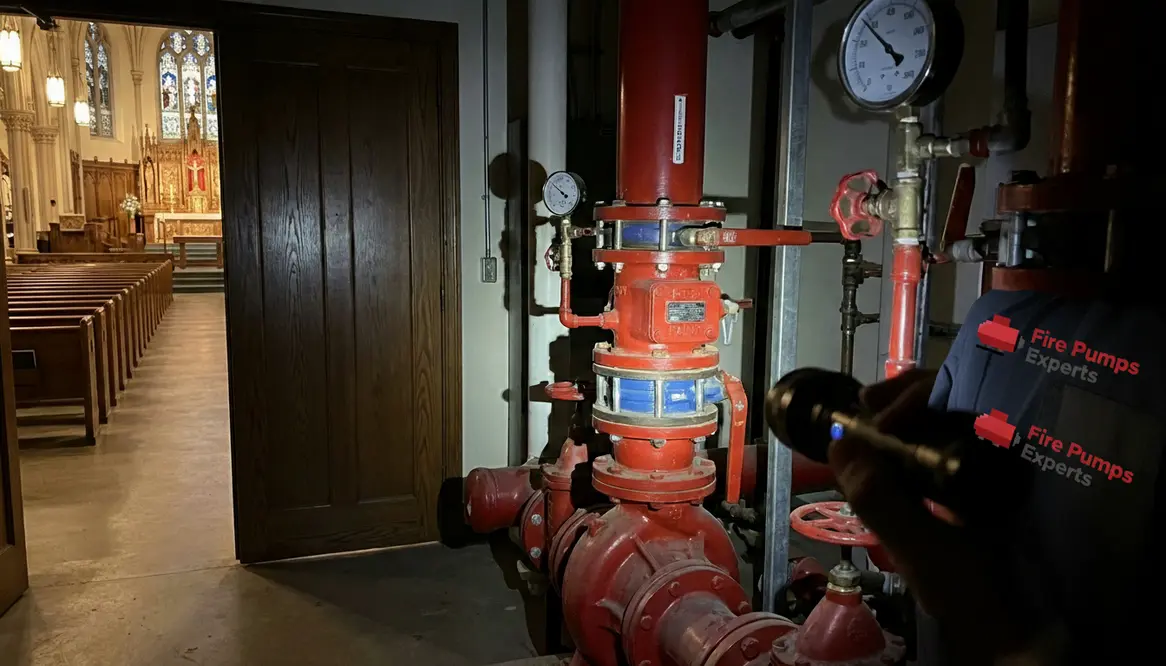
Fire Pump Systems for Synagogues Safety Guide
I have walked through many large sanctuaries, from historic cathedrals to modern worship centers, and one truth always settles in like a quiet hymn. Fire protection is not just a system. It is a responsibility. Early in my work with Fire Pump Systems for Synagogues, I realized that protecting sacred spaces requires both precision and respect. These buildings are more than structures. They hold history, community, and moments that cannot be replaced. So I approach fire safety with the same care you would give to something truly irreplaceable.
Why fire protection in houses of worship demands a different mindset
Houses of worship are not typical commercial properties, even though they often operate at a large scale. They host gatherings, events, and sometimes thousands of occupants at once. Therefore, fire protection must account for fluctuating occupancy, aging architecture, and unique layouts.
Moreover, many of these buildings feature wood interiors, vaulted ceilings, and decorative elements that can accelerate fire spread. While that might look beautiful during a Sunday service, it can turn into a scene straight out of a disaster movie if not properly protected. And trust me, nobody wants their place of worship making headlines for the wrong reason.
So I always emphasize layered protection. Detection, suppression, and water delivery systems must work together seamlessly.
How do fire pump systems support large worship facilities?
Fire pump systems act as the heartbeat of a fire protection network. When water pressure from municipal sources falls short, the pump steps in without hesitation. In large worship facilities, that reliability is not optional. It is essential.
I have seen facilities where standard pressure simply could not reach upper galleries or extended wings. In those cases, properly engineered fire pump systems ensure consistent water flow to every sprinkler head. As a result, response time improves, and damage stays contained.
Additionally, these systems must be designed with redundancy in mind. Power loss during an emergency is not a plot twist. It is a reality. Therefore, diesel driven or backup powered pumps often play a critical role.
Fire Pump Systems for Synagogues and other large sacred buildings
When I work with Fire Pump Systems for Synagogues, I focus on customization. No two facilities are alike. Some include community centers, schools, or event halls within the same property. Consequently, the fire protection strategy must adapt to each function.
Furthermore, compliance with fire codes is only the starting point. I go beyond that by evaluating water supply reliability, system demand, and long term maintenance. Because a system that works perfectly on installation day but fails five years later is not a solution. It is a liability.
And yes, inspections matter. A lot. Skipping routine testing is like ignoring the check engine light and hoping your car just figures things out. It will not.
Key components that make a fire protection system truly effective
Water Supply Integrity
I always verify that the available water source can meet peak demand. If not, storage tanks and pumps must compensate.
System Integration
Alarms, sprinklers, and pumps must communicate efficiently. Delays reduce effectiveness.
Code Compliance
Meeting NFPA standards is non negotiable. However, I treat it as the baseline, not the goal.
Routine Testing
Regular flow tests and inspections ensure the system performs when needed.
Redundancy
Backup power and secondary systems provide resilience during failures.
Professional Oversight
Large facilities require expert design and ongoing evaluation. This is not a DIY weekend project.
Designing fire protection without compromising sacred spaces
I understand the concern. No one wants exposed piping disrupting a carefully designed sanctuary. However, safety and aesthetics can coexist. With thoughtful planning, systems can be integrated discreetly.
For example, concealed sprinkler heads and strategic pipe routing maintain visual harmony. At the same time, advanced pump systems operate quietly in dedicated mechanical rooms. So while the congregation focuses on worship, the system stands ready in the background like a dependable stage crew.
And if you think fire pumps are loud beasts that sound like a spaceship taking off, modern systems might surprise you. They are far more refined than their older counterparts.
Fire Pump Systems for Synagogues and long term reliability planning
Long term reliability is where many facilities fall short. Installing a system is one thing. Maintaining it over decades is another story entirely.
I always recommend a lifecycle approach. This includes scheduled inspections, performance testing, and component upgrades. As a result, the system evolves alongside the building.
Additionally, documentation plays a key role. Clear records ensure that future facility managers understand system design and maintenance history. Without that, even the best systems can become misunderstood over time.
Think of it like preserving a classic film. If you neglect the archive, the story fades. The same applies here.
Extended considerations for Fire Pump Systems for Synagogues
Fire Pump Systems for Synagogues must often serve more than a single sanctuary. They may support libraries filled with rare texts, cultural centers, or archival rooms storing irreplaceable artifacts. Each of these spaces carries different fire loads and risk profiles, and the pump sizing, zoning, and control strategies should reflect that reality.
In urban areas, municipal water pressure might fluctuate dramatically between weekday and weekend demand. In some neighborhoods, aging infrastructure adds another layer of uncertainty. A well designed fire pump arrangement buffers those swings, ensuring that a packed High Holy Day service enjoys the same level of protection as a quiet weekday study session.
Collaboration with local fire authorities is equally important. Walkthroughs, pre-incident plans, and clear signage around pump rooms, valves, and control panels help responders act quickly under pressure. When Fire Pump Systems for Synagogues are documented and labeled clearly, responders spend less time guessing and more time protecting what matters.
Finally, budget planning should include long term maintenance contracts, replacement schedules, and technology updates. Smart monitoring, remote alerts, and trend analysis can all be layered onto existing equipment, turning a basic pump into a well-managed, continuously observed asset.
FAQ
Conclusion
Protecting a house of worship is about more than meeting regulations. It is about preserving a place where people gather, reflect, and connect. I take that responsibility seriously, and so should you. If you manage a large worship facility or commercial property, now is the time to evaluate your fire protection strategy. Reach out, ask the right questions, and invest in systems that will stand strong when it matters most. Because peace of mind should never be left to chance.