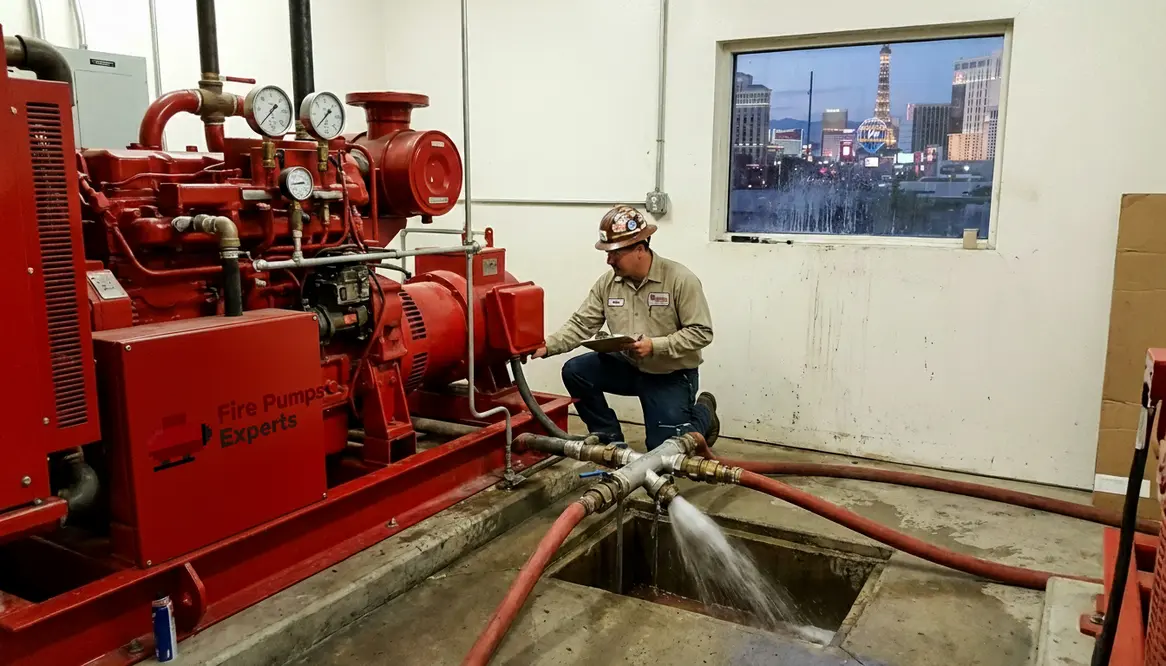
Fire Pump Testing Las Vegas Water Supply Sizing
I have spent enough time around commercial fire protection systems in Las Vegas to know one thing for certain. When it comes to fire pump water supply sizing, there is no room for guesswork. In a city built on spectacle, the last thing any property owner wants is a fire system that performs like a low budget magic trick. It either works, or it does not. And in Clark County, testing requirements are not just paperwork. They are the line between control and chaos. So let me walk you through what actually matters, without the fluff.
Las Vegas properties do not fail fire pump testing because of bad luck. They fail because the original water supply assumptions were optimistic, unverified, or already outdated the day the ink dried on the plans.
If you want your next inspection to read like a clean win instead of a punch list, you start with realistic fire pump water supply sizing and back it up with disciplined testing.
This is not theory. It shows up in your annual results, your retrofit budget, and how nervous you feel every time the inspector walks in.
What are the fire pump testing requirements for commercial properties in Las Vegas?
Let me answer this straight away, because this is what most people are really asking. In Las Vegas, commercial and industrial properties must follow NFPA 25 standards, along with local amendments enforced by the Clark County Fire Department.
That means I am looking at:
- Weekly churn tests to ensure the pump starts and runs properly
- Monthly inspections of components like valves, controllers, and fuel levels
- Annual flow testing where we verify actual performance under load
Where testing and water supply sizing collide
Now, here is where it gets serious. During annual testing, we measure pressure and flow against the original design. If your fire pump water supply sizing is off, even slightly, the system can fail to deliver enough water at peak demand. And yes, inspectors will catch it. They always do.
Think of it like a casino security system. You do not notice it until it fails, and then suddenly everyone is paying attention.
Quick Las Vegas checklist
- Follow NFPA 25 plus Clark County amendments
- Do not skip weekly churn tests
- Document every inspection and test
- Match test results to the original hydraulic design
Why fire pump performance matters more in Las Vegas
Las Vegas is not your average city. Between high rise resorts, sprawling industrial warehouses, and massive commercial campuses, the demand on fire protection systems is intense.
Because of that, I always stress that proper pump capacity calculation is not just a design step. It directly affects testing outcomes. If the system was undersized from day one, no amount of testing will save it.
The Las Vegas water supply reality
Additionally, water supply conditions here can vary. Municipal pressure is not always consistent across large properties. Therefore, fire pumps carry more responsibility than in smaller cities. That is exactly why realistic fire pump water supply sizing matters so much; it builds a margin for those pressure swings into the system from the beginning.
And let us be honest. In a place where entire buildings are designed to impress, no one wants a failed inspection report sitting in their compliance file like a bad Yelp review.
How fire pump water supply sizing impacts your annual test results
This is where things get technical, but I will keep it grounded.
The three points that tell the story
During an annual flow test, I measure three main points: churn pressure, rated flow, and peak demand. These numbers tell me whether your system matches its original design curve.
If your fire pump water supply sizing was calculated correctly, the pump will hit those targets smoothly. However, if the water supply or demand assumptions were off, the test results will show it immediately.
Common failures annual testing exposes
- Insufficient flow at peak demand
- Pressure drops that exceed acceptable limits
- Pump cavitation due to poor water supply conditions
And yes, cavitation sounds like something from a sci fi movie, but it is very real. It can damage your pump faster than you think.
So while testing confirms performance, it also exposes whether your system was designed with reality in mind or just optimism. That is why thoughtful fire pump water supply sizing is not optional; it is the foundation your whole testing history stands on.
Common compliance mistakes I see in large commercial buildings
Over the years, I have seen patterns. Some of them are almost predictable.
First, skipped weekly tests. People assume automation replaces responsibility. It does not.
Second, incomplete documentation. If it is not recorded, it did not happen as far as inspectors are concerned.
Third, ignoring early warning signs. Small pressure inconsistencies often point back to poor water supply calculations or system wear.
What goes wrong
- Missed test schedules
- Inaccurate flow readings
- Undersized supply assumptions
- Neglected maintenance
What it leads to
- Failed inspections
- System underperformance
- Costly retrofits
- Increased risk during fire events
And trust me, retrofitting a fire pump system in a fully operational commercial building is about as fun as remodeling a casino floor during peak hours.
Design, testing, and long term system reliability
Everything connects. Design feeds testing, and testing validates design.
When I evaluate a system, I do not just look at whether it passes. I look at how it performs over time. A properly sized system, supported by accurate water supply calculations, will show consistency year after year.
Why sizing and testing have to stay married
On the other hand, systems that barely pass tend to degrade quickly. They become maintenance heavy, unpredictable, and expensive. That usually starts with aggressive, unrealistic fire pump water supply sizing on paper and ends with constant testing drama in the field.
Therefore, I always recommend aligning your testing program with a deeper review of system design. Especially in large commercial and industrial facilities, where demand can shift as operations grow.
Because let us face it. Buildings evolve. Your fire protection system should keep up.
Want backup from a specialist team?
If you are responsible for a complex property and you would rather not gamble on your next inspection, this is where partnering with a dedicated fire pump service provider pays off. A team like Kord Fire Protection’s fire pump service experts lives in the world of sizing, testing, and documentation every single day, and that experience shows when it is time to prove your system actually performs.
FAQ about fire pump testing in Las Vegas
You do not need a binder full of standards to understand the basics. Here are the questions people ask me most often when they are trying to get a handle on their fire pump testing program.
Final thoughts and next steps
If you manage a commercial or industrial property in Las Vegas, do not treat fire pump testing like a routine checkbox. Treat it like what it really is. A performance audit that protects your building, your people, and your investment.
I can help you evaluate your system, verify your numbers, and make sure your next test is not a surprise. From realistic fire pump water supply sizing to clear documentation and test-ready equipment, the goal is simple: a system that performs exactly when it matters most.
Reach out today, line up your testing schedule, and give your future self one less thing to worry about the next time the inspector walks through the door.